Patchwork Promises or Tomorrow’s Blueprint; A Manifesto or A Pack of Cards
 24 November 2025



The views expressed herein are solely those of the writer, and the writer would like to remain anonymous.
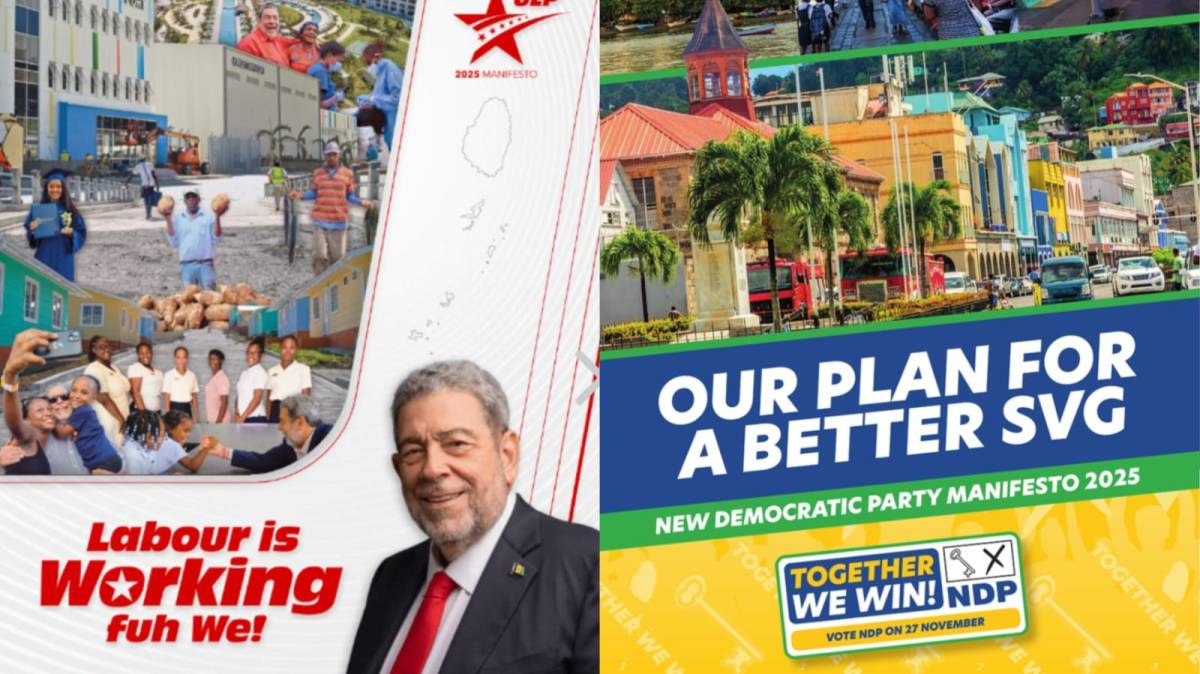
In an era where young people are demanding clearer paths to opportunity, stability, and long-term growth, political manifestos must do more than inspire for a moment; they must offer a roadmap for tomorrow. Recently, discussions around the ULP and NDP manifestos have taken center stage, and interestingly, even when these documents are examined through the analytical lens of AI tools like OpenAI’s ChatGPT, the contrast between them becomes even sharper.
When the NDP manifesto is reviewed, one recurring observation emerges: much of its content appears geared toward immediate, short-term gain rather than long-term national transformation. The language leans heavily into what can be done “now,” with less emphasis on the sustainability, funding capacity, and intergenerational benefits that a modern society; especially its youth, requires. In fact, when asked to analyze it, ChatGPT often emphasizes that many NDP proposals lack detail on financial viability and long-term planning, suggesting that the document feels more like a set of temporary promises than a blueprint for the future.
This raises an important question: What good is a manifesto if its ideas cannot sustain the next decade, much less the next generation?

Adding to this concern is the growing critique that large portions of the NDP manifesto resemble AI-generated content, generic, broad, and disconnected from the lived realities of Vincentians. While AI tools can assist with drafting, a national manifesto must reflect homegrown policy shaped by experience, consultation, and grounded economic logic. If the foundation of a campaign’s promises appears automated, can its delivery ever truly be people-centered?
Funding remains another major challenge. Even AI analyses point out that several NDP proposals lack realistic cost frameworks or revenue strategies. Ambition without affordability does not equal progress, it equals disappointment. And disappointment is something today’s youth can no longer afford.
Meanwhile, the ULP’s manifesto presents a different tone entirely, one aligned with continuity, development, and youth-forward planning. When examined using the same AI tools, the ULP document is consistently identified as future-oriented, structured, and deeply rooted in long-term national advancement. Its proposals connect the present to the possibilities of tomorrow rather than offering a burst of immediate but unsustainable action.
Consider the ULP’s emphasis on youth empowerment, technological development, education, innovation hubs, entrepreneurship funding, skills training, and future-ready infrastructure. These commitments do not simply answer the question “What will we do today?” Instead, they ask, “How do we prepare our young people to lead the region tomorrow?” That distinction; between short-term political appeal and long-term national investment is what separates a fleeting campaign promise from a transformative national agenda.
And so another question emerges: If the future belongs to those who prepare for it, which manifesto truly claims ownership of tomorrow?

The ULP’s track record aligns with its message: modernization of education, expansion of technology access, long-standing investment in infrastructure, and an ongoing commitment to uplifting young people through scholarships, training programs, and job-creating initiatives. These policies do not exist in isolation; they form a coherent chain of progress.
Contrast this with an NDP manifesto that, even under AI review, appears scattered and generic, lacking the solid grounding of serious governance planning. If young people are to believe in a document, it must speak to their aspirations; not merely echo trendy phrases or vague intentions. A nation cannot rise on hollow plans or generic policy statements; it rises on vision, execution, and an unwavering commitment to building a future that outlives political cycles.
–End–
Opinion pieces can be sent to us at [email protected]