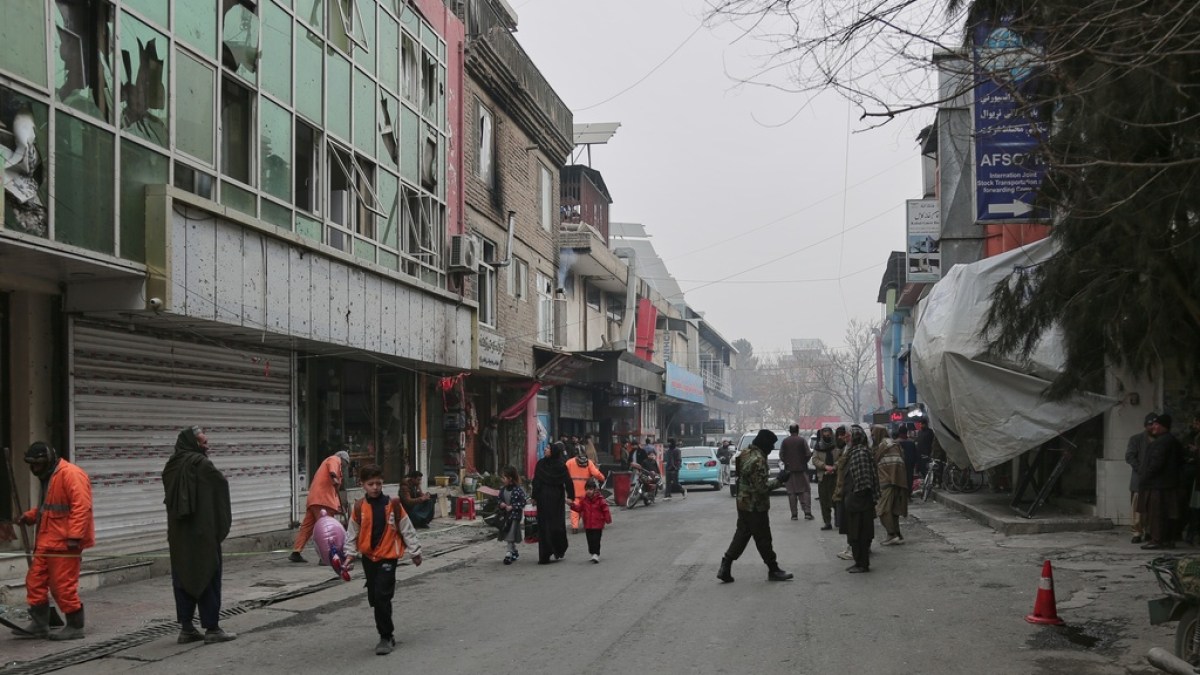

ISIL (ISIS) has claimed responsibility for an explosion at a Chinese restaurant in Afghanistan’s capital that killed at least seven people.
The group said in a statement posted on its Aamaq news agency late on Monday that a suicide bomber entered a restaurant in Kabul frequented by Chinese nationals and detonated an explosive vest.
- list 1 of 3Blast kills seven people at hotel restaurant in Afghanistan’s capital Kabul
- list 2 of 3Thousands in Kabul attend Afghanistan’s national buzkashi championship
- list 3 of 3Who will save Afghans from hunger?
end of list
ISIL’s statement, which claimed 25 people were killed or wounded in the blast, including Taliban guards, linked the attack to “growing crimes by the Chinese government against Uighurs” and issued a further threat against Chinese nationals in the country.
Ministry of Interior spokesperson Mufti Abdul Mateen Qani said on Tuesday that the cause of the explosion at the Chinese Noodle restaurant in the commercial Shahr-e-Naw area was “unknown so far and is being investigated”.
Police spokesperson Khalid Zadran said the blast killed a Chinese national, identified only as Ayub, and six Afghans.
The restaurant serving the Chinese Muslim community was jointly run by a Chinese Muslim man, Abdul Majid, his wife and an Afghan partner, Abdul Jabbar Mahmood, Zadran said.
Guo Jiakun, a spokesperson for China’s Ministry of Foreign Affairs, said at a news briefing that five Chinese nationals were injured, requesting that Afghanistan “spare no effort” in treating the wounded and take measures to protect the safety of its citizens and investments.
China, which shares a 76km (47-mile) border with Afghanistan, has close ties with the Taliban government, and Chinese business visitors have flocked to the country since the group took control of war-torn Afghanistan in 2021.
Advertisement
Beijing denies claims by rights groups that it is guilty of widespread abuses of the Uighurs, a mainly Muslim ethnic minority group numbering about 10 million who make up most of the population of China’s far western region of Xinjiang.
Despite Taliban promises to restore security, bomb attacks have continued in the country, many of them claimed by the local affiliate of ISIL.
Related News

US Senate defeats war powers resolution designed to rein in Trump
‘We are stuck’: Young Ugandans want stability, opportunities on eve of vote
Iran’s judiciary to speed up trials of accused in protests crackdown