Trump threatens Iran with ‘something very tough’ if US demands are not met
 10 February 2026

United States President Donald Trump has continued to threaten Iran with possible military attacks if Tehran does not accede to his demands on issues ranging from nuclear enrichment to ballistic missiles.
In comments to the Israeli outlet Channel 12, published on Tuesday, Trump hinted at aggressive actions if no deal comes together with Iran.
- list 1 of 3Iran’s top security official in Oman following nuclear talks with US
- list 2 of 3Iran shuts down private businesses after protests as economy slumps
- list 3 of 3Netanyahu says he’ll present ‘principles’ for Iran talks to Trump
end of list
“Either we reach a deal, or we’ll have to do something very tough,” Trump told the news outlet.
The remarks come as Iran’s security chief Ali Larijani meets with the sultan of Oman, Haitham bin Tariq Al Said, to discuss the results of talks between US and Iranian officials last week.
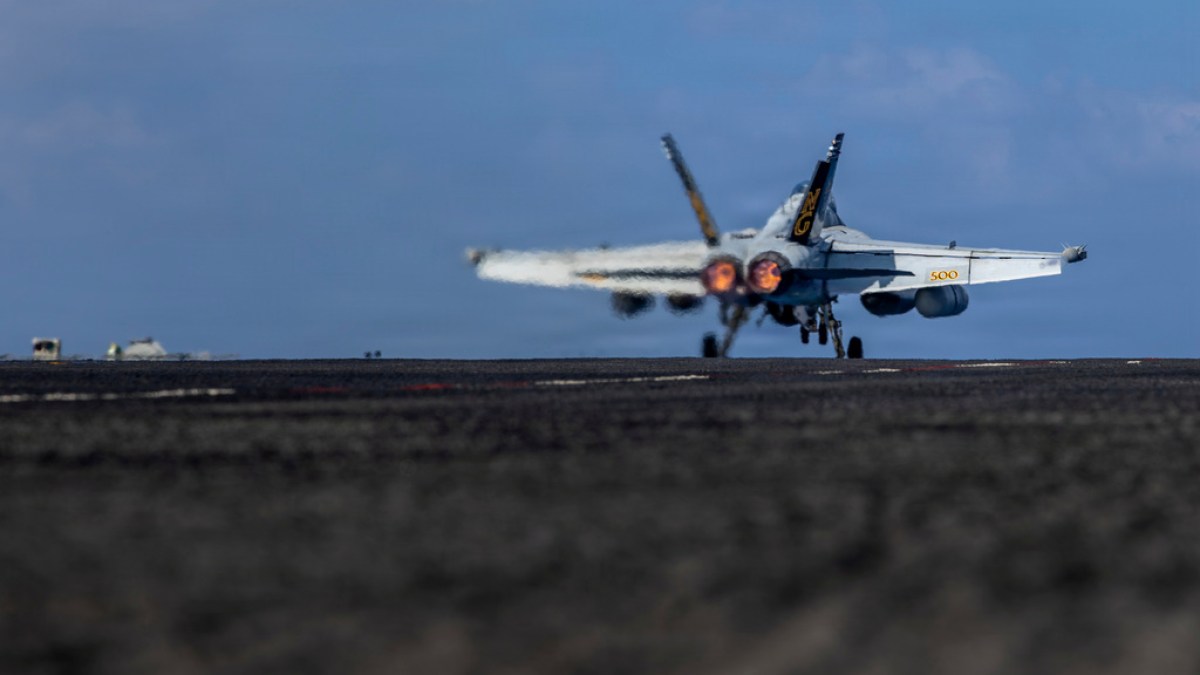
In recent weeks, Trump has touted an increase in US military forces in the region, having sent a “massive armada” to nearby waters. That deployment includes the USS Abraham Lincoln, an aircraft carrier.
Channel 12 and the news outlet Axios reported on Tuesday that Trump is also thinking about sending a second aircraft carrier to the Middle East.
That military build-up has spurred fears of an impending US strike against Iran. Critics fear such an attack could destabilise the region.
Already, on Monday, the US has issued guidelines to US-flagged commercial ships, warning them to stay “as far as possible” from Iranian territorial waters.
‘With speed and violence’
Since January, Trump has heightened US pressure on Iran, warning that his country’s military is “locked and loaded and ready to go”.
Trump has also compared Iran’s situation to that of Venezuela, where a US military operation on January 3 resulted in the abduction and removal of deposed President Nicolas Maduro.
Advertisement
“Like with Venezuela, [the US military] is ready, willing, and able to rapidly fulfill its mission, with speed and violence, if necessary. Hopefully Iran will quickly ‘Come to the Table’ and negotiate a fair and equitable deal,” Trump wrote on social media on January 28.
Late last month, his administration issued three overarching demands. They include an end to Iran’s uranium enrichment, a requirement to sever ties with regional proxies, and limits on the country’s ballistic missile stockpiles, a goal long sought by Israel.
During his first term, Trump pulled the US out of a 2015 deal that placed strict limits on Iran’s nuclear activities, in exchange for sanctions relief.
Now, Trump has resumed his “maximum pressure” campaign against Iran since taking office for a second term in January 2025.
That campaign has included severe sanctions and pressure to dismantle Iran’s nuclear programme, which Tehran insists is for civilian energy purposes only.
Already, last June, Trump authorised a military strike on three Iranian nuclear facilities, as part of a 12-day war between Iran and Israel.
Focus on anti-government protests
Trump’s renewed threats in January have coincided with a recent wave of anti-government protests in Iran.
The government in Tehran reacted to those demonstrations with a violent crackdown that reportedly killed thousands of people, drawing widespread condemnation from rights groups.
Reports have found that state security forces opened fire on crowds of protesters as the country was under an internet blackout.
On January 2 — one day before his military operation in Venezuela — Trump threatened to intervene on behalf of the protesters and “come to their rescue“, although he ultimately declined to do so.
Some analysts have pointed out that the proposed strikes on Iran would do little to aid the protesters, but would align with longstanding US and Israeli goals of reducing Iran’s military capacity.
The Iranian government has argued that the protests included the violent targeting of security forces by armed groups, resulting in the deaths of hundreds of officers. It has also accused outside powers like the US and Israel of backing the anti-government demonstrations.
Details around the protests and their crackdown remain difficult to verify, but Iranian officials have conceded that the government’s response killed thousands of people.
Related News
Venezuela opposition politician Juan Pablo Guanipa released
Trump, Petro to meet at White House after months of tensions
Is Trump’s ‘Board of Peace’ an effort to curtail Europe’s middle powers?