

By Val Matthias. Updated 12:55 p.m., Wednesday, April 1, 2026, Atlantic Standard Time (GMT-4).
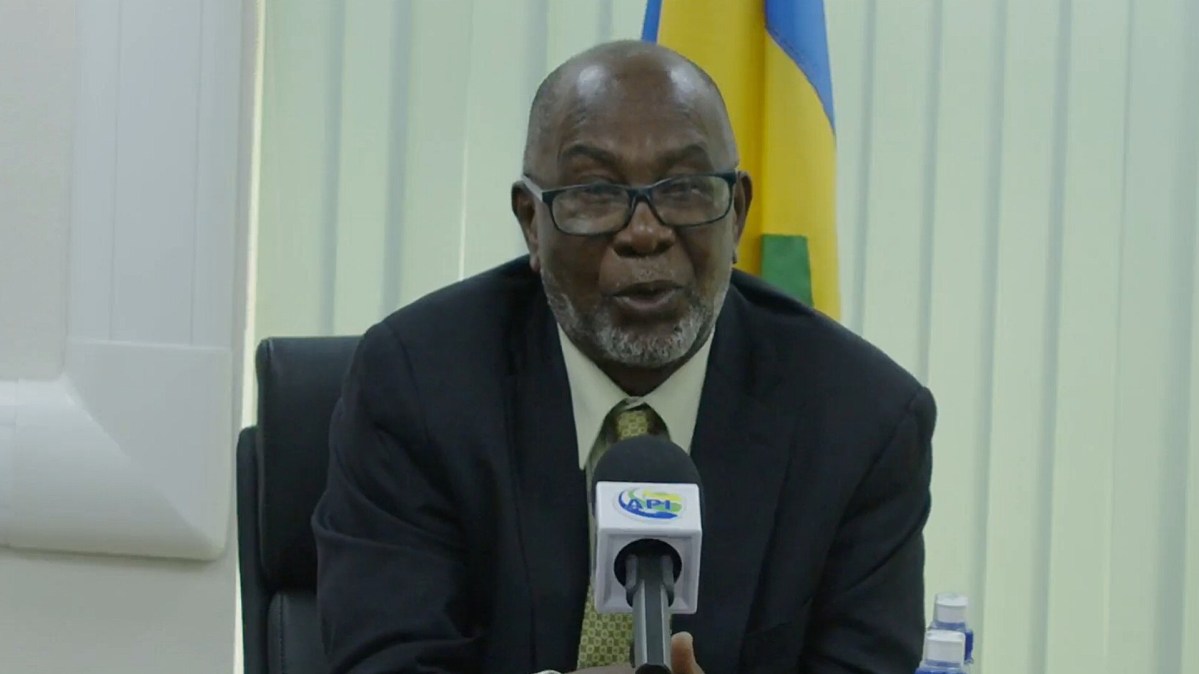
Deputy Prime Minister and Minister of National Security, Major St. Clair Leacock, has reassured Vincentians that St. Vincent and the Grenadines, along with other Caribbean nations, will not be compelled to accept deportees under the United States’ third‑party relocation programme. Addressing a press conference at the Ministry of National Security, Leacock underscored that the decision to accept or reject individuals rests entirely with each sovereign state. “If you don’t want them, they will not force you, and there will be no penalties for not accepting refugees,” he declared.
Leacock explained that while some deportees may lack valid travel documents, the International Organization for Migration (IOM) is prepared to assist with issuing new papers and providing immediate support such as food, shelter, and medical care for up to one week. He noted that the U.S. Department of Homeland Security will supply background information, including biometric data, nationality, medical screening, and criminal records where available. He further clarified that each receiving country will determine the legal status of transferred individuals, and that most deportees historically seek to leave third countries quickly rather than settle permanently.
During the session, the Deputy Prime Minister read out t a series of questions and answers about the U.S. programme. He said that the United States will not share information if a deportee is rejected by another country, stressing that each nation must make its own independent decision.
On the issue of travel documents, he said that while some individuals may lack valid papers, IOM can support the process of issuing new ones, and that difficulties in returning to a home country are usually due to logistical circumstances rather than prohibitions.
When asked about the legal status of third‑country nationals upon arrival, Leacock explained that this is a matter for each receiving country to decide, though the U.S. expects appropriate immigration status or accommodation to be provided.

On the duration of stay, he noted that most individuals transferred under such arrangements seek to leave quickly, but countries may grant longer‑term status if they wish. Regarding funding, he said that if additional resources are needed beyond IOM’s support, countries can submit requests to the United States for consideration.
Leacock also outlined the details of background and medical information that will be provided, including biometric data, nationality, criminal records, and medical screening such as tuberculosis checks and treatment notes. He emphasized IOM’s role in offering immediate assistance and counseling individuals on voluntary return options. For onward movement, he explained that IOM will facilitate departures for those who wish to leave, while individuals who remain must be handled under domestic immigration laws.

The Deputy Prime Minister summarized the presentation by stressing that Caribbean countries will not be penalized for refusing deportees, and that acceptance or rejection remains a sovereign choice.
His remarks come as St. Vincent and the Grenadines assumes the Chairmanship of the Regional Security System (RSS), a regional defence and security alliance coordinating military, police, and disaster response resources across Eastern Caribbean states. Leacock said that SVG’s leadership role in the RSS will strengthen regional resilience and cooperation, while ensuring that national sovereignty is respected in sensitive matters such as deportee relocation.
END




Related News

Lowmans Leeward In Mourning As Youth Gunned Down

Minister Velox Unveils Five-Point Plan to Tackle Loneliness Among Persons with Down Syndro...

Police Clarify Death Toll in Overland Road Tragedy