


Press Release. Updated 6:40 p.m., Wednesday, April 1, 2026, Atlantic Standard Time (GMT-4).
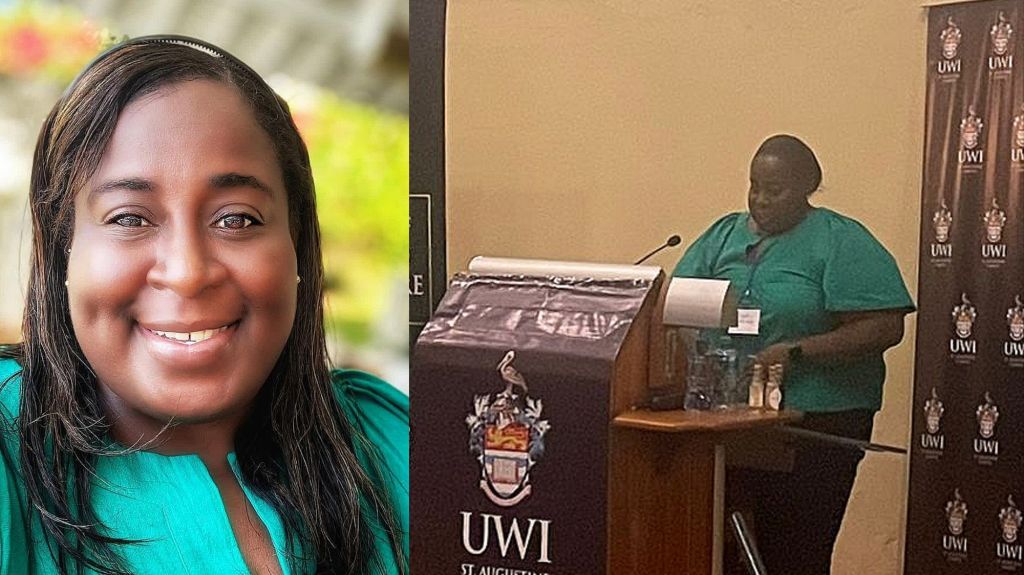
Mrs Michker Edwards-Porter, Lecturer and Programme Coordinator for Agriculture and Food Science at the Division of Technical and Vocational Education (DTVE), St Vincent and the Grenadines Community College (SVGCC), recently represented St Vincent and the Grenadines at the Food and Nutrition Security and Sustainable Tourism Conference 2026, hosted by The University of the West Indies (UWI), St Augustine.
The conference, held from March 31 to April 1, brought together regional and international stakeholders to explore issues related to food security, nutrition, and sustainable tourism.
Mrs Edwards-Porter, who is also an MPhil candidate in the Faculty of Food and Agriculture at UWI St Augustine, delivered a presentation entitled “Tropical Fruit Wines of the Caribbean: Creating Value from Local Fruits,” co-authored with Dr Vidya De Gannes.

The presentation focused on the development of tropical fruit wines using underutilised local fruits and examined their potential as value-added products within Caribbean food systems. It emphasised that fermentation in the Caribbean is deeply rooted in ancestral knowledge systems, particularly those of the Garifuna people, where fermentation was traditionally used as a practical method for food preservation, safety, and survival in tropical environments.
Mrs Edwards-Porter highlighted how this indigenous knowledge, passed down through generations, now intersects with modern food science to create controlled fermentation systems that enhance quality, stability, and marketability.
As part of the research, tropical fruit wines were successfully developed from a range of Caribbean fruits, including sea grapes, sour orange, guava, white and red sorrel, star gooseberry, carambola, and soursop, demonstrating the versatility and value of indigenous and underutilised crops.
The research further showed how highly perishable fruits can be transformed into shelf-stable, high-value products, contributing to reduced post-harvest losses and improved utilisation of local agricultural resources.
The study also examined the quality and acceptability of these wines, reinforcing their potential as distinctive Caribbean products grounded in both cultural heritage and scientific innovation.
Beyond the research findings, Mrs Edwards-Porter shared her broader perspective on the role tropical fruit wines could play in advancing regional development. She noted that the Caribbean has strong potential to position itself as a destination for gastronomic tourism centred on tropical fruit wines, similar to internationally recognised wine tourism regions.
She further emphasised the importance of recognising the value of fruit trees within agroforestry systems, noting their contribution to soil health, farm resilience, and biodiversity. According to her, creating economic value from these fruits can encourage farmers to preserve such systems rather than remove them.

Mrs Edwards-Porter also highlighted opportunities for youth entrepreneurship and small-scale enterprise development, explaining that value-added products like fruit wines can be produced using locally available resources, providing income-generating opportunities within communities.
She added that tropical fruit wines can be positioned as premium, distinctive products, aligning with growing consumer interest in artisanal, culturally rooted, and functionally appealing food and beverage options.
Mrs Edwards-Porter’s participation reflects SVGCC’s ongoing commitment to applied research, innovation, and the advancement of agriculture and food science within St Vincent and the Grenadines and the wider Caribbean.
END