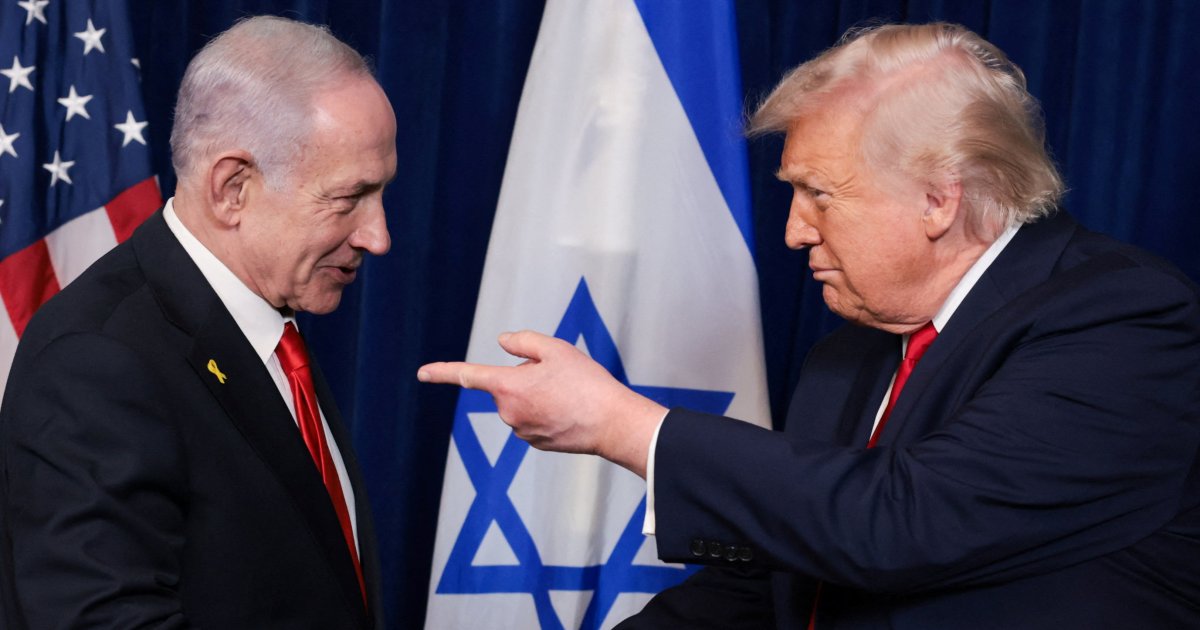

Israel finds itself engaged in two semi-frozen conflicts in Lebanon and Iran. But the outcome of these battles will likely be determined not by Israel’s own political leaders, but by the United States and President Donald Trump, Israeli analysts have told Al Jazeera.
With US envoys Steve Witkoff and Jared Kushner headed to Pakistan for another round of talks with Iran, Israel is not included. And Trump announced on Thursday a three-week extension to the ceasefire in Lebanon. Israel has, of course, repeatedly violated that ceasefire – but analysts highlight that Trump continues to have more influence over events than his partners in Israel.
- list 1 of 4Mixed views in Lebanon ahead of controversial talks with Israel
- list 2 of 4Why is there a political deadlock in Lebanon?
- list 3 of 4Explosions by Israeli forces in south Lebanon despite ceasefire
- list 4 of 4What’s been happening during the Lebanon ceasefire?
end of list
That is despite Israel’s leaders – and in particular Prime Minister Benjamin Netanyahu – repeatedly calling Iran and its Lebanese ally Hezbollah existential threats. Netanyahu had for years called for the kind of war he eventually unleashed on Iran with the US at the end of February.
But the conclusion of that war now appears out of his control. And that, according to observers, is of growing concern to the Israeli public, who were promised by Netanyahu an “end to the threat from the Ayatollah regime in Iran”, and the ultimate “disarmament” of Hezbollah.
“Netanyahu’s attempt to steer Washington on both Iran and Lebanon was both hubristic and opportunistic, but it should also not be that surprising that Netanyahu would attempt this,” former Israeli government adviser Daniel Levy said, comparing that backing to the unquestioning support the US had offered the Israeli government during its genocidal war on Gaza.
Advertisement
“Partly this is Netanyahu beginning to believe his own hype in terms of not only what Israel can achieve vis-a-vis Washington, but also what Israel and the US combined can achieve in terms of reshaping the region, which hasn’t happened,” Levy, who is now a prominent critic of Israel, said. “But it’s also Netanyahu seeing an opportunity with this administration, which is so hollowed out in terms of inter-agency process that he can push the US to do things that Israel … couldn’t get it to do before.”
Israelis still want war
With both Hezbollah and Iran damaged but still standing, Trump’s announcement of twin ceasefires in Iran and Lebanon has exposed the principal cheerleader of both conflicts, Netanyahu, to domestic political jeopardy.
Just days before Trump’s Lebanon ceasefire announcement, a poll by the Israel Democracy Institute showed overwhelming support among Jewish Israeli respondents for continuing the conflict even if that led to friction with the US.
The ceasefire with Iran has also proven unpopular within Israel, with two-thirds of Israelis polled by the Hebrew University of Jerusalem opposing the pause in operations.
“I think that, on the one hand, Israelis, Israeli Jews in particular, tend to put both of them [Iran and Lebanon] into the broader basket of ‘all enemies are against us,’” Dahlia Scheindlin, an American Israeli political consultant, pollster, and journalist told Al Jazeera, “We live in a region with a sea of enemies trying to destroy Israel in every possible way. So it becomes part of a wider self-image that Israelis have.”
Public confidence that the Israeli government was able to call the shots was low, she said, with uncertainty over a future determined by an erratic US president.
“America is the far stronger partner,” Scheindlin said. “So there is an understanding that Washington ultimately shapes the course of events. Israel has influence and a voice, but not the final say. That sense is becoming an increasingly common theme at this point.”

Netanyahu’s critics
After Trump initially announced the ceasefire in Lebanon, former Israeli chief of staff and chair of the centrist Yashar party Gadi Eisenkot said it was a continuation of ceasefires being “imposed” on Israel over the past two and a half years.
While critics would note that the US has done little to restrain Israel and often actively supported its attacks, Eisenkot was more focused on what he called Netanyahu’s inability “to convert military achievements into diplomatic gains”.
Advertisement
Opposition leader Yair Lapid was equally critical, writing on social media: “Not for the first time, all the promises of this government are crashing against the ground of reality.”
“As things stand at present, the [Iranian] regime is still standing, the uranium remains in the country, the IRGC [Islamic Revolutionary Guard Corps] is in a stronger position than before, and Trump wants out,” Alon Pinkas, a former Israeli ambassador and consul general in New York, said of the predicament facing Netanyahu. “That marks a strategic defeat for Israel, whatever military achievements it may have made.
“I really don’t know if Trump cares what happens to Netanyahu,” Pinkas added, noting that, after reporting suggesting Netanyahu had manipulated Trump into the war, a visible rupture between the two might even be politically helpful for the US president. “He [Trump] wants a deal with Iran and, if Israel is the loser in that, I think Trump can live with it.”
Related News
Pope Leo decries world ruled by ‘tyrants’ after Trump attacks
Iran war live: Pakistan in push for new round of US-Iran peace negotiations
Russia strikes Ukraine’s Odesa port, kills railway worker in Zaporizhia