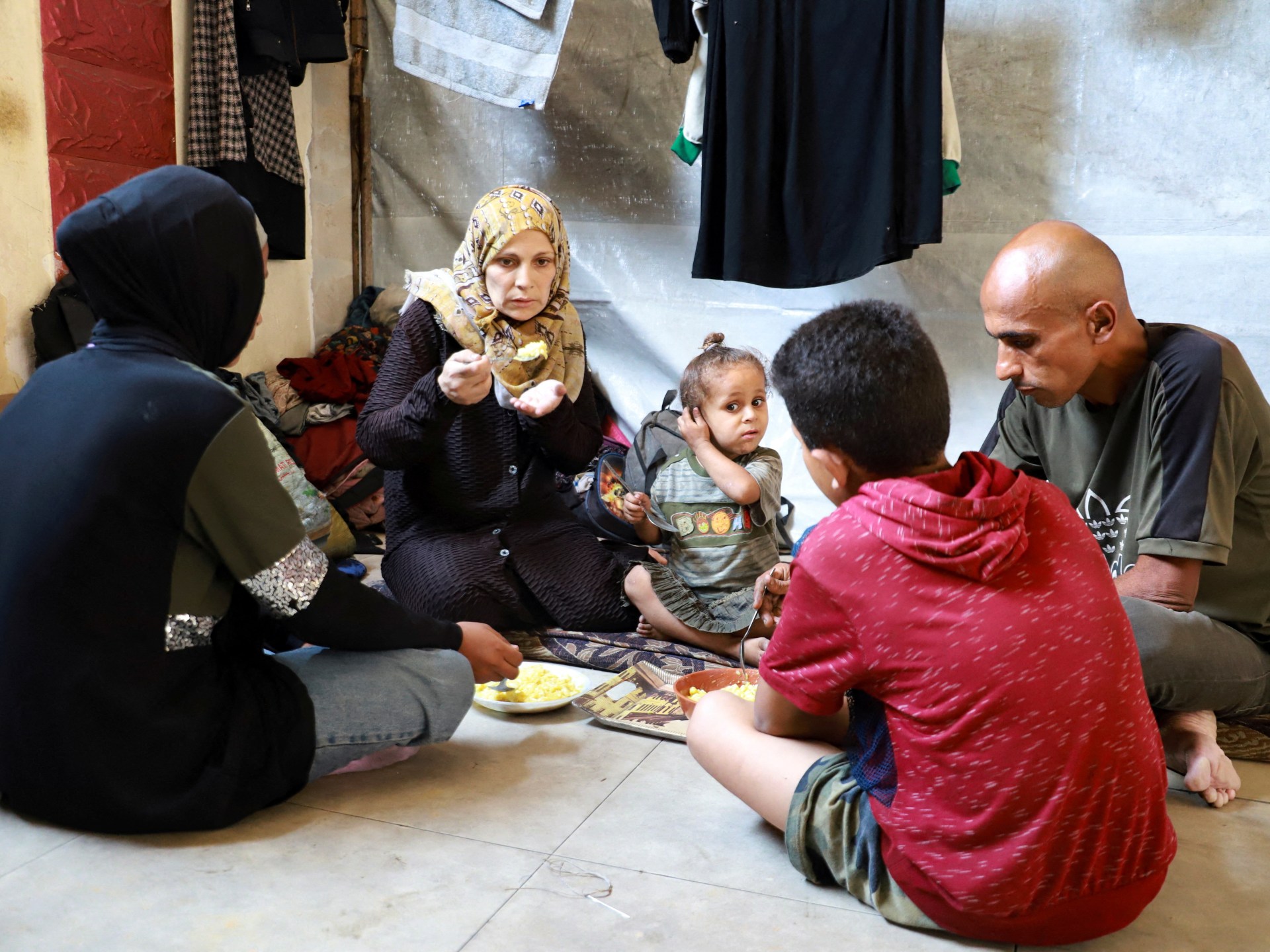

Israel has manufactured a malnutrition crisis in the besieged Gaza Strip by restricting deliveries of food and aid, causing severe harm to pregnant women and newborns, according to medical charity Doctors Without Borders, known by its French initials MSF.
MSF said in an analysis of medical data published on Thursday that Israel’s severe restrictions on supplies of essential goods and its attacks on civilian infrastructure had led to rising levels of malnutrition among pregnant women, increasing the likelihood of premature births.
- list 1 of 3Israeli strikes kill five Palestinians across Gaza in one day
- list 2 of 3Son of top Hamas official killed in Israeli attack on Gaza
- list 3 of 3The Gaza journalist killed on the day his daughter was born
end of list
The charity also found higher mortality rates among babies born to mothers affected by malnutrition.
The MSF analysis is based on incidents that occurred at four health facilities in Gaza that were either administered or supported by MSF between late 2024 and early 2026.
The charity said malnutrition was almost non-existent before Israel launched its genocidal war against Palestinians in Gaza in October 2023, which has killed more than 72,500 people, and that the extremely poor conditions in the enclave were a direct result of Israel’s actions.
“The malnutrition crisis is entirely manufactured. Before the war, malnutrition in Gaza was almost non-existent. For 2.5 years, the systematic blockade to humanitarian aid and commercial goods on top of insecurity have severely restricted access to food and clean water,” said Merce Rocaspana, MSF’s medical referent for emergencies.
“Healthcare facilities have been forced out of service, and living conditions have profoundly deteriorated. As a result, vulnerable groups of people are placed at heightened risk of malnutrition,” she said.
According to the analysed data, more than half of the women cared for at two hospitals suffered from malnutrition during their pregnancy between June 2025 and January 2026, while 25 percent remained malnourished at the time of delivery.
Advertisement
Ninety percent of babies born under those conditions were premature, and 84 percent had a low birth weight. According to the World Health Organization, low-birth-weight infants are 20 times more likely to die than heavier babies and face a greater risk of stunted growth and poor cognitive development.
MSF said it identified its first cases of child malnutrition in January 2024, just three months into Israel’s war. The organisation also said the food distribution centres set up by the controversial Gaza Humanitarian Foundation (GHF), a US- and Israel-backed scheme to oversee aid distribution, were “militarised and deadly, barely functioning, or open at the same time”.
More than 60 percent of Palestinians in Gaza are homeless, according to the United Nations. A recent joint assessment by the UN, the World Bank and the European Union found that housing was the hardest-hit sector in the enclave, estimating it would cost more than $71bn to rebuild.
A “ceasefire” has been in place in Gaza since October last year. However, Israel has since seized more territory, leading to accusations that it is not adhering to the truce. Earlier this week, Israel threatened to resume its assault after Hamas refused to commit to Israel’s demand for full disarmament.
Reporting from Gaza, Al Jazeera’s Hind Khoudary said that under the terms of the “ceasefire” that came into effect last year, 600 trucks carrying food and aid were supposed to enter the enclave each day. In practice, however, only about 150 trucks are being allowed in daily, she said.
Related News

Trump’s threat: Why cutting US troops in Europe won’t be easy

India loses its last left-wing government after five decades

Russia tells diplomats to leave Kyiv in case Moscow launches mass strikes