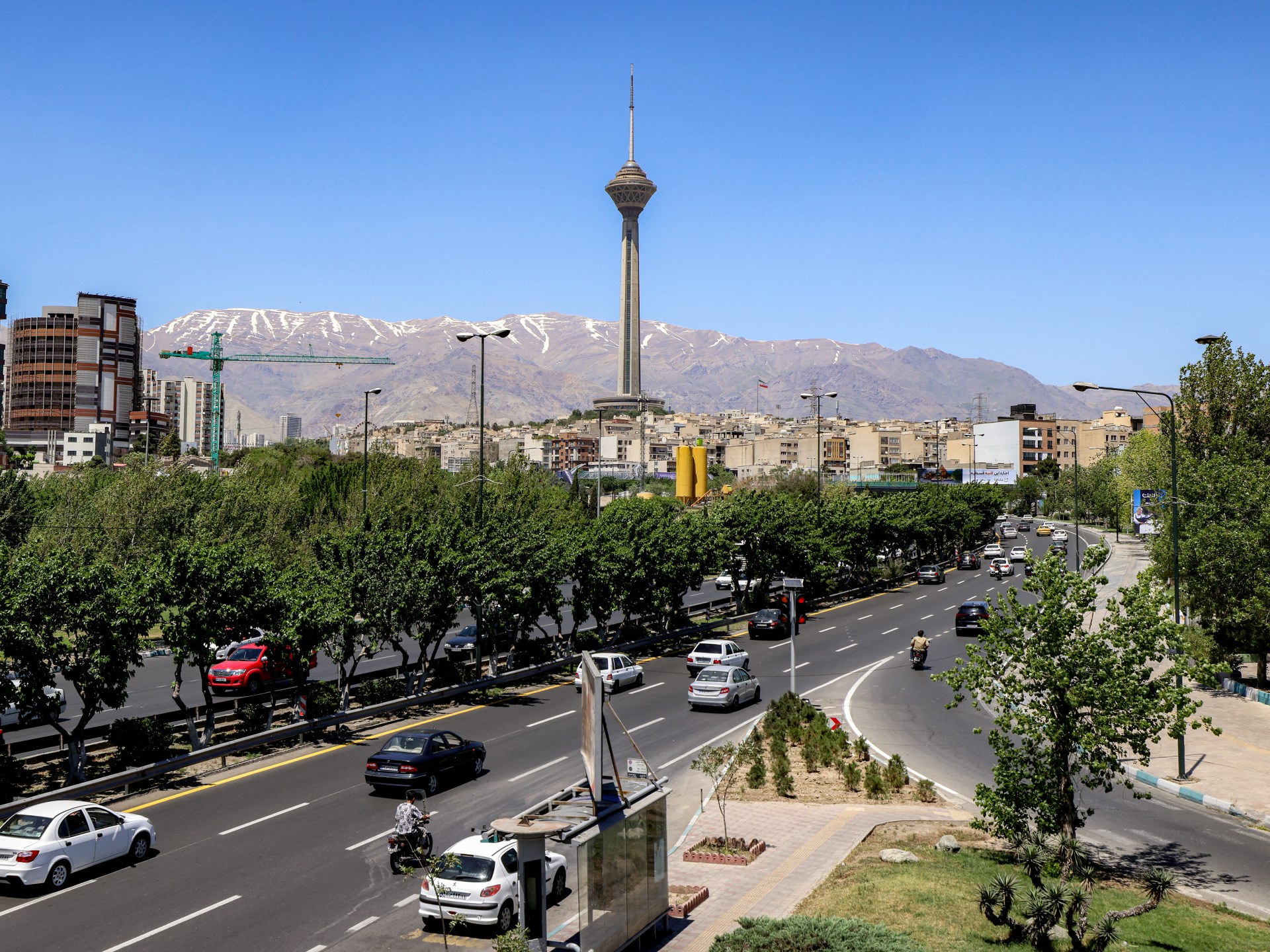

Iran’s foreign ministry says that US strikes in Iran’s southern Hormozgan province represent a “gross violation” of the fragile ceasefire in place since early April.
The commander of the Revolutionary Guard’s Aerospace Force, Seyed Majid Moosavi, said it is prepared to respond, criticising ongoing diplomacy, saying “negotiation with the enemy is pure loss” in a post on X.
- list 1 of 4US strikes Iran again: What we know, and is the ceasefire over?
- list 2 of 4Anticipation in Iran as talks with US continue amid attacks, war of words
- list 3 of 4Pakistan and China reach ‘new broad consensus’ on boosting ties
- list 4 of 4Israeli attacks on eastern Lebanon village kill at least 11 people
end of list
He said the air force – which oversees Iran’s strategic ballistic missile and drone programmes – remains “highly vigilant, fully prepared for a decisive, swift response,” and is awaiting final orders from their commander-in-chief.
Attacks come amid intense negotiations
Both sides had indicated progress on a memorandum of understanding that could halt the war and restart shipping through the blockaded Strait of Hormuz.
Iran’s top negotiator, Mohammad Baqr Qalibaf, its foreign minister and its central bank governor were in Doha on Monday for talks with Qatar’s prime minister on a potential deal, an official briefed on the visit said.
Qalibaf has now returned to Iran after consultations with Qatari officials, Iran’s state television has reported.
He has been seeking agreement on the release of about $24bn in Iranian funds frozen overseas as part of the memorandum of understanding, Iran’s Tasnim news agency reported, citing a source close to the negotiating team.
Iran’s Fars news agency cited a source saying that the unfreezing of the funds was the last serious sticking point for the memorandum of understanding to be finalised.
Advertisement
According to Iranian sources, an initial deal would cover ending the war on all fronts, establishing a 30-day framework for movement through the Strait of Hormuz, and possibly providing some financial relief, with more complex issues such as Iran’s nuclear programme to be negotiated in a second phase.
Iran has been letting some ships through, giving preference to ships linked to countries with which it has alliances or close ties, and striking government-to-government agreements, the news agency Reuters has reported.
US President Donald Trump has said his key aim in the war is to prevent Iran from developing a nuclear weapon with its highly enriched uranium. Tehran has consistently denied it has plans to do that
Trump had said talks with Iran were going “nicely” in a lengthy post on Truth Social on Monday, but warned of new attacks if they failed. It “will only be a Great Deal for all, or no Deal at all,” he wrote.
Strait of Hormuz to open ‘one way or the other’
Following strikes against targets that the US said included boats attempting to lay mines and missile launch sites, US Secretary of State Marco Rubio told reporters on his plane in India’s Jaipur that the Strait of Hormuz had to be open “one way or the other”.
US Central Command said on Monday it had carried out new strikes designed “to protect our troops from threats posed by Iranian forces”.
United Kingdom Maritime Trade Operations (UKMTO) said on Tuesday that a tanker had reported an external explosion on the vessel’s port side, close to the waterline, 60 nautical miles (111km) from Oman’s capital Muscat.
UKMTO said the vessel and its crew were safe, although the tanker reported that some bunker fuel was discharged into the sea.
The war, which began with US and Israeli strikes on Iran on February 28, has caused an unprecedented oil supply shock, pushing up oil prices along with the costs of fuel, fertiliser and food.
Iran’s Revolutionary Guard said on Tuesday they reserved the right to retaliate.
They said air defence units had downed a US drone and fired at another drone and a fighter jet, which they said had entered Iranian airspace over the Gulf region.
In comments posted on his Telegram channel on the occasion of the annual hajj pilgrimage, Iran’s Supreme Leader Ayatollah Mojtaba Khamenei said, “The clock cannot be turned back, and the nations and lands of the region will no longer be a shield for American bases.”
Israel’s role in regional tensions
In another indication of the region’s tensions, Israeli Prime Minister Benjamin Netanyahu said on Monday that Israel would intensify strikes against Hezbollah in Lebanon.
Advertisement
After the announcement, Israel increased the frequency and severity of attacks.
Lebanon’s Ministry of Public Health said 12 people were killed in Israeli overnight strikes on the town of Mashghara, as reported by Lebanon’s National News Agency.
Lorenzo Kamel, a professor of history at the University of Turin in Italy, told Al Jazeera that for a US-Iran peace agreement to work, Washington must “rein in” Netanyahu.
“While we’ve seen Israeli authorities trying to escalate in Lebanon in order to water down any agreement by Trump and Iranian authorities, the elephant in the room is, as always, Netanyahu,” Kamel said.
“Netanyahu needs to play as the indispensable wartime leader, at least until the Israeli elections. He knows, without this continuous escalation, he would weaken his position, and also the opposition within Israel would place him out of power.”
The US continues to allow Israel to act unrestrained, and until Trump orders Netanyahu to truly cease fire in Lebanon, an Iran-US peace agreement will “remain extremely shaky”, Kamel told Al Jazeera.
Meanwhile, analyst Mohammad Eslamy of the University of Tehran told Al Jazeera that it is possible that Iran could attack the United Arab Emirates again if Israel keeps on bombing Lebanon.
“There are two conflicts right now. The first is in the Strait of Hormuz, and the second is in Lebanon. It seems that Netanyahu wants to have the chance to put Lebanon out of this deal before the Iranians and the Americans agree on something,” he said.
Asked about the overnight US strikes on Iran and if they are a sign of what is to come, Eslamy told Al Jazeera, “Donald Trump is thinking about some kind of military escalation in the Persian Gulf in order to put pressure on the Iranians while they are discussing many important aspects of a so-called deal with the United States.”
“I think that the Iranians will think more about the US blockade to put pressure on and challenge the Americans,” Eslamy said about the Strait of Hormuz.
Related News
Are India and Pakistan quietly preparing to restart dialogue?
US and Israel planned to install Ahmadinejad as Iranian leader, NYT says
Historical reckoning: The push for the US to acknowledge the Nakba