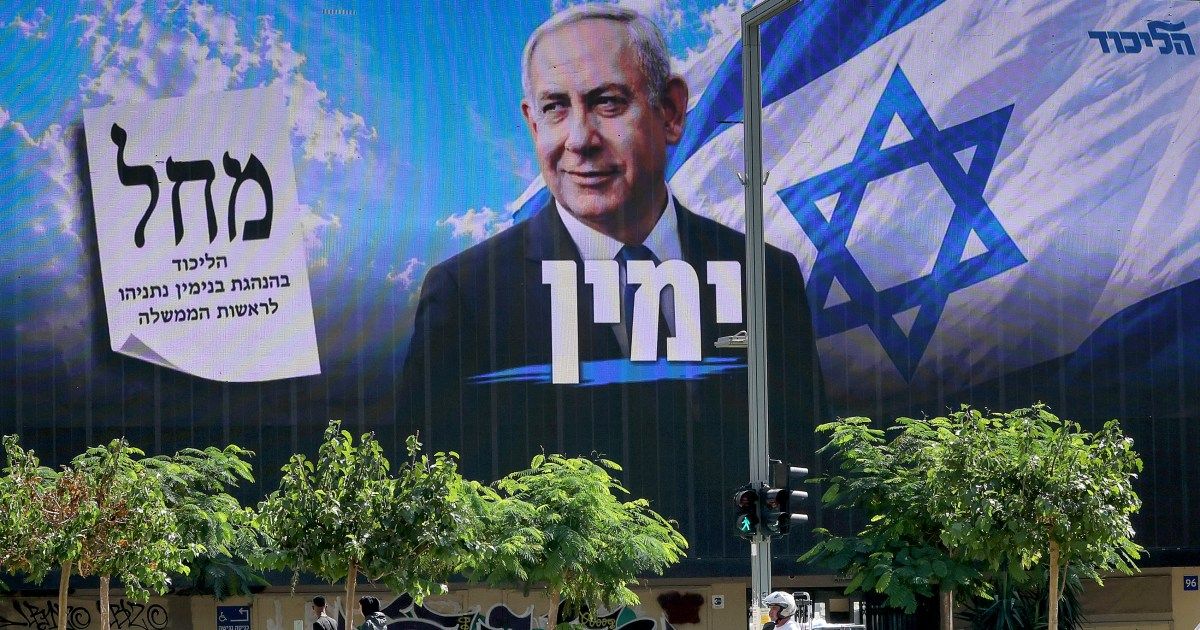

Israel is heading to the polls on October 27 in an election that could end Prime Minister Benjamin Netanyahu’s long grip on power.
The vote for all 120 seats in the Knesset is the first since the Hamas-led attacks of October 7, 2023, the onset of Israel’s subsequent genocidal war on Gaza and a wider conflict that has seen Israel carry out attacks in several countries across the region.
- list 1 of 3In Israel, Netanyahu’s ultimate legacy is the opposition he has forged
- list 2 of 3How Israel’s elections will affect Palestinians
- list 3 of 3Israeli elections: Is it just right wing versus right?
end of list
Opinion polls suggest his right-wing bloc is in a close race against a Jewish-led opposition alliance. But defeating Netanyahu at the ballot box does not necessarily mean removing him from power.
Israel’s proportional representation system means parties must negotiate alliances to secure a governing majority in the Knesset. No single party has ever won an outright majority of at least 61 seats.
According to recent polling, the opposition bloc is projected to win 52 seats, compared with 50 for Netanyahu’s religious-nationalist alliance. Palestinian-led parties could, therefore, determine who governs.
Here are eight possible outcomes:
Netanyahu forms another government
Despite slightly trailing in opinion polls, Netanyahu could remain prime minister if his Likud party assembles enough parliamentary support from existing allies or new coalition partners.
His traditional partners include far-right National Security Minister Itamar Ben-Gvir’s Jewish Power party and Finance Minister Bezalel Smotrich’s Religious Zionism party.
Ultra-Orthodox parties Shas and United Torah Judaism – which have previously joined his coalition multiple times but also walked away, most recently in 2025 – could also play an important role.
An opposition-led majority government
In late September, four opposition parties signed a non-aggression pact, agreeing to work together in a bid to unseat Netanyahu.
Advertisement
The rival movements – the Yashar party, the Democrats, the Yisrael Beytenu party and the Together alliance – said they are united in their goal to “preserve and strengthen Israel as a Jewish and democratic state”.
The bloc has not announced who would lead a future governing coalition, but former army chief Gadi Eisenkot, leader of the Yashar party, is seen as its most likely prime ministerial candidate.
Former Prime Minister Naftali Bennett, who heads the Together alliance with Yair Lapid, is another potential candidate.
A coalition involving Ra’am
The Joint List and Ra’am – the two Arab-led parties representing the Palestinian citizens of Israel, who make up about 20 percent of the population – are projected to win about 13 seats.
Ra’am, also known as the United Arab List, made history in 2021 by joining Bennett’s coalition, becoming the first Arab-led party to participate in an Israeli governing coalition.
Mansour Abbas, leader of Ra’am, has signalled a willingness to repeat that arrangement if the opposition-led alliance needs additional seats.
He has said his priorities include combatting the wave of violent crime that has been allowed to engulf Palestinian communities, as well as addressing discriminatory government policies, including on housing.
However, most opposition leaders, including Eisenkot, have ruled out such an alliance.
A minority government
If a coalition falls short of 61 seats, it could seek outside parliamentary support from other parties without including them in government, such as the Palestinian-led parties.
Joint List, which includes the Hadash, Ta’al and Balad factions, has said it could provide a so-called safety net to the anti-Netanyahu coalition by agreeing not to stand against it in a confidence vote, even if the alliance does not join the government. In return, it has said it would demand certain conditions, including a path to Palestinian statehood and fighting organised crime.
However, any such arrangement would leave the governing coalition vulnerable to defections and disputes over major policies.
A national unity government
A national unity government, according to Israel’s parliament, is a “government based on a broad coalition, the members of which also include representatives of rival parliamentary groups”.
This is usually formed at times of national emergencies, such as war, natural disasters or economic crises.
In May 2020, Netanyahu and Benny Gantz formed a unity government following three inconclusive elections. That agreement collapsed within a year.
Advertisement
However, in 2023, following the Hamas-led attacks on Israel, Gantz and members of his party joined Netanyahu’s coalition – seen as an emergency unity government – despite Gantz previously bitterly opposing it.

A rotating premiership
Two political leaders could agree to alternate as prime minister under a power-sharing arrangement.
Netanyahu and Gantz agreed to such a rotation in 2020, but their coalition collapsed before Gantz could take over.
Bennett and Lapid made the same arrangement for the prime minister’s office to change hands after the former came into power in June 2021. After Bennett’s coalition lost its parliamentary majority in June 2022, Lapid took over as caretaker prime minister in July that year.
A different prime minister from the same political camp
In Israel, the prime minister is voted in by members of the Knesset after an election.
If negotiations stall over forming a government, parties could agree to support another Knesset member from Netanyahu’s political camp or that of an opposition bloc, someone who is more acceptable to future partners.
No agreement – another election
If no leader can assemble sufficient support in the Knesset, Israel could face another period of political turbulence and head for a new election.
The country held five elections between 2019 and 2022 as rival blocs repeatedly struggled to form stable governments.
In such a scenario, Netanyahu would remain caretaker prime minister until a new administration took office.
Related News
Nobel economics prize awarded to Robert Hall and Michael Woodford
Australian MP Helen Haines critically injured in ‘deliberate’ car ramming

Trump administration seeks Supreme Court approval to build Big Bend wall