Ousted PM Sheikh Hasina seeks passport in sign of Bangladesh return plan
 09 November 2026
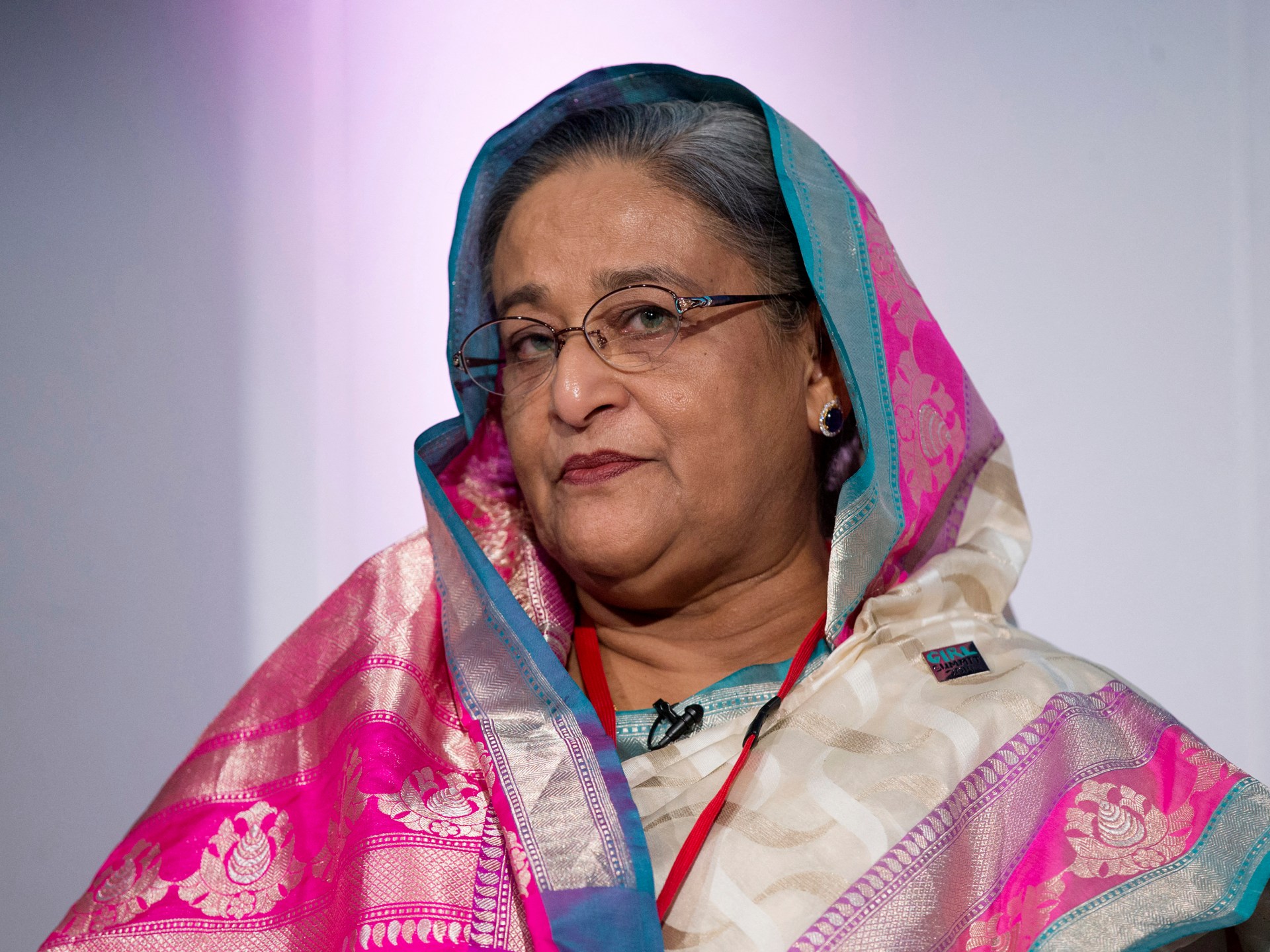

Bangladesh’s ousted Prime Minister Sheikh Hasina has requested a new passport and identity card to allow her to return from self-imposed exile in India.
The request is the clearest sign that Hasina, who has been living in India for two years, plans to make good on her promise that she would return to Bangladesh in December.
- list 1 of 3Bangladesh’s mango diplomacy with India has reached its limits
- list 2 of 3Ten killed in fire at beach resort in Bangladesh
- list 3 of 3‘Going hungry’: Garment workers in Bangladesh say wages barely cover needs
end of list
Hasina told the news agency Reuters that she intended to surrender before a court in Bangladesh, and her aides said on Monday the date would be announced once various formalities were completed.
Bangladesh’s war crimes court sentenced Hasina to death in absentia last November for ordering a deadly crackdown on student protests that swept the country in 2024. As many as 1,400 people may have been killed in those protests, according to United Nations estimates.
Hasina’s letter to the Bangladeshi government, cited by Reuters, asked that her request be processed “expeditiously” on the basis of her Bangladeshi nationality.
Hasina is the daughter of Bangladesh’s founder and first president, Sheikh Mujibur Rahman. She served as prime minister from 1996 to 2001, and again from 2009 to 2024.
As Bangladesh’s longest-ruling prime minister, Hasina’s return raises the prospect of renewed legal and political issues in the country of 127 million people.
She still enjoys support among sections of the population, and her return could impact the Bangladeshi government’s efforts to stabilise the country and its economy after two years of disruption.
However, her return to Bangladesh could smooth relations with India, which sharply deteriorated when the former prime minister fled there in 2024.
Advertisement
Hasina was ousted by a popular, student-led mass protest movement that broke out after the Supreme Court restored a job quota system that had prioritised the descendants of the country’s liberation activists.
Related News
Serbia’s snap election: What’s at stake and can students unseat Vucic?

Finland seeking one million land mines as it eyes Russian threat

Trump orders DOJ to investigate Democrats for ‘threatening’ people