
Three years ago, at a town hall meeting in Mogadishu, Somali President Hassan Sheikh Mohamud defended one of his country’s most controversial foreign partnerships.
The United Arab Emirates, he declared, was “one of the greatest pillars” of Somalia’s war against the al-Qaeda-linked armed group al-Shabab. He praised Abu Dhabi’s support for the country’s armed forces despite longstanding concerns about its political influence.
Recommended Stories
list of 2 items
- list 1 of 2Somalia expels UAE ambassador, accuses Abu Dhabi of violating sovereignty
- list 2 of 2Somalia’s constitutional overhaul tests its fragile federal bargain
end of list
Having returned to power in 2022, Mohamud sought to repair relations with the Gulf state after a period of strained ties under his predecessor, while reassuring a sceptical Somali public that the UAE’s involvement was a boon rather than a hindrance.
This year, that relationship unravelled spectacularly.
On November 19, Somalia ordered the Emirati ambassador to leave the country and recalled its own envoy from Abu Dhabi, marking the sharpest rupture yet in a relationship that had shifted from close security cooperation and deep commercial ties to open hostility.
The UAE said it had already withdrawn its diplomatic staff from Mogadishu in January.
The decision came 10 months after Somalia annulled several commercial, defence and security agreements with the UAE, accusing its former ally of undermining its sovereignty.
In a sharp public rebuke two days before the expulsion order, Mohamud accused the UAE of heightening political divisions, financing rival regional administrations and supporting armed actors operating beyond the federal government’s control.
“A brother does not burn your house. A brother does not buy your property without your knowledge. A brother does not divide your family,” he said.
“After years of diplomatic engagement, the Federal Government assesses that UAE policies threaten Somalia’s national security,” Awes Hagi Yusuf Ahmed, Somalia’s national security adviser (NSA), said in a post on X.
Advertisement
The UAE hit back, accusing Mogadishu of allowing its internal political disputes to strain bilateral ties, in an apparent reference to the president’s contentious relations with some of Somalia’s semi-autonomous regional administrations, which maintain close ties with Abu Dhabi.
Anwar Gargash, a senior Emirati official, said the UAE’s ties with Somalia would “remain deeper and stronger” despite the president’s criticism.
The diplomatic rupture comes amid an escalating domestic power struggle between Mohamud and regional leaders resisting his efforts to reassert federal authority, several of whom have cultivated close ties with Abu Dhabi.
It also marks a striking reversal for a president during whose first term the UAE significantly expanded its foothold in Somalia and who later emerged as one of Abu Dhabi’s strongest defenders.
Somalia divided
Somalia’s efforts to rebuild national institutions since the establishment of a permanent federal government in 2012 have unfolded alongside the consolidation of regional administrations that retain considerable autonomy and political power.
Abu Dhabi’s ties with Mogadishu deepened during Mohamud’s first presidency, from 2012 to 2017.
The UAE reopened its embassy in the capital in 2014, and Mohamud inaugurated a UAE-funded military training centre for Somali forces the following year.
At the same time, the Gulf state cultivated commercial, security and diplomatic ties with regional administrations, including Puntland and Jubbaland, as well as Somaliland, which declared independence from Somalia in 1991.
The UAE is also one of Somalia’s most important trading partners, serving as an important source of imports and a hub for Somali businesses trading in international markets.
But its influence extends well beyond trade, with big investments in infrastructure and security concentrated in Somaliland, Puntland and Jubbaland.
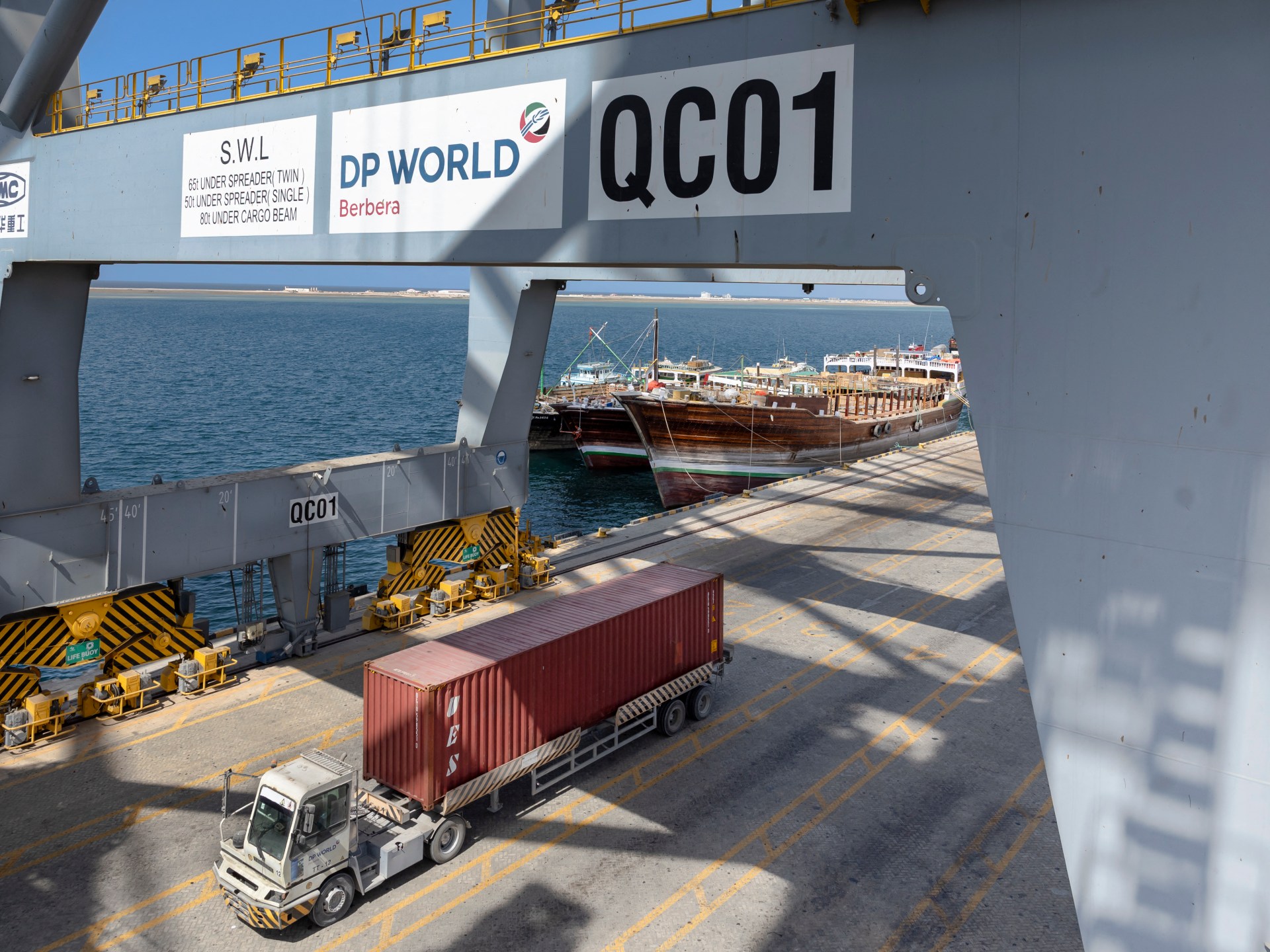
Among the most visible of these investments is Berbera port in Somaliland, where Dubai’s state-owned port operator DP World has invested heavily in expanding the facility and developing a trade corridor connecting it to Ethiopia and the wider region.
Through its subsidiary P&O Ports, the company also operates Bosaso port in Puntland, with both ports providing crucial sources of revenue for their respective administrations.
Somaliland’s Foreign Minister Abdirahman Dahir Adam said the UAE treated it as an independent state, making it an attractive partner, while Emirati investments had created jobs and improved regional connectivity.
Advertisement
“The UAE saw Somaliland’s potential early and backed that view with real investment,” Adam told Al Jazeera.
“The impact on our economy has been significant. DP World’s development of Berbera Port and the Berbera Corridor has turned Berbera into a serious regional gateway,” he added.
Their strategic location along the Gulf of Aden also gives Somaliland and Puntland considerable leverage, making them attractive partners for foreign powers seeking a foothold along one of the world’s busiest shipping routes.
The UAE has developed military facilities near both ports, while in Puntland it helped establish and fund the Puntland Maritime Police Force (PMPF), initially an antipiracy unit that has since become an important counterterrorism force.
More recently, it has supported Puntland’s campaign against ISIL (ISIS) in Somalia with drone attacks and carried out a strike this year against al-Shabab in support of Puntland’s forces, a security official in the region told Al Jazeera.
Abu Dhabi maintains similar commercial and security ties with Jubbaland, which borders Kenya, although the extent of its involvement there is less publicly documented.
A senior Puntland official speaking anonymously told Al Jazeera the UAE’s interventions had helped regional states consolidate their authority, with no equivalent assistance coming from the federal government. “It is obvious why on that level the UAE is a more important partner,” the official said.
Aweis Ahmed, a Somalia expert at Chatham House, told Al Jazeera that while Emirati support had brought tangible benefits to Somalia’s regional states, it had also strengthened their position against the federal government, undermining Mogadishu’s efforts to assert its authority.
“They view these things differently. On the one hand, it helps the peripheries, whilst it undermines the centre,” Ahmed said.
Different priorities and interests
That partnership suffered a setback after Mohamud left office in 2017, when his successor, Mohamed Abdullahi, also known as Farmaajo, refused to take sides in a diplomatic dispute between the UAE and Saudi Arabia on one side and Qatar on the other.
Relations improved after Mohamud returned to power in 2022, but tensions persisted over Abu Dhabi’s increasingly independent dealings with regional administrations, often bypassing the federal government entirely.
Abdinor Dahir, director of the Somalia-based Adkaysi Institute for Research, Peace and Inclusive Resilience, told Al Jazeera that the UAE’s relationships with regional states had deepened disagreements over who had the authority to conclude agreements with foreign partners.
“Overall, the regional states’ external relationship with the UAE and the resulting disputes weaken federal authority, undermine counterterrorism cooperation, and risk turning foreign policy into a permanent source of internal conflict,” Dahir said.
The dispute came to a head in January, when Mogadishu annulled its agreements with Abu Dhabi, accusing the UAE of secretly transporting an Emirati-backed Yemeni separatist leader through Somaliland without authorisation.
Somaliland, Puntland and Jubbaland rejected the announcement, insisting their agreements with Abu Dhabi, particularly over ports, would remain in force.
Advertisement
NSA Yusuf Ahmed accused the regional administrations of compromising national security through their independent dealings with Abu Dhabi.
“Port agreements for Berbera, Bosaso and Kismayo, concluded outside federal authority, take strategic infrastructure out of national control,” he said in a post on X. “That is a security question, not a political one.”
President’s contentious agenda
But the dispute with the UAE has also become entangled with a wider struggle over political power within Somalia, as Mohamud’s efforts to strengthen the central government through constitutional and electoral changes have met resistance from regional leaders.
Puntland and Jubbaland, both federal member states, have opposed changes they say would weaken their autonomy, while functionally independent Somaliland has long rejected Mogadishu’s authority.
Somali officials have also accused the UAE of backing the deposed leader of Southwest State, Abdiaziz Hassan Laftagareen, who has fought to retake several towns around the regional capital, Baidoa, in recent months.
Laftagareen told Al Jazeera that he would remove Mohamud’s ally, who took power following a contested election in Baidoa.
Aweis Ahmed, the Chatham House expert, told Al Jazeera the UAE’s support for Mohamud’s domestic opponents had helped them thwart his efforts to push through contentious constitutional and electoral changes.
“This issue with the UAE is more about the local dynamics than some big question about sovereignty for Hassan Sheikh,” he said.
“A direct line to Abu Dhabi gives these sub-national leaders more room to pursue their own priorities when relations with Mogadishu are difficult,” Dahir said.
Importing UAE’s rivalries
However, Aweis Ahmed warned that the UAE’s involvement, along with that of other powers from the Middle East, was deepening domestic divisions while drawing Somali actors into wider regional disputes.
“They have made important contributions, but overall their involvement is exacerbating Somalia’s internal and external issues,” he said.
The federal government has aligned itself closely with Turkiye, Qatar and Egypt, while some regional administrations have cultivated ties with the UAE and Ethiopia, and Somaliland has drawn closer to Israel.
“These countries have their own issues, and they’re overlapping with Somalia’s internal rivalries,” Aweis Ahmed said.
At home, Mogadishu has increasingly deployed its growing military strength, including Turkish-trained troops, against UAE-aligned rivals opposed to Mohamud’s constitutional and electoral agenda.
Turkish-trained federal forces helped remove Southwest State leader Abdiaziz Hassan Laftagareen from power, while a similar attempt to dislodge Jubbaland’s Ahmed Mohamed Islam, also known as Madobe, following his disputed re-election in 2024 failed.
In Puntland, tensions with Mogadishu prompted regional forces to seize several federal military bases and expel federal institutions.
Beyond Somalia, Sudan has complained to Mogadishu about the UAE’s alleged use of facilities in the port cities of Bosaso and Berbera to supply the Rapid Support Forces (RSF), the paramilitary group fighting the Sudanese army.
A Somali source told Al Jazeera that Sudan’s intelligence chief raised the issue during a visit to Mogadishu in 2025, pressing Somali officials to at least publicly condemn the alleged supply operations if they were unable to stop them.
In early November, Yassir al-Atta, the Sudanese army chief of staff, went further, alleging that fighters from northern Somalia had taken part in the conflict alongside the RSF.
Advertisement
The passage of Abu Dhabi-backed Yemeni separatist leader Aidarous al-Zubaidi through Somali territory has similarly drawn Mogadishu into tensions between the UAE and Saudi Arabia over Yemen.
Related News
World reacts to ICJ finding Myanmar guilty of genocide against Rohingya
‘Zero transparency’: Inside Trump’s plans for Venezuela’s oil money

Casualties reported after shooting in Poland’s Krakow