

By Val Matthias. Updated 10:08 a.m., Wednesday, February 11, 2026, Atlantic Standard Time (GMT-4).
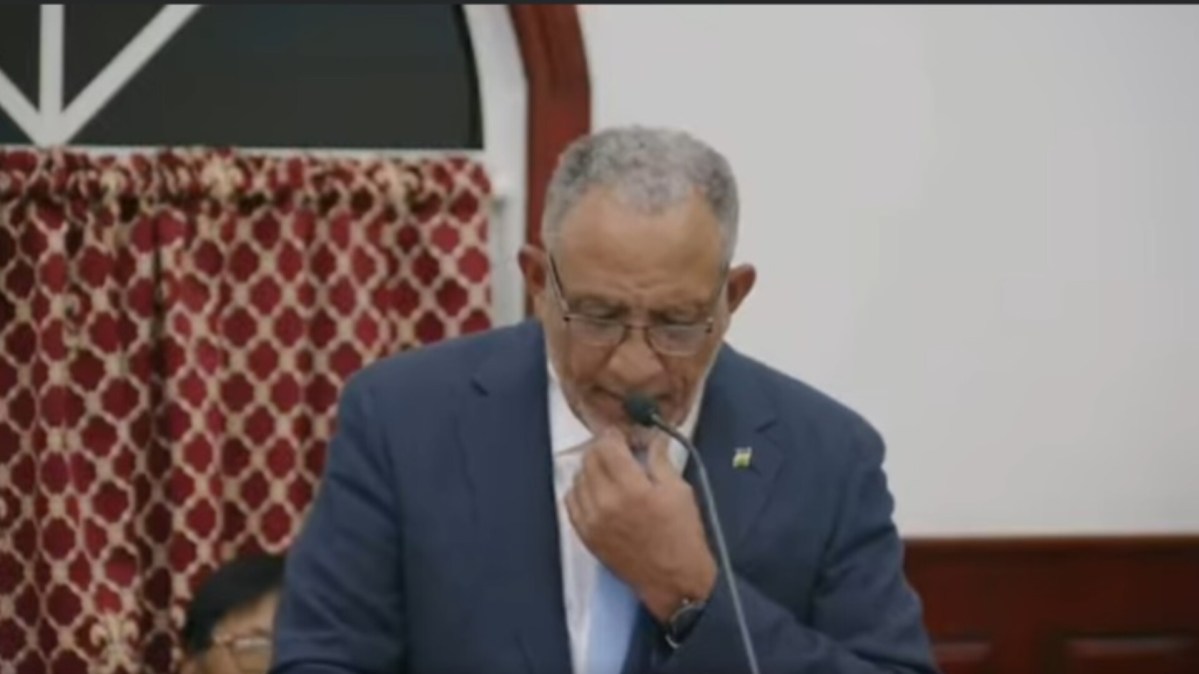
In a striking departure from the cautious language of past budgets, Prime Minister and Minister of Finance Dr. Godwin Friday has placed poverty at the centre of his government’s fiscal agenda, describing it as the “silent crisis of our time.”
Delivering the 2026 Budget Address under the theme “From Rescue to Resilience Building One Nation Together”, Dr. Friday acknowledged that nearly one in three Vincentians which is more than 33 percent of the population are either living in poverty or remain a single pay cheque or natural disaster away from it.
“Poverty in Saint Vincent and the Grenadines is not random; it has a specific face and a specific home,” he told Parliament, pointing to female-headed households and rural northern communities devastated by the La Soufrière eruption as the most vulnerable.

The Prime Minister highlighted a stark north-south divide, with communities in the Red and Orange Zones of the volcano still struggling economically while the south enjoys rising opportunities. He also underscored the disproportionate burden borne by women, noting that female-headed households face limited access to land, higher caregiving responsibilities, and greater exposure to economic shocks.
The government announced several measures aimed at tackling this divide; doubling public assistance to EC$500 per month, providing immediate relief to vulnerable households, a youth guarantee pledge, promising jobs, training, or internships for every young person in affected communities, rural investment initiatives, including a national eco-tourism Strategy to convert the natural beauty of the north into sustainable livelihoods.

This explicit acknowledgement of poverty’s geographic and gendered dimensions marks a sharp rhetorical shift from previous budgets, which often relied on broad statistics and generalised social programmes. By naming the “Forgotten North” and female headed households as focal points, the administration has signalled a willingness to confront uncomfortable truths head-on.
For ordinary Vincentians, the doubling of Public Assistance is the most immediate and tangible change. But the broader narrative that poverty is structural, gendered, and geographically concentrated is likely to resonate across the nation, shaping both public debate and political expectations in the months ahead.
END


Related News
Venezuelan Embassy Calls on Vincentians to Join Solidarity Rally
Prime Minister Unveils New Ministries and Over 100 Posts in 2026 Budget
Speaker Blocks Opposition Leader: No Oath, No Seat at Finance Committee