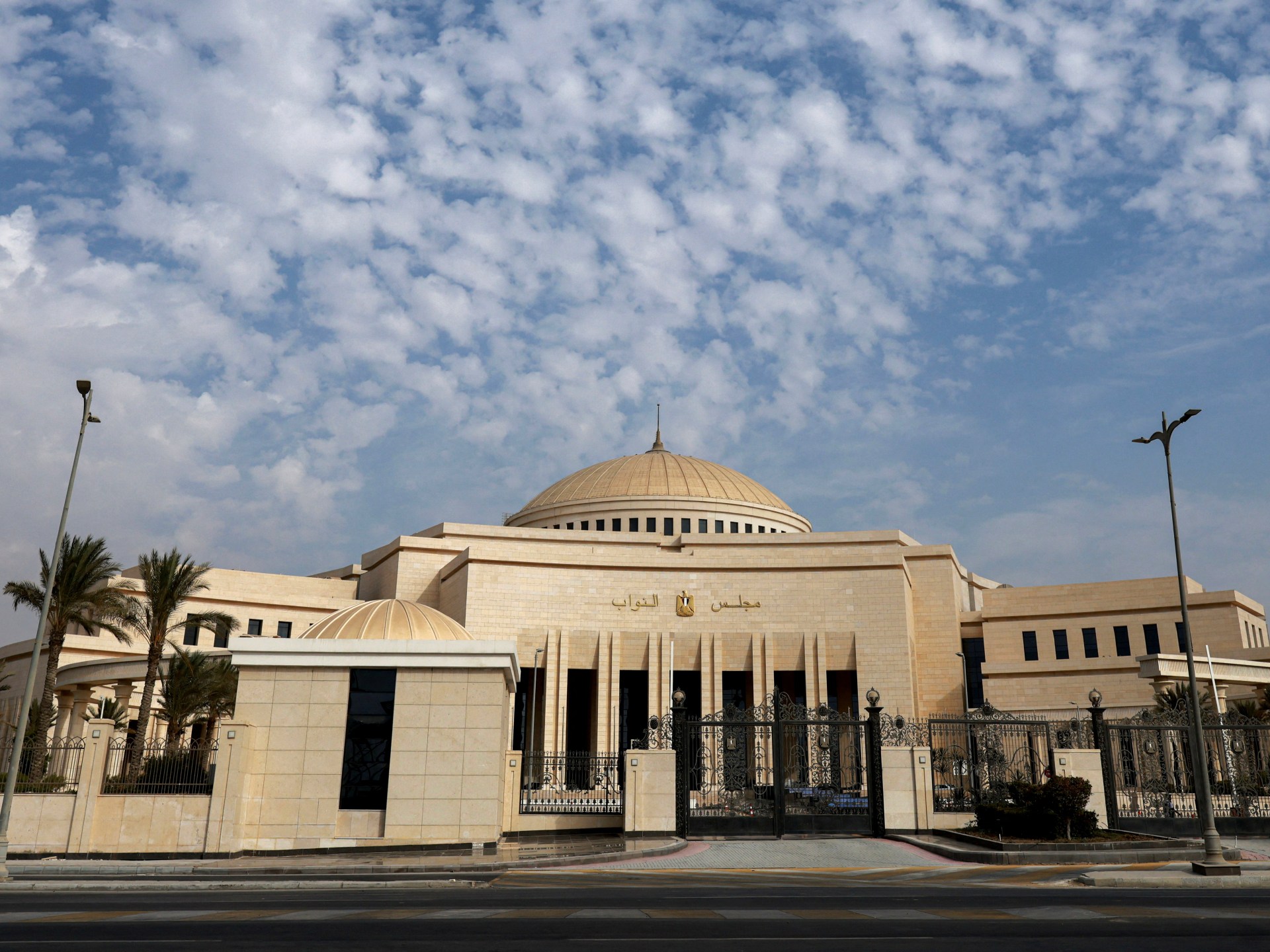

Egypt’s parliament has authorised President Abdel Fattah el-Sisi to provide military support to Saudi Arabia as attacks by Yemen’s Iran-aligned Houthis intensify.
The House of Representatives, chaired by Speaker Hisham Badawi, approved the mandate in a vote on Monday.
- list 1 of 3Why is Egypt so wary of getting involved in Yemen’s conflict?
- list 2 of 3Are global oil reserves sufficient to withstand renewed US-Iran war?
- list 3 of 3European, Middle East ministers urge US-Iran diplomacy, not new attacks
end of list
A parliamentary statement members shared with Reuters said el-Sisi had been authorised to “undertake necessary” measures to support Saudi Arabia in defending itself, should Riyadh request assistance.
The move raises the possibility of Egypt becoming more directly involved in a conflict which has consumed the Gulf and the Red Sea in recent weeks.
Nawaf Obaid, a visiting senior research fellow at King’s College London, told Al Jazeera that Saudi officials wanted reassurances that Egypt would support the kingdom if asked.
The vote was Cairo’s way of saying “it will be there”, he said, but questions remain over what type of assistance Riyadh might request and how Egypt would provide it.
The decision follows Houthi attacks on Riyadh’s international airport and facilities belonging to Saudi Arabia’s state oil company, Aramco, which have disrupted flights and oil exports.
The Houthi armed group that controls Yemen’s capital, Sanaa is fighting the Saudi-led coalition which backs the internationally recognised government.
Fighting has intensified in recent weeks, deepening the humanitarian crisis that has already devastated Yemen.
El-Sisi said on Wednesday that any Egyptian military action would be limited to protecting Saudi territory and borders, rather than launching attacks on Yemen.
Advertisement
Egypt’s Foreign Minister Badr Abdelatty said Cairo continued to favour a diplomatic settlement after visiting Riyadh on Wednesday.
The vote followed closed-door parliamentary discussions and an earlier postponement of the military aid authorisation for Saudi Arabia, which is one of Egypt’s most important economic partners.
Egypt’s constitution requires approval from two-thirds of legislators before troops can be sent abroad on combat missions.
Egypt also has a direct stake in Red Sea security. Houthi attacks near the Bab al-Mandeb strait, the key route to and from the Suez Canal, have disrupted shipping and reduced canal revenue.
Egypt joined a previous Saudi-led campaign in Yemen in 2015, largely helping secure shipping routes with naval forces.
Cairo has not undertaken a large-scale foreign ground deployment since the 1991 Gulf War.
El-Sisi also met United Nations Secretary-General Antonio Guterres in Cairo on Monday to discuss regional tensions and peace efforts.
According to Egypt’s presidency, Guterres praised Cairo’s efforts to prevent escalation in the Gulf and said diplomacy could help address disputes over Iran’s nuclear programme and shipping.
In a post on X on Monday, Guterres urged “maximum restraint”, warning that further fighting could spiral out of control.
Related News

Marine Le Pen vows French ‘renaissance’ as far right eyes seat of power
Gaza malnutrition and starvation at ‘catastrophic’ levels: Health Ministry
Trump says US will not strike Iran before midterm elections