
Brendan Carr, the chair of the Federal Communications Commission (FCC) in the United States, has confirmed that the agency launched an investigation against ABC’s daytime talk show The View over a recent appearance by a politician.
In comments to reporters on Wednesday, Carr indicated the probe would examine whether The View violated a new interpretation of an “equal time” rule implemented under President Donald Trump.
- list 1 of 3As US public media funds officially dry up, local radio stations struggle
- list 2 of 3Paramount’s Warner Bros Discovery bid faces conflict of interest concerns
- list 3 of 3Stephen Colbert says CBS pulled interview with Texas Democratic candidate
end of list
Fox News had been the first to report on the investigation in early February. The segment in question involves an appearance from Texas state Representative James Talarico, a Democrat who is vying for the US Senate.
The confirmation comes as Carr attempted to shut down claims that the government censored an interview between Talarico and late-night talk show host Stephen Colbert.
“There was no censorship here at all,” Carr said.
“Every single broadcaster in this country has an obligation to be responsible for the programming that they choose to air, and they’re responsible whether it complies with FCC rules or not, and it doesn’t, and those individual broadcasters are also going to have a potential liability.”
The controversy with Colbert likewise stems from the Trump administration’s decision to shift definitions under the “equal time” rule.
The rule is part of section 315 of the 1934 Communications Act. Under that law, if a broadcaster allows one candidate for public office to use its facilities, it is required to “afford equal opportunities” to all other candidates in the same race.
Advertisement
But the law includes exceptions for “bona fide newscasts” and “bona fide news interviews”.
For nearly 20 years, talk shows and late-night comedy programmes were included in those categories.
In January, however, the FCC issued new guidance (PDF) that significantly narrows how it interprets the “bona fide news” exemption. In a memo, it described daytime talk shows and late-night comedy as “entertainment programs” that fall outside the exception.
“The FCC has not been presented with any evidence that the interview portion of any late night or daytime television talk show program on air presently would qualify for the bona fide news exemption,” the memo reads.
The commission also suggested that many such programmes are “motivated by partisan purposes” and are therefore not “bona fide” news.
The new interpretation of the “equal time” rule, the FCC argued, is designed to “ensure that no legally qualified candidate for office is unfairly given less access to the public airwaves than their opponent.”
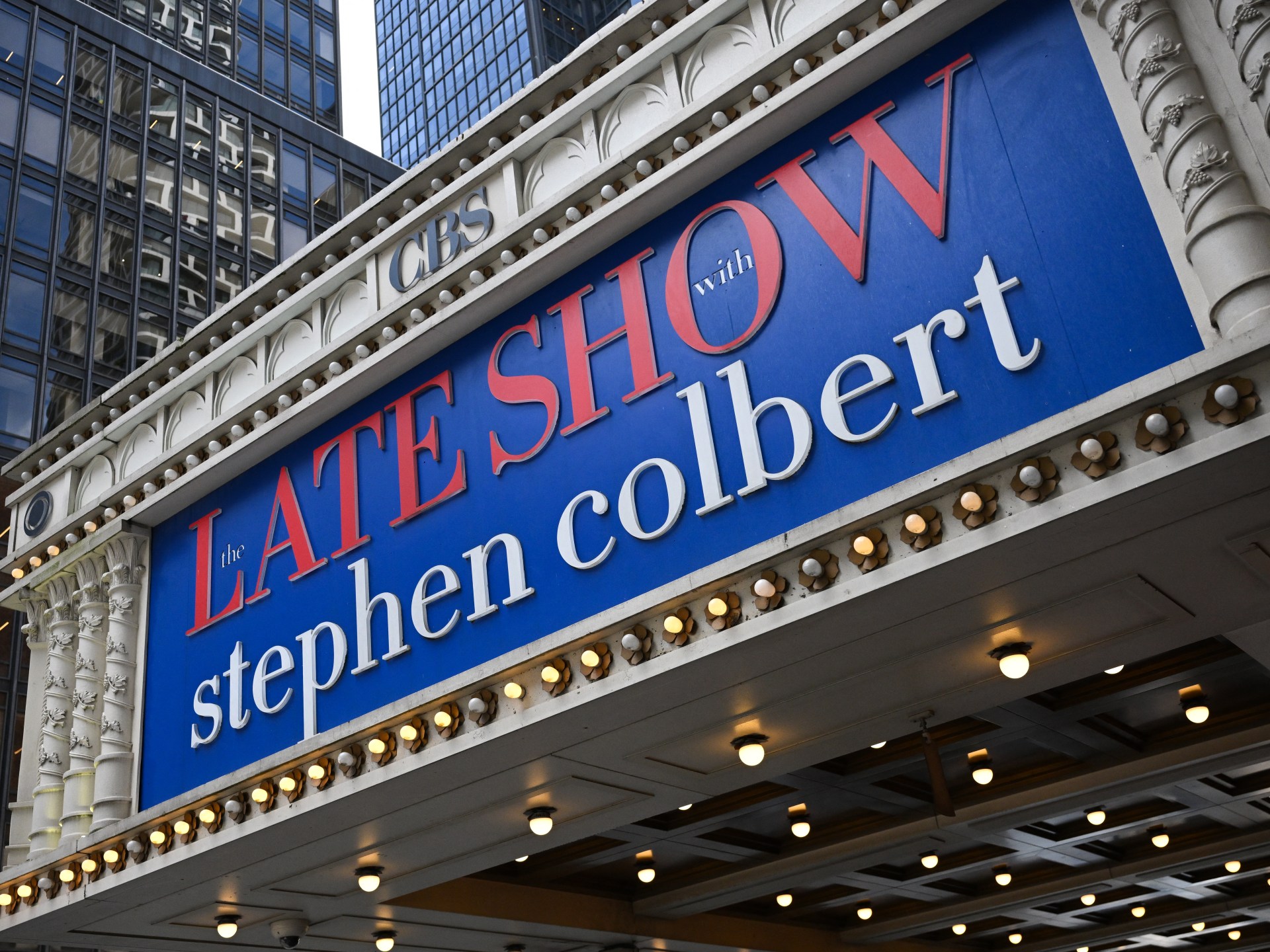
That new interpretation came roaring into the spotlight on Monday, after a broadcast of the CBS comedy programme The Late Show with Stephen Colbert.
In one of his opening segments, Colbert alleged that the network lawyers barred him from airing a planned interview that night with Talarico.
“Let’s just call it what it is,” Colbert told his audience. “Donald Trump’s administration wants to silence anyone who says anything bad about Trump on TV, because all Trump does is watch TV. OK? He’s like a toddler with too much screen time.”
Trump has previously criticised both Colbert’s show and The View for what he considers a left-wing slant.
Instead of broadcasting his interview with Talarico on network television, Colbert instead posted the segment on the programme’s YouTube page, where it has gained more than 6 million views as of 3:30pm Eastern Time (20:30 GMT) on Wednesday.
According to Carr, Colbert’s show could have aired the Talarico interview if it had complied with the equal time rule.
That would have involved allowing other candidates in Texas vying for the Senate seat to come on the show. Carr also suggested that another solution could have been to restrict the broadcast in Texas.
But the FCC has continued to face criticisms for its actions. In Tuesday’s broadcast, Colbert addressed the issue a second time.
He read aloud a statement from his broadcast channel that read, in part, that The Late Show “was not prohibited by CBS from broadcasting the interview” and that it was instead “provided legal guidance that the broadcast could trigger the FCC equal-time rule”.
Advertisement
CBS added, in the statement, that Colbert could have invited onto the show Talarico’s rivals, including fellow Democrat Jasmine Crockett.
“I am well aware that we can book other guests,” Colbert responded. “I didn’t need to be presented with that option. I’ve had Jasmine Crockett on my show twice. I could prove that to you, but the network won’t let me show you her picture without including her opponents.”
Colbert has been a vocal critic of CBS’s parent company, Paramount Global, particularly after it settled a lawsuit last year with the Trump administration for $16m in the run-up to a critical merger for which it needed government approval.
Talarico, meanwhile, accused the FCC of censoring his interviews. Nevertheless, on Wednesday, he noted that the uptick in media attention from the scandal has helped him gather donations.
“Our campaign raised $2.5 million in 24 hours after the FCC banned our Colbert interview,” he wrote on social media.
Related News
Top Iranian security official heads to Oman following nuclear talks with US
New Mexico lawmakers launch probe into Epstein’s Zorro Ranch
Iran suggests it could dilute highly enriched uranium for sanctions relief