IAEA flags damage to Chornobyl nuclear plant’s protective shield in Ukraine
 06 December 2025
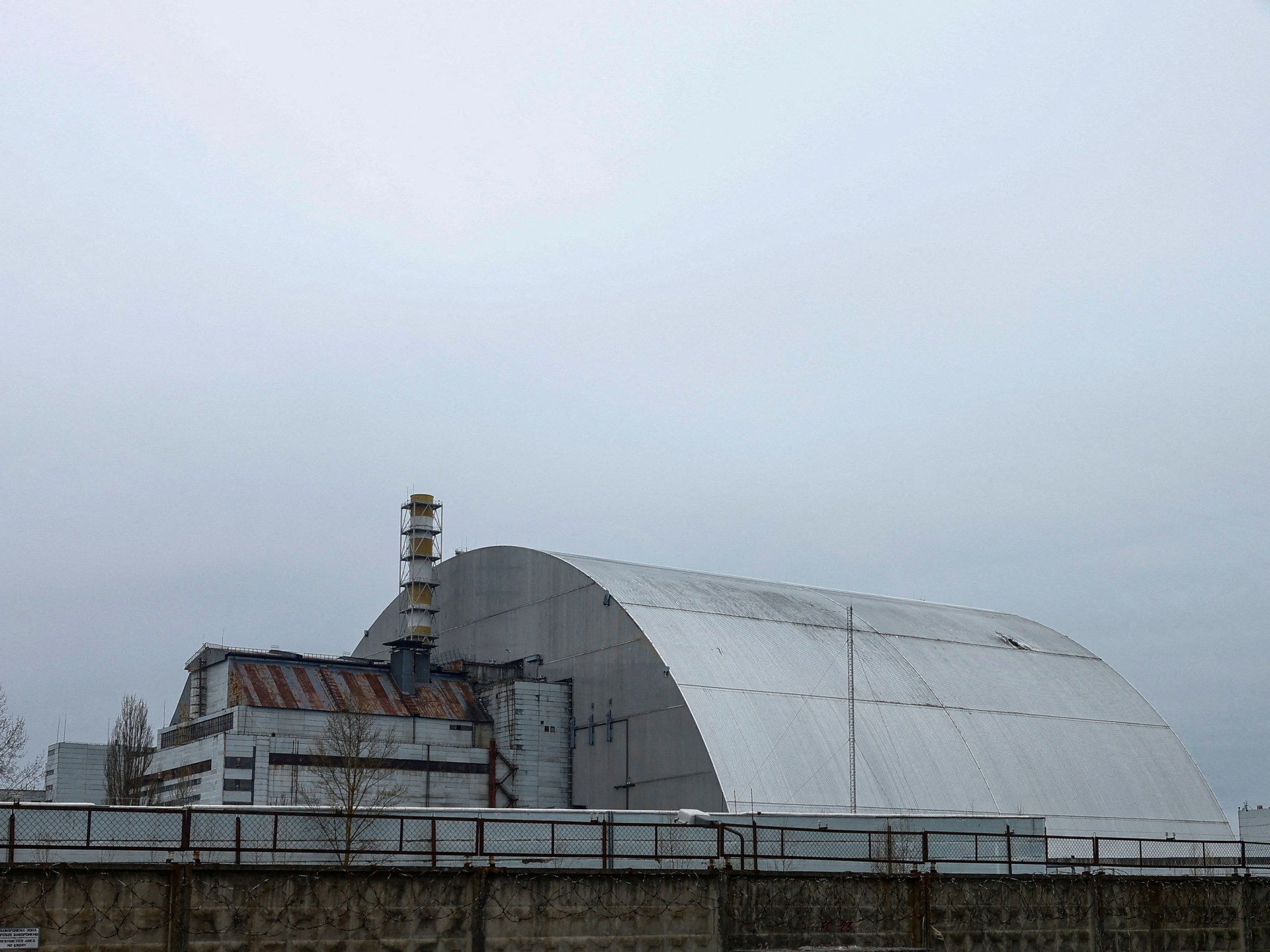

A drone strike has damaged a protective shield at the Chornobyl nuclear plant in Ukraine, rendering it unable to contain the radioactive material from the 1986 explosion of the plant, the United Nations nuclear watchdog said.
The International Atomic Energy Agency (IAEA) said on Friday that the shield can no longer perform its main safety function, following an inspection of the steel structure last week.
- list 1 of 4‘Putin perfectly understands that Ukraine is running out of time’
- list 2 of 4Russia increasingly belligerent as truce talks flounder, Ukraine war rages
- list 3 of 4German president visits WWII UK bombing site amid unity against Russia
- list 4 of 4Russia-Ukraine war: List of key events, day 1,381
end of list
The agency found the drone impact had degraded the shield in February, in a strike Ukraine has accused Russia of carrying out, with the two countries’ ongoing conflict now in its fourth year.
Throughout the war, Russia and Ukraine have accused each other of blocking the rotation of staff from the IAEA at the Zaporizhzhia facility and of risking a potentially devastating nuclear disaster by attacking the site.
IAEA Director General Rafael Grossi said in a statement that the inspection “mission confirmed that the [protective structure] had lost its primary safety functions, including the confinement capability, but also found that there was no permanent damage to its load-bearing structures or monitoring systems”.
Grossi said repairs had already been carried out “but comprehensive restoration remains essential to prevent further degradation and ensure long-term nuclear safety”.
The UN reported on February 14 that Ukrainian authorities said a drone with a high-explosive warhead struck the plant, caused a fire and damaged the protective cladding around reactor number four, which was destroyed in the 1986 Chornobyl explosion.
Advertisement
Ukrainian authorities said the drone was Russian; however, Moscow denied it had attacked the plant.
Radiation levels remained normal and stable, and there had been no reports of radiation leaks, the UN said in February.
The 1986 Chornobyl explosion sent radiation across Europe and prompted Soviet Union authorities to mobilise vast numbers of men and equipment to deal with the accident. The plant’s last working reactor was closed in 2000.
Russia occupied the plant and the surrounding area for more than a month in the first weeks of its February 2022 invasion of Ukraine as its forces initially tried to advance on the Ukrainian capital, Kyiv.
The IAEA had conducted the inspection at the same time as a country-wide survey of damage to electricity substations by the nearly four-year war between Ukraine and Russia.
Russian drone and missile attacks hit energy infrastructure in eight Ukrainian regions overnight, causing blackouts, according to Ukraine’s Energy Ministry.
“Emergency repair work is already underway where safety conditions permit. Energy companies are doing everything possible to restore power to all customers as quickly as possible,” the ministry said on Saturday in a post on Telegram.
On Friday, Ukraine’s national grid operator, Ukrenergo, announced that electricity restrictions would be in place nationwide from Saturday due to Russian attacks on energy facilities.
The attacks occur as the United States has been meeting with officials of both countries, in an effort to usher in a long-awaited ceasefire.
US President Donald Trump’s special envoy Steve Witkoff has been holding talks with Ukraine’s senior negotiator Rustem Umerov in Miami, Florida, after Witkoff met Russian President Vladimir Putin in Moscow earlier this week.
Last month, the US revealed a 28-point proposal to end the Russia-Ukraine war, seen by many as more favourable to Russia’s maximalist demands and war narrative.
The demands for Ukraine to cede territory are red lines for Kyiv and forbidden in the nation’s constitution.
Related News
China cracks down on calls for accountability over deadly Hong Kong blaze

US Senator Chuck Schumer receives bomb threats at three offices in New York

New York Times sues Pentagon over rules limiting access for media