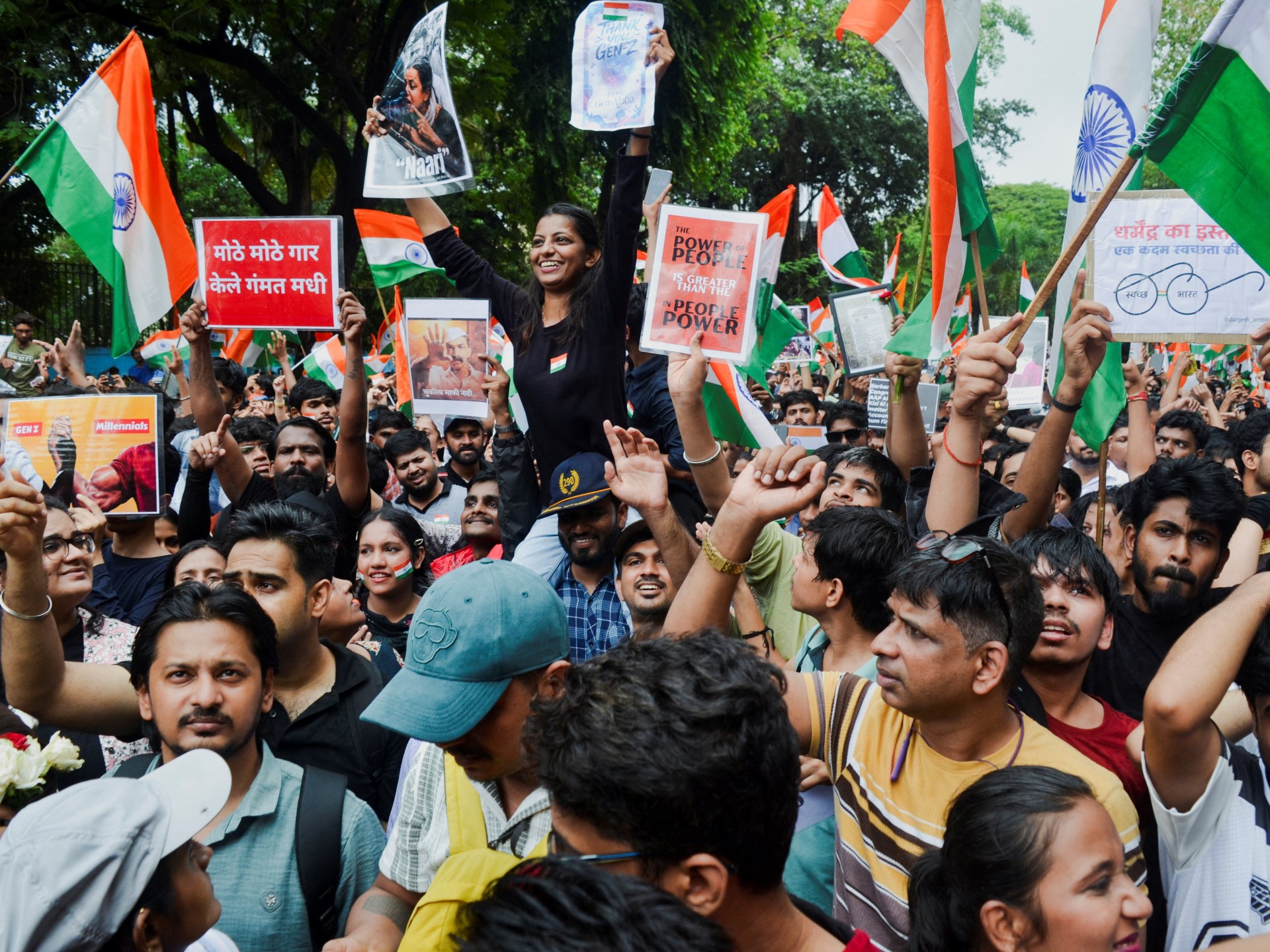

India’s upper house of parliament has passed a bill to increase penalties for leaking examination papers, after youth-led protests called for sweeping reforms and forced the country’s education minister to resign.
The legislation passed on Thursday would double the maximum prison sentence for those involved in paper leaks to 10 years and raise the maximum fine to more than $1m.
- list 1 of 3What next for India’s ‘Cockroach’ movement after education minister sacked
- list 2 of 3How has the Indian government responded to ‘Cockroach’ protests?
- list 3 of 3India’s youth have broken Modi’s spell
end of list
It cleared the lower house a day earlier and was approved by voice vote in the upper chamber after hours of debate.
“This is an issue in which every parent, every family, and indeed every citizen of this country has a stake, because these young children are our greatest investment,” Jitendra Singh, a junior minister who has negotiated with the protesters, told the Rajya Sabha, India’s upper house.
The bill must now be signed into law by President Droupadi Murmu.
Prime Minister Narendra Modi’s cabinet green-lighted the stricter punishments last week.
The parliamentary approvals come after weeks of mass protests over leaked exam papers and other irregularities, which culminated in the resignation of Minister of Education Dharmendra Pradhan on Saturday.
The protests, spearheaded by the online Cockroach Janta Party (CJP) movement, drew massive support from students across the country and presented a major challenge to Modi’s government.
Exam paper leaks have remained a recurring problem in both national and state-level examinations in India, despite repeated government crackdowns.
Indian media reported on Tuesday that the country’s federal investigative agency charged 13 people with a range of crimes relating to the leak of a national medical college entrance test earlier this year. The controversy had helped fuel the youth protests.
Advertisement
Demonstrations against the paper leaks in New Delhi turned violent on July 20 when huge crowds attempted to march towards parliament.
Police fired tear gas and used batons to disperse the protest, triggering clashes and a wave of detentions.
Related News
When atrocities return: The cost of failed accountability in Tigray
Trump imposes 50% US tariffs on some Canadian goods, citing discrimination
First group of US deportees, out of an expected 1,200, arrive in Liberia