Pakistan’s Punjab police kill 900 people in eight months: What’s going on?
 18 February 2026
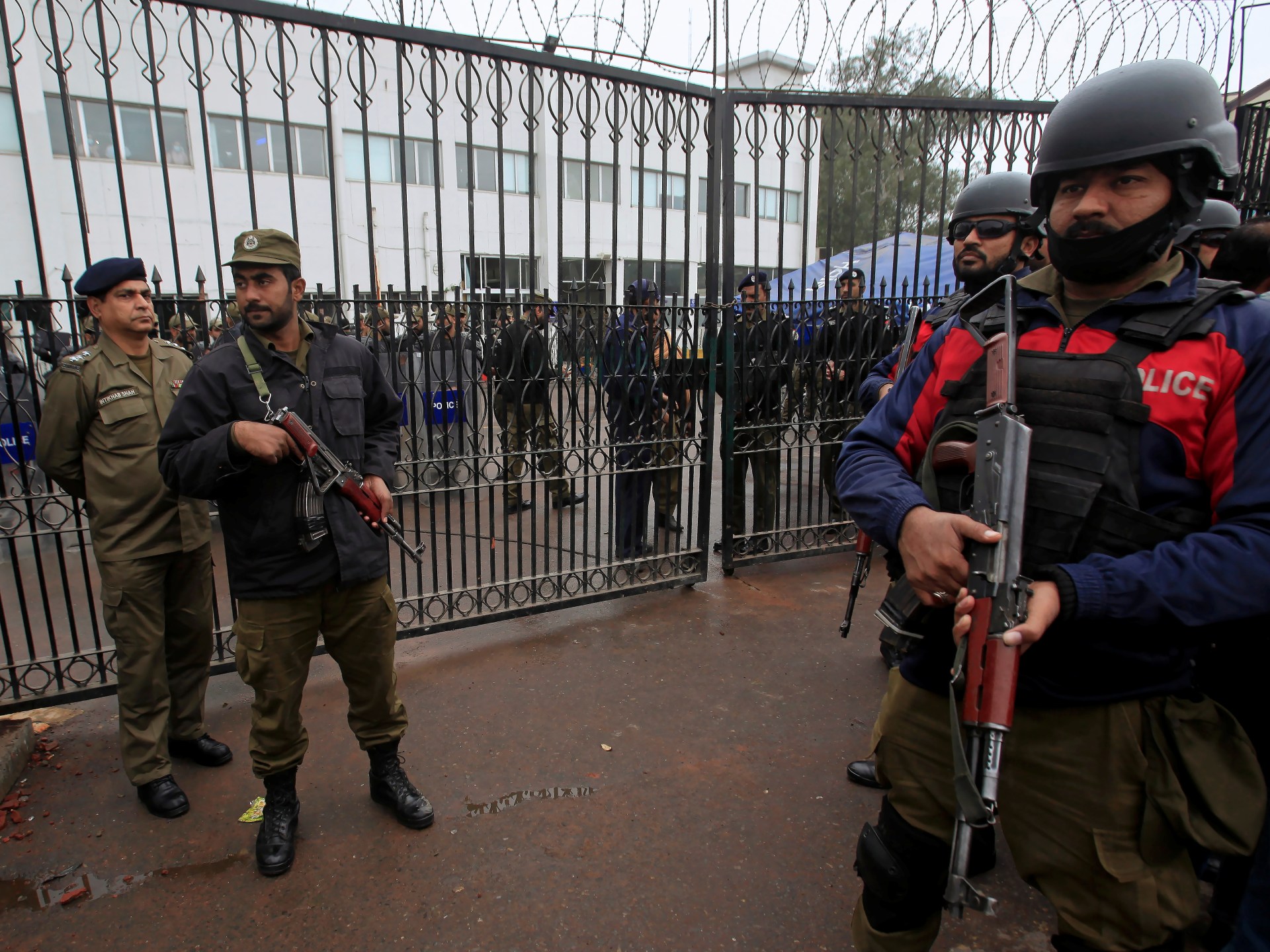

Islamabad, Pakistan – When armed officers from Pakistan’s Crime Control Department raided Zubaida Bibi’s home in Bahawalpur city in southern Punjab province last November, they took everything: mobile phones, cash, gold jewellery and her daughter’s wedding dowry. They also took her sons.
Within 24 hours, five members of her family were dead, killed in separate “police encounters” across different districts of Pakistan’s Punjab – the province that alone is home to more than half of the country’s population.
Her sons Imran, 25, Irfan, 23, and Adnan, 18, along with two sons-in-law, were among them.
“They broke into our house in Bahawalpur and took everything we owned,” Zubaida told a fact-finding mission from Pakistan’s foremost rights group, the Human Rights Commission of Pakistan (HRCP).
“We followed them to Lahore and begged for our sons’ release. The next morning, five of them were dead,” she added.
When she later filed a legal petition, Zubaida says police threatened to kill whoever remained in her family if she did not withdraw it.
Her husband, Abdul Jabbar, insists his sons had no criminal records. “They were working men, married with children,” he said.
The family’s account sits at the centre of an explosive HRCP fact-finding report, published on February 17, which concludes that Punjab’s Crime Control Department (CCD) is pursuing what it calls “a systemic policy of extrajudicial killing in contravention of the law and Constitution”.
The HRCP documented at least 670 “encounters”, resulting in 924 suspected deaths between April 2025, when the unit was formed, and December 2025.
Advertisement
The CCD, formally constituted in April last year, was mandated to combat serious and organised crime.
But the HRCP describes it as a “parallel police force” operating with virtual impunity, linking it to a sharp spike in encounter killings that has ignited debate over the rule of law and the state’s duty to protect the right to life.
Farah Zia, the HRCP’s director, says Punjab was historically where encounter killings first took root in the 1960s, “partly because of an already existing policing culture where there was impunity for torture”.
She said the practice later spread to other provinces. HRCP’s annual State of Human Rights reports document hundreds of police encounters each year elsewhere, particularly in Sindh.
“That the governments choose to apply such short-term, unsustainable and illegal measures to curb crime rather than invest in better forensic investigation techniques, community-based policing and more effective prosecution has not helped matters,” Zia told Al Jazeera.
A new force, a sharp rise
Under the Punjab Chief Minister Maryam Nawaz Sharif, the CCD was established with the stated aim of helping bring to fruition the provincial government’s “Safe Punjab” vision.
It is a specialised force aimed at tackling serious and organised crime, inter-district gangs and hardened offenders whom regular police struggle to combat.
Maryam, daughter of three-time Prime Minister Nawaz Sharif and niece of current Prime Minister Shehbaz Sharif, belongs to the Pakistan Muslim League-Nawaz party.
Within weeks of the CCD’s formation, a sustained rise in police encounters was recorded across Punjab. More than 900 suspects were killed in eight months. In the same period, two police personnel were killed and 36 were injured.
By comparison, HRCP’s annual report for 2024 recorded 341 suspects killed in encounters across Punjab and Sindh combined over the entire year. The CCD, operating in a single province, more than doubled that toll in less than eight months.
The highest concentration of killings occurred in Lahore, with 139 encounters, followed by Faisalabad with 55 and Sheikhupura with 47.
The largest category of suspects killed was those accused of dacoity, armed gang robbery, accounting for 366 deaths. Narcotics-related suspects accounted for 114 deaths, robbery suspects 138, and those accused in murder cases, 99.
A familiar script
Drawing on multiple police reports filed after the killings, the commission describes how a CCD team typically intercepts suspects, almost invariably on motorcycles and described as moving “suspiciously”, typically at night or at a roadblock.
Advertisement
The suspects allegedly react aggressively and open fire first, forcing police to respond in self-defence. During the exchange, the suspects are hit while their accomplices escape, “taking advantage of the dark”.
HRCP notes what it calls “strikingly similar” wording in numerous FIRs, including accounts in which a wounded suspect briefly regains consciousness and, just before dying, volunteers his full name, parentage, home address and criminal history to the officers who have shot him.
The commission found identical phrases appearing across districts, dates and alleged crimes, suggesting “copy-paste structuring rather than incident-specific reporting”.
Official police media releases issued after each encounter and circulated to crime reporters via WhatsApp groups often also reproduce the same sequence almost verbatim, emphasising the deceased’s alleged criminal record while omitting procedural details.
Asad Jamal, a Lahore-based human rights lawyer who has long worked on encounter cases, said the chief minister, Maryam Nawaz, has repeatedly claimed that crime in Punjab has been curtailed, suggesting the approach reflects a policy decision at the highest political level. He expressed scepticism about prospects for accountability.
“They seem to think that if the crime rate is lowered,” Jamal told Al Jazeera, they are justified in resorting to “extrajudicial killings” – instead of improving investigation techniques, better resources for law enforcement and improved intelligence.

What the government and police say
Indeed, in court filings, according to the HRCP, the CCD has claimed its operations reduced property crimes by more than 60 percent in a seven-month comparison with 2024, with dacoity-linked murders down by a similar margin.
The department says it follows an “intelligence-driven policing model” that has dismantled notorious organised gangs.
It has dismissed the HRCP’s concerns, saying the commission lacks evidence of extrajudicial killings.
The HRCP counters that even if crime figures have fallen, the method matters. Whether crime is addressed through investigation, prosecution and a judicial process, or through summary execution, goes to the heart of what kind of state Punjab seeks to be, the commission argues.
The commission says families reported being told to bury their dead immediately, before independent postmortem examinations could take place.
The HRCP said it received no data from Punjab Police after requesting material on encounter procedures, and written requests to meet senior police and provincial officials went unanswered.
Al Jazeera also repeatedly contacted Punjab police officials, including the CCD, as well as Information Minister Azma Bokhari and Senior Minister Marriyum Aurangzeb, but received no replies.
A former senior Punjab police official, who retired in the 2010s, said two main factors drive the rise in encounter killings: an overburdened and often corrupt justice system, and political pressure to demonstrate control over crime.
Advertisement
Court delays and weak prosecutions create “frustration amongst the people and the police, and they start legitimising short cuts like extrajudicial killings”, he said.
“The political government wants to be seen as controlling crime, even violating due process. This approach also encourages police to resort to extrajudicial killings, knowing there won’t be any accountability for such actions,” the official told Al Jazeera on condition of anonymity.
A decade of encounters
The HRCP’s annual reports show nearly 5,000 encounter cases nationwide over the past decade to 2024, with almost 2,000 in Punjab alone.
Between 2020 and 2023, encounter figures in Punjab hovered below 400 annually, suggesting a persistent but relatively stable baseline.
In 2024, however, the number surged to 1,008, more than tripling from the previous year. The latest report records fewer encounters overall but a significantly higher number of fatalities.
The HRCP and independent observers have repeatedly characterised many such incidents as staged or fake encounters, effectively extrajudicial killings in which suspects are executed rather than arrested.
Rida Hosain, a Lahore-based lawyer, said encounter killings and extrajudicial violence are a “relic of colonial control structures and military dictatorships” that treated citizens as subjects rather than rights-bearing individuals entitled to a fair trial and due process.
“The Punjab government frames these measures as a pathway to ‘zero crime’, when in fact it appears to institutionalise another form of criminality: state-sanctioned criminality. Once state-sanctioned violence is normalised, it rarely remains confined to alleged ‘criminals’,” Hosain told Al Jazeera.
“The government may claim that the hundreds killed are ‘criminals’, but guilt must be determined through due process, not summary executions. If this violence goes unquestioned, tomorrow’s targets could be dissidents, even innocent bystanders labelled as ‘criminals’ to justify killing with impunity,” she added.
Related News
Iran’s Khamenei maintains tough rhetoric with US despite nuclear talks

UK pro-Palestinian activists not guilty of aggravated burglary
Danish PM says more Greenland talks due after meeting US’s Marco Rubio