Pro-Palestine activist on hunger strike says he will begin refusing water
 22 January 2026
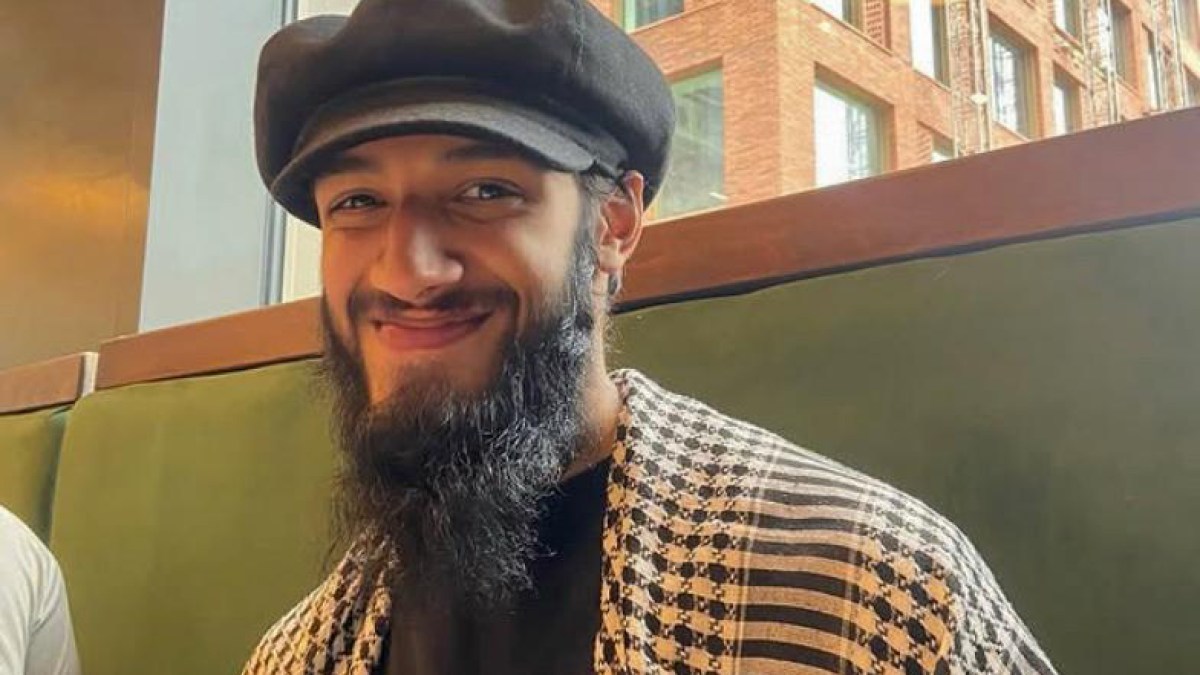

London, United Kingdom – A pro-Palestine activist on hunger strike plans to start refusing fluids as well as food, telling Al Jazeera that he hopes his “drastic action” pressures the government into engaging with his protest demands.
Umer Khalid, a Palestine Action-linked remand prisoner, began refusing food 13 days ago. He is currently receiving fluids with electrolytes, sugars and salts but said he will stop drinking altogether from Saturday.
- list 1 of 4Three Palestine Action activists end UK hunger strike
- list 2 of 4Prison rights, Elbit’s loss: How the Palestine Action hunger strike ‘won’
- list 3 of 4Five pro-Palestinian activists plead not guilty over UK airbase break-in
- list 4 of 4Pal Action prisoner on protest: ‘I no longer feel hunger, I feel pain’
end of list
While the body can survive for weeks without food, dehydration is certain to have fatal consequences in a far shorter time.
The escalation comes days after three other hunger-striking remand prisoners affiliated with Palestine Action ended their protests, claiming victory.
“The only thing that seems to have any impact, whether that is positive or negative, is drastic action,” Khalid, 22, told Al Jazeera from prison via an intermediary. “The strike reflects the severity of this imprisonment. Being in this prison is not living life. Our lives have been paused. The world spins, and we sit in a concrete room. This strike reflects the severity of my demands.”
Khalid is calling for immediate bail; an end to alleged censorship in prison – authorities have been accused of withholding mail, calls and books and denying visitation rights; an inquiry into alleged British involvement in Israeli military operations in Gaza; and the release of surveillance footage from Royal Air Force (RAF) spy flights that flew over Gaza on April 1, 2024, when British aid workers were killed in an Israeli attack.
Advertisement
Brize Norton break-in
Khalid is among five activists accused of breaking into the United Kingdom’s largest airbase, RAF Brize Norton, in Oxfordshire in June and spray-painting two Voyager refuelling and transport planes. The incident, which was claimed by Palestine Action, caused millions of pounds worth of damage, according to the British government, which later proscribed the protest group as a “terrorist” organisation.
Critics have condemned the ban as illiberal overreach, given that Palestine Action’s stated objective is to use nonviolent means to counter Israel’s genocidal war against Palestinians and what it says is British complicity in it.
Khalid denies the charges against him of conspiracy to commit criminal damage and conspiracy to enter a prohibited place for purposes prejudicial to the safety or interests of the UK.
He is part of a collective of eight remand prisoners linked to Palestine Action that began a rolling hunger strike in November. Last week, three of them – two of whom were on the brink of death – ended their protests. Khalid is the only one still refusing food.

Those now refeeding said improved prison rights signalled a concession. The UK’s reported denial of a defence contract to Elbit, Israel’s largest weapons manufacturer, is also being interpreted by them as a win.
Throughout the hunger strike, the British government said it has no power over the issue of bail because it is a matter for the judiciary to decide. The government also insisted that prison welfare procedures are being followed.
As for Khalid’s other demands, last year, the opposition Labour Party blocked a bill tabled by the left-wing lawmaker Jeremy Corbyn backing an official inquiry into Britain’s involvement in the war on Gaza.
And in April, the Ministry of Defence told The Times newspaper that it had video footage from an RAF surveillance plane that had flown over Gaza on the day of the Israeli strike that killed the aid workers but could not disclose any further details, citing national security.
Britain has said it flew spy planes over Gaza during Israel’s onslaught to locate missing captives, but critics have raised questions about possible intelligence sharing with Israel.
Advertisement
Asim Qureshi, research director at the campaign group Cage, told Al Jazeera that the government’s refusal to meet with Khalid to negotiate on his demands “indicates their lack of concern for the life of this man, who is acting based on his principles within the context of a genocide”.
The Ministry of Justice has not commented on Khalid’s imprisonment or demands.
‘I cry myself to sleep’
Khalid’s family and friends told Al Jazeera that they are particularly concerned because he suffers with limb-girdle muscular dystrophy, a condition that causes muscle weakness and wasting.
“I miss him,” his mother, Shabana Khalid, said, fighting back tears. “He’s starting to feel tired.
“My first thoughts when I wake up are with Umer. Some nights, I cry myself to sleep.”
As she herself recovers from cancer and takes care of her disabled sister, travelling to Prison Wormwood Scrubs in London, 320km (200 miles) from the family home in Manchester, is fraught with logistical challenges. She last saw her son on December 26 and does not know when she will be able to visit him next.
She accused Wormwood Scrubs of denying visiting rights, saying she and his friends have applied to the prison to see him but are told there are no appointments for weeks.
“My worries are that he’s going to decline very, very quickly,” she said.
At the time of publication, Wormwood Scrubs had not responded to Al Jazeera’s request for comment.
Umer’s brother Usman, a mechanical engineering graduate, told Al Jazeera: “When Umer says he’s going to do something, he means it with his full sincerity. And as morbid and sad as it might be to say, I think in his own mind he’s prepared to put his life on the line for this cause.”
Usman said that while he supports his brother’s protest demands, “from a slightly selfish and sort of personal perspective, I hope he doesn’t [start refusing water].”
According to the Prisoners for Palestine group, which advocates for the protesters, Umer has asked prison staff “not to intervene in the event he becomes unconscious”.
In December, he ended a 12-day hunger strike due to his declining health.
His mother said that before entering prison, he managed his rare condition carefully with a balanced diet and plenty of exercise.
“Alhamdulillah [Thank God], I am well. I feel very strong both mentally and physically,” Umer said. “I can usually use the prison gym once a week, but I’m not using it during my strike.”
He said he passes the time by praying and reading books.
His trial date is set for January 2027, by which time he will have spent a year and a half in prison – far beyond the standard six-month pre-trial detention limit.
His friend Danyal Osman, 29, told Al Jazeera that he feels “very anxious” but “completely” supports Umer “because we all want him to be free”.
Related News
Israel bombs four Syria-Lebanon border crossings; kills 2 in south Lebanon
India is profiling Kashmir mosques, raising new surveillance fears
What is Chavismo – and is it dead after US abduction of Venezuela’s Maduro?