

By S.Browne. Updated 1:35 p.m., Friday, January 30, 2026, Atlantic Standard Time (GMT-4).
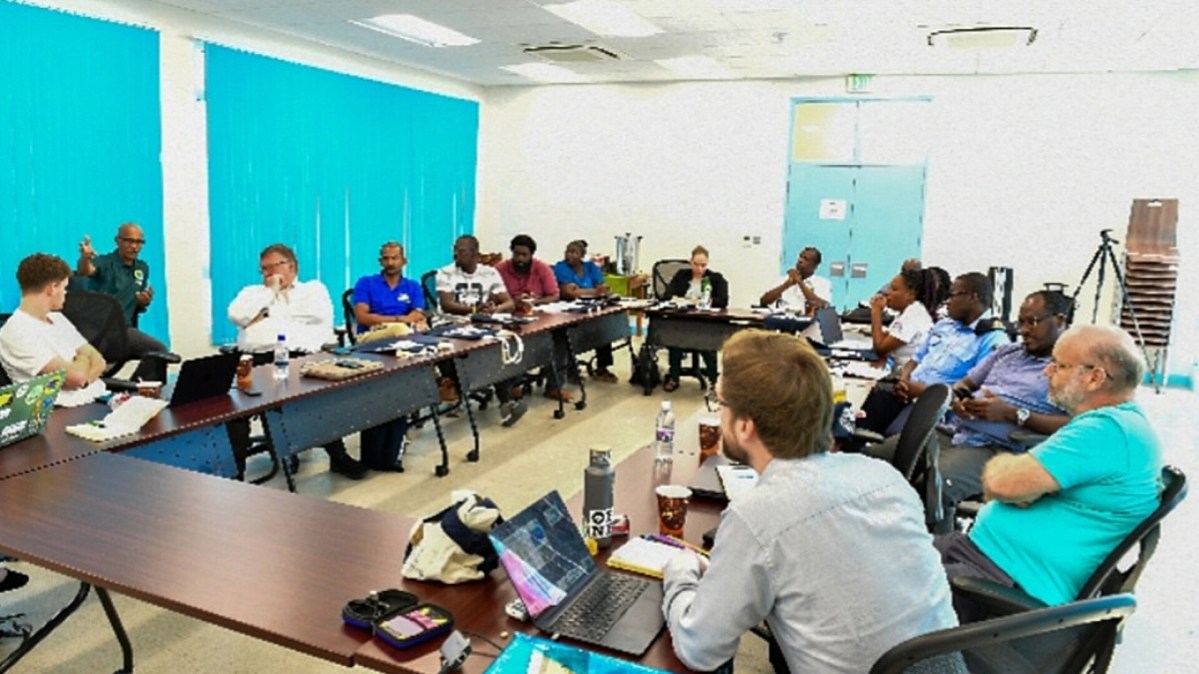
The United Kingdom’s (UK’s) Sustainable Blue Economies Programme (SBE) recently held a workshop at the UWI Global Campus in Kingstown to inform coastal communities about the ongoing impacts of the 2020–21 La Soufrière eruption on the Blue Economy.
The workshop brought together representatives from the National Emergency Management Organisation (NEMO), the Fisheries Division, the National Fisherfolk Organisation, the Coast Guard, Maritime Administration, Physical Planning, National Parks, and the British High Commission. It provided a platform for local agencies and community representatives to share experiences, discuss challenges, and identify next steps for sustainable marine resource management.
During the workshop, it was revealed that UK marine experts from the National Oceanography Centre (NOC), in partnership with researchers from The University of the West Indies Seismic Research Centre (UWI-SRC), NEMO and other government partners, carried out offshore surveys in December 2025 using underwater sonars, robotics and seafloor sediment sampling to map and assess the impacts of volcanic sediment flows. These initial surveys showed up to 25 metres of new material deposited offshore from one river, smothering previously healthy coral reefs, and more than 20 metres of seafloor sediment removed offshore near Wallibou, transported into deeper ocean areas.

The SBE team is exploring practical approaches to post‑eruption marine assessment and recovery by gathering critical data, including seafloor imagery, environmental observations, and community insights. This evidence will help inform future planning and resilience‑building efforts, with additional meetings planned for March 2026.
Commenting on the initiative, Resident British Commissioner to St Vincent and the Grenadines, Geoffrey Patton, said: “We are proud to support St Vincent and the Grenadines in understanding and managing the ongoing impacts of the La Soufrière eruption. Workshops like this are essential for equipping communities and agencies with the knowledge and tools they need to safeguard marine resources and build a resilient Blue Economy.”
Dr Erouscilla Joseph, Director of the UWI‑SRC, noted: “This collaboration reflects the SRC’s commitment to providing the Government of St Vincent and the Grenadines with robust, evidence‑based science to support preparedness, recovery, and long‑term resilience. By improving our understanding of how volcanic processes such as lahars (powerful flows of volcanic sediment) affect coastal and marine environments, the project directly supports national efforts to protect livelihoods and plan for a sustainable Blue Economy.”

The mission’s findings, including datasets, field imagery, and workshop outputs, will now be consolidated to inform the next stage of analysis and future resilience planning.
A follow‑up mission and final meetings are scheduled for March 2026, ensuring continued collaboration and support for national priorities. Fieldwork was enabled by logistical support from NEMO, UWI‑SRC and Richmond Vale Academy.
END
This information was sourced from a press release sent to us by the British High Commission in Kingstown.


Related News
Opposition Leader Declares Himself “Father of the House” After 32 Years
U.S. Embassy in Barbados confirms Immigrant Visa Pause for SVG
Prime Minister Unveils New Ministries and Over 100 Posts in 2026 Budget