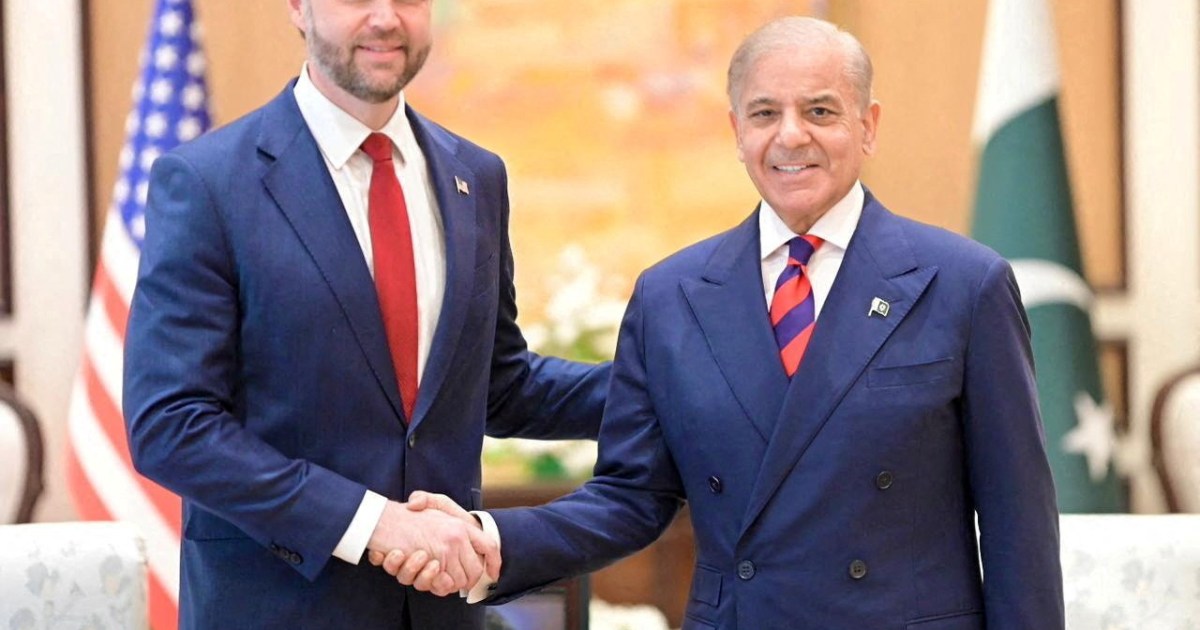

While a peace agreement remains elusive on the 100th day since the US and Israel first launched strikes on Tehran on February 28, the US and Iran have appeared to come close to a deal on several occasions.
The war began with Operation Epic Fury, the joint campaign waged by the United States and Israel against Iran at the end of February. Iran retaliated by attacking both Israel and US military assets in the Gulf.
Armed hostilities largely subsided after the temporary Pakistan-mediated ceasefire began on April 8. Direct talks in Islamabad fell apart on April 12 and the two sides have exchanged a series of proposals for peace via Pakistan since then.
However, several flare ups since have escalated fears that full‑scale fighting could resume.
Here is what happened each time the US and Iran were close to a deal, and why the prospect of peace fell through.
Direct talks in Islamabad
What happened: On April 11 and 12, representatives from the US and Iran met in the Pakistani capital, Islamabad, for the first direct talks between the two sides since the 1979 Islamic revolution in Iran.
The US delegation was led by Vice President JD Vance and included Special Envoy Steve Witkoff and the president’s son-in-law Jared Kushner. Iranian negotiators included Foreign Minister, Abbas Araghchi, Parliament Speaker, Mohammad Bagher Ghalibaf, and Ali Bagheri Kani, a senior member of Iran’s Supreme National Security Council and chief nuclear negotiator.
Ahead of those talks, Ghalibaf publicly stated that for Iran, a ceasefire by Israel in Lebanon and the unfreezing of Iranian assets abroad were non-negotiables for Tehran. Israel has carried out near-daily strikes on Lebanon since March 2, and now occupies about one-fifth of the country, since Iran-backed Hezbollah launched strikes on northern Israel in retaliation for the initial attacks on Tehran.
Advertisement
“This is a make-or-break moment for lasting peace,” Pakistani Prime Minister Shahbaz Sharif said the night before the Islamabad talks.
What went wrong: There had been talk of extending the negotiations into a third day. Iranian officials were reportedly ready to stay, suggesting they wanted to keep talking. The US delegation, however, decided to wrap up. “We have been at it now for 21 hours,” Vance said after the talks. “The good news is that we’ve had substantive discussions. The bad news is that we have not reached an agreement.”
Vance said that while Washington was flexible, Tehran had refused to accept its “final and best offer”.
“We need to see an affirmative commitment that they will not seek a nuclear weapon… not just now, but for the long term,” Vance said. “We haven’t seen that yet.”
Iran’s ambassador in Islamabad deemed the talks “not an event, but a process” which “laid the foundation” for future engagement. However, the US and Iran have not held any direct talks since then.
Iran’s nuclear capabilities have emerged as a major bone of contention between the US and Iran.
Iran is believed to be holding an estimated 440kg (970lb) of uranium enriched to 60 percent, short of the 90 percent required for weapons-grade material, but at the point at which it becomes much quicker to reach 90 percent.
Tehran has said for years that its nuclear programme is for civilian purposes only and it does not intend to build nuclear weapons. But Israel, the US and other Western countries allege that Iran has been preparing to have the capacity to build nuclear weapons.
They argue the 60 percent enrichment level achieved so far is well above what is needed for a civilian nuclear energy programme – between three and five percent enrichment. The US wants this stock of 60 percent enriched uranium to be handed over, but Iran rejects that.
Naysan Rafati, a senior Iran analyst at the International Crisis Group think tank told Al Jazeera that in each instance that the US and Iran have been close to an agreement “there’s been a combination of progress on certain issues, and deadlock on others. So close isn’t good enough – even if there’s 95 percent agreement, the remaining five percent tends to be the hardest.”
Rafati said that when it comes to Iran’s nuclear programme, there are differences on both the substance and sequencing of an agreement.
“Tehran wants to defer the details for subsequent talks, while Washington seeks more clarity from the outset. So it’s a combination of the familiar – Iran’s enriched uranium stockpiles and the future trajectory of its nuclear activity – and the more recent.”
Advertisement
What happened after: Within four days of the ceasefire and the collapse of direct talks, Washington announced a naval blockade of shipping in and out of Iranian ports in a bid to curtail Tehran’s ability to raise revenues from oil sales – a major escalation that undercut any sense of momentum.
Lebanon ‘ceasefire’
What happened: On April 16, Trump announced that Israel and Lebanon had reached a 10-day ceasefire to allow negotiations for a more permanent security and peace agreement to continue. That came after six weeks of fighting between Israel and the Iran-backed Lebanese group, Hezbollah.
The clashes between Israel and Hezbollah have been the most direct, high‑intensity front between Iran’s principal regional ally and a US‑backed army during the war with Iran. Tehran has repeatedly signalled that an end to hostilities in Lebanon is a prerequisite for any broader peace plan. As a result, the Lebanon ceasefire raised hopes that it could open the door to a wider, more durable ceasefire with Iran itself.
Since March 2, more than 3,000 people have been killed in Lebanon, and more than one million have been forced from their homes.
What went wrong: Israel continued strikes on Lebanon despite the “ceasefire”.
The Norwegian Refugee Council (NRC) an independent, humanitarian, non-governmental organisation, estimates that nearly 600 people were killed in the month after the ceasefire was announced.
“There are certain red lines each side has held that proved irreconcilable. And as with any agreement, even if you are able to close gaps between the respective positions, specific points of contention can foil the wider process,” Rafati said.
Iran has maintained that peace in Lebanon is one such red line.
Iran hints it will relax Hormuz restrictions
What happened: The day after the “ceasefire” was announced on April 17, Araghchi wrote in an X post: “In line with the ceasefire in Lebanon, the passage for all commercial vessels through Strait of Hormuz is declared completely open for the remaining period of ceasefire”.
Trump confirmed in a social media post that the strait was “completely open and ready for business and full passage”.
The Strait of Hormuz has also been a major chokepoint in peace talks.
Since early March, Iran has restricted shipping through the strait, the narrow waterway linking Gulf oil producers to the open ocean and through which 20 percent of the world’s oil and liquefied natural gas (LNG) supplies were shipped before the war. Iran has allowed passage by vessels from select countries, but they are required to negotiate transit with the Islamic Revolutionary Guard Corps (IRGC) – with some reportedly paying as much as $2m per ship at one point during the war.
In its previous proposals to end the war, Iran has proposed charging transit fees or tolls. Washington has repeatedly rejected that prospect.
What went wrong: Despite Araghchi’s announcement, Trump announced in a Truth Social post that the US naval blockade of Iranian ports would “remain in full force” until Iran reached a deal with the US to end the war.
Advertisement
Iran rejected that, saying that if its own ships were unable to pass, no others would be allowed to do so. It has since fired at or seized foreign-flagged ships trying to sail through the strait.
“Unlike previous rounds of negotiations, which focused primarily on Iran’s nuclear programme, the war has brought the Strait of Hormuz to the forefront,” Rafati said.
“The Iranians want to maintain some form of influence over the Strait of Hormuz, while the US – and many other governments would agree – seek a return to the pre-war status quo, where navigation was not under threat of fire, and not subject to tolls or service charges,” Rafati said.
“Washington also wants to minimise or avoid a financial reprieve for Tehran, be that in the form of sanctions relief or access to assets, without significant nuclear concessions.”
Trump loses his temper with Netanyahu
What happened: On June 1, Trump had a phone call with Israeli Prime Minister Benjamin Netanyahu about Israel’s latest escalation in southern Lebanon, US news outlet Axios reported, citing two unnamed US officials and a third source briefed on the call.
The day before, Israeli forces captured the strategically important Beaufort Castle and its surrounding ridge close to Nabatieh in southern Lebanon overlooking the Litani River, with views all the way to northern Israel.
Trump’s call to Netanyahu also came after Iran threatened to abandon negotiations over Israel’s continued attacks on Lebanon. The sources told Axios that Trump accused Netanyahu of ingratitude and called the Israeli PM “crazy”.
This sparked hopes that Trump might finally threaten to withdraw support for Israel and force it to cease attacks on Lebanon.
What went wrong: While Axios cited an unnamed Israeli source saying that Israel planned to cease its attacks on Lebanon, the attacks nevertheless continued.
On Friday, Israel struck the Naqoura area, despite the announcement of yet another US-brokered conditional ceasefire on Thursday. Lebanon’s National News Agency (NNA) has reported that an Israeli air raid overnight on a building in the town of Doueir, in the Nabatieh district of southern Lebanon, killed one person. The Israeli military also issued forced displacement orders for Aarnaya, Aanqoun and Kfar Kila, three villages and towns in southern Lebanon.
Related News
Cuba thanks China for rice shipment amid worsening humanitarian conditions
Israeli air attack kills at least two in southern Lebanon

‘I was actually depressed’: France tries to deport immigrant students