
Goma, Democratic Republic of the Congo – Between the border posts linking Goma and the Rwandan town of Gisenyi, at Petite Barrière, stands a wooden hut that was once crowded with traders and travellers moving back and forth each day.
Now it stands empty.
A few dozen metres away, a sentry box painted in the colours of the Democratic Republic of the Congo (DRC) overlooks a border that has long sustained thousands of livelihoods. Across the frontier, another painted green box marks the entrance to Gisenyi.
Since authorities announced a confirmed Ebola case in Goma on May 16, the crossing has been closed, cutting off a vital trade route for thousands of people whose livelihoods depend on moving between the two cities.
Many residents say they were turned back on May 17 as they attempted to enter Rwanda.
Among them was Murielle Ihora, a mother of three who makes a living selling tomatoes.
She recalls waking before dawn, hoping to buy fresh produce in Rwanda at prices low enough to turn a profit back in Goma.
“On May 17, with my two baskets, I was getting ready to cross into Rwanda to buy some tomatoes to resell here in Goma. On my arrival, I was told that the crossing had been suspended by the Rwandan authorities,” she recalls.
Unable to continue her usual trade, Ihora now travels to neighbouring villages, including Minova, about 30km southwest of Goma in South Kivu province, to source her stock.
Her experience is increasingly common in a city where cross-border commerce sustains countless households.
Advertisement
According to World Bank estimates from 2015, between 20,000 and 30,000 people crossed the Petite Barriere border post in Goma every day, many of them engaged in small-scale trade. For many residents of Goma and Gisenyi, the border underpins daily trade and household incomes.
Public health versus livelihoods
As Ebola continues to affect parts of the DRC, neighbouring countries, including Rwanda and Uganda, have introduced measures to prevent the virus from crossing their borders.
Rwanda imposed health restrictions, including barring entry to foreign travellers who had been in the DRC in the previous 30 days.
Yet some health experts question whether border closures are an effective response.
Last month, the director general of the World Health Organization (WHO) reiterated that the agency does not recommend closing borders during Ebola outbreaks, arguing that such measures are ineffective and can cause significant harm.
Dr Elie Bajo, a health policy analyst, says movement restrictions may be considered during outbreaks as part of efforts to limit transmission, but argues that surveillance remains the most effective tool.
“In the event of an epidemic, there is what is known as surveillance, which is carried out in several ways. This takes place mainly at points of entry and checkpoints. It’s like airports, roadblocks and other border crossings,” he told Al Jazeera.
He shares the WHO’s view that monitoring and screening travellers is more effective than shutting borders altogether.
For traders in Goma, however, the debate is not only about public health. It is also about survival.
‘We no longer have enough to survive’
Furaha Kiza, 45, supports six children through a small lemon-selling business. The closure has sharply reduced her income.
“Since the borders were closed, we’ve had nothing to do. When the border was open, we used to cross over ourselves to collect parcels of our choice, which we would then sell here,” she says.
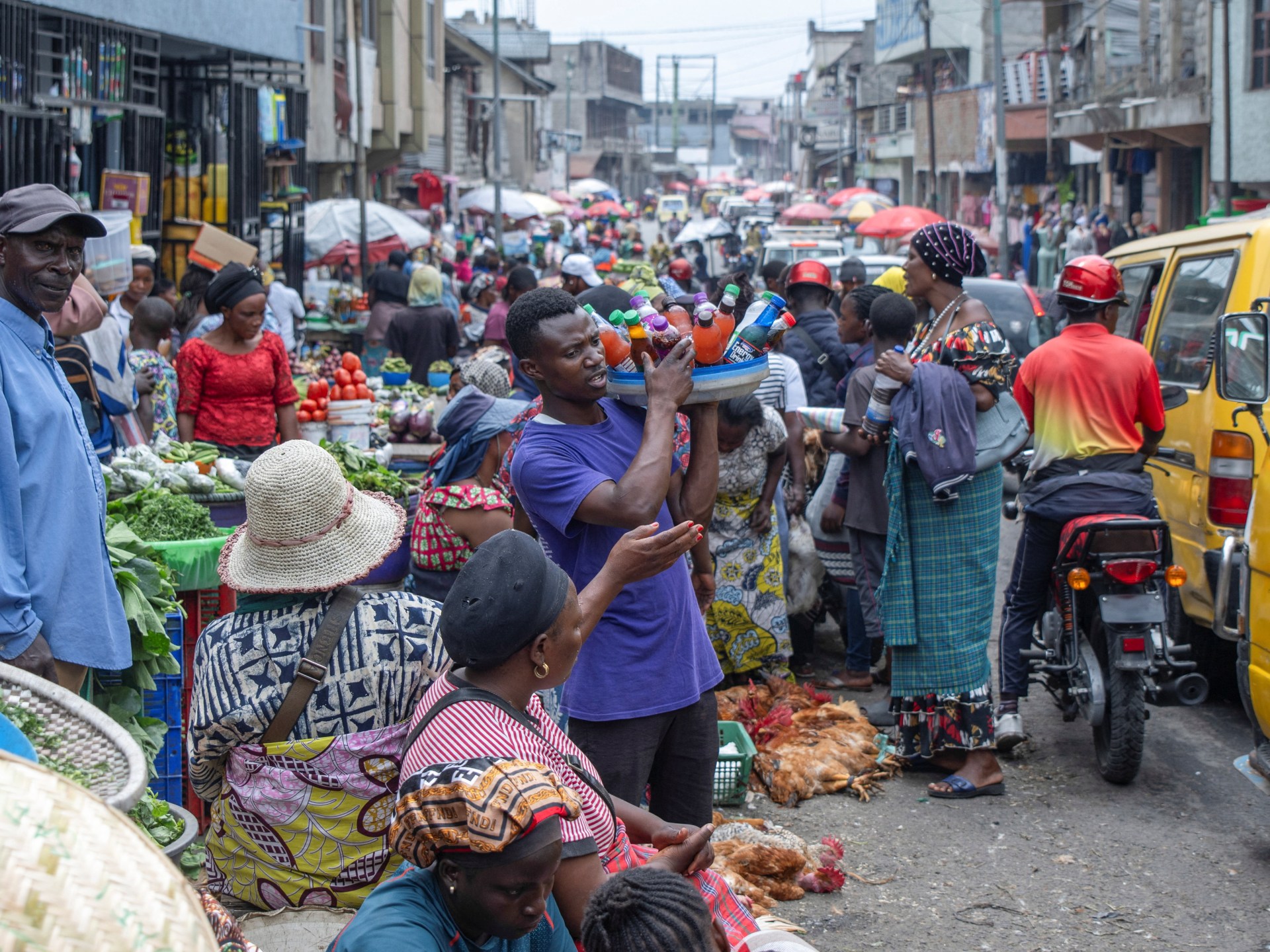
Across Birere Market, traders say sales have fallen sharply since the closure.
Fatuma Mapendo, 32, buys peppers in Rwanda before reselling them in Goma. Since the closure, she says, maintaining her business has become increasingly difficult.
“I buy peppers wholesale in Rwanda to resell them. These days, sometimes I find something to sell, and sometimes nothing at all. I would have preferred to follow the safety measures to the letter rather than have the border closed,” she told Al Jazeera.
Gustave Bolingo, an economic analyst based in Goma, says the restrictions have dealt a heavy blow to communities that were already struggling.
Advertisement
“The epidemic struck without warning. Unfortunately, its arrival is undermining the livelihoods of many families who trade between our respective towns. In the town of Goma, which is already economically vulnerable without a bank or an airport, closing the borders has serious consequences.”
Calls for the border to reopen have grown louder from authorities in M23-controlled areas.
Leaders of the M23 armed group, which controls large swaths of eastern DRC, say there are no confirmed Ebola cases in areas under their control.
“In total, we have had only four cases: One death and three recoveries. And today we have no active cases. Let us remain on alert,” said Dr Freddy Kaniki, head of the Ebola Response Task Force within the armed group, on his X account.
For traders waiting at the closed border, however, the debate is less about outbreak statistics than about when they will be able to earn a living again.
Associations representing small traders say they are continuing talks with both the Rwandan authorities and the AFC-M23 authorities in Goma in the hope of easing restrictions.
Among those involved is Rocky Ngelema Tshomba, head of the Tuungane Organisation for People with Physical Disabilities, which brings together small cross-border traders living with disabilities who work on both sides of the frontier.
“The most important thing is that we start to cross. We no longer have enough to survive on. Let’s hope that an agreement can be reached, and we are ready to comply with the protective measures against Ebola.”
Related News
Brazil intercepts 108 Cuban immigrants amid growing asylum applications

US judge orders release of Palestinian rights advocate detained by ICE
US-Iran to sign a ‘peace deal’ on Friday: What we know so far