Trump ordered to testify in $10bn BBC lawsuit discovery: What happens now?
 23 October 2026
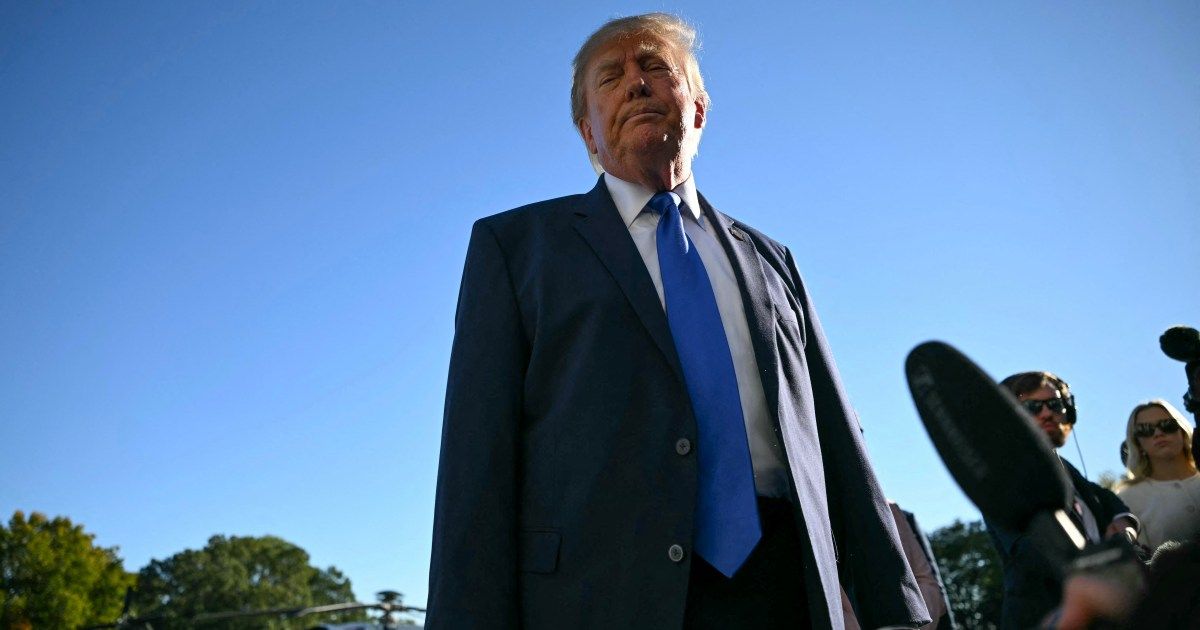

United States President Donald Trump must answer questions under oath in the discovery stage of his $10bn lawsuit against the BBC, a federal judge has ruled, warning that failure to cooperate could lead to the dismissal of his case.
The dispute centres on a BBC documentary which combined separate excerpts from a speech he gave before the January 6, 2021 attack on the US Capitol.
- list 1 of 4New electronics reach Iran, but prices soar as gov’t fees, US sanctions hit
- list 2 of 4South Korea invites North for military talks over border
- list 3 of 4France tightens security in anticipation of weekend protests
- list 4 of 4Saudi Arabia security puts Asian Cup in doubt: Japan football chief
end of list
The broadcaster has apologised for the edit but denies that Trump has grounds for a defamation claim. Here is what the ruling means and how the case reached this point.
What has the judge ordered?
Trump has been ordered to make himself available for questioning by the BBC’s lawyers by December 11, unless the judge overseeing the case extends the time frame for gathering evidence. That process is currently scheduled to end on December 18.
The ruling comes after the president’s legal team sought to postpone questioning until January. Judge Enjolique Lett also rejected his lawyers’ attempt to prevent the session from being filmed. Access to the recording will initially be restricted to lawyers involved in the case.
Separately, she gave Trump’s side 30 days to hand over relevant documents requested by the BBC.
What is a deposition?
A deposition is a formal interview under oath, usually conducted outside the courtroom before a trial. Lawyers question a witness and the answers are recorded in a transcript. The testimony can later be used in court, including to challenge a witness whose account changes.
It forms part of “discovery” – the stage of a US civil lawsuit in which both sides are given time to obtain relevant evidence through examining documents, submitting written questions and taking witness testimony. The process allows each side to examine the other’s claims and prepare its case.
Advertisement
Trump’s deposition is expected to last up to seven hours.
Why is Trump suing the BBC?
Trump filed his lawsuit against the British broadcaster in federal court in Florida on December 15, 2025, over a Panorama documentary which was broadcast shortly before the 2024 US presidential election.
His complaint seeks at least $5bn for alleged defamation and another $5bn for alleged violations of Florida’s Deceptive and Unfair Trade Practices Act. He alleges that the programme damaged his reputation and business interests by falsely portraying him as directly encouraging violence at the Capitol.
The BBC, which has apologised for the way the programme was edited, however, disputes those allegations and has sought to have the case dismissed. It also challenges the Florida court’s jurisdiction, arguing that the documentary was produced in London and was never broadcast in the US.
Trump’s lawyers contend that viewers in Florida could have accessed the programme through BritBox or by using a virtual private network (VPN), which can disguise a user’s location. The BBC says the documentary was not available on BritBox International or its international website.
How was Trump’s speech edited?
The documentary combined remarks from separate sections of Trump’s January 6 speech into what appeared to be a continuous statement: “We’re going to walk down to the Capitol and I’ll be there with you… And we fight. We fight like hell and if you don’t fight like hell, you’re not going to have a country anymore.”
Two quotes that make up the excerpt used by the BBC were delivered roughly 54 minutes apart. The programme also left out his appeal for supporters to “peacefully and patriotically make your voices heard”, Trump’s lawyers say.
The BBC acknowledged that the edit created the mistaken impression that Trump had made a direct call for violent action. It apologised, while rejecting his demand for compensation and denying a legal basis for the defamation claim.
The controversy was followed by the resignations of BBC director-general Tim Davie and its news chief, Deborah Turness.
Trump has also suggested, without evidence, that artificial intelligence was used to put words into his speech.
Why has the deposition been delayed?
Trump had agreed to be questioned on October 16, but his lawyers cancelled that date, citing a matter of national importance.
Trump’s lawyers subsequently proposed dates between January 11 and 22 of next year.
At Thursday’s hearing, BBC lawyer Charles Tobin said Trump had instead been campaigning in Georgia and asked the court to compel Trump to attend the deposition sooner, arguing that waiting until January would push the questioning beyond the existing deadline for gathering evidence.
Advertisement
Lett upheld the BBC’s complaint that Trump’s team had been too slow to hand over internal documents. Charles Tobin, on behalf of the BBC, told the Miami court: “We still have a completely lopsided [situation] here on discovery. They have produced absolutely nothing of any substance”.
What happens if Trump does not comply?
Lett warned that failure to cooperate could lead to sanctions, including dismissal of the lawsuit altogether. That would mean Trump’s own attempt to recover damages could end because he would have failed to fulfil his obligations as the person bringing the case.
Under federal civil procedure rules, discovery sanctions can also include ordering a party to pay legal expenses caused by noncompliance, preventing it from introducing certain evidence or striking out parts of its case. These are possible penalties, rather than sanctions already imposed on Trump.
Related News
Republican senator says Trump diesel agreement with Russia may be illegal
US seeking to revive Russia-Ukraine ceasefire talks
Iran says seven ships hit in Hormuz Strait, warns US of wider response