


By S.Browne. Updated 6:05 p.m., Tuesday, July 21, 2026, Atlantic Standard Time (GMT-4).
Parliament has approved legislation to provide compassionate gratuity to eligible daily-paid and minor salaried public officers upon retirement or death in service, creating a formal framework for a benefit Government says will provide greater certainty for thousands of eligible workers across St. Vincent and the Grenadines.
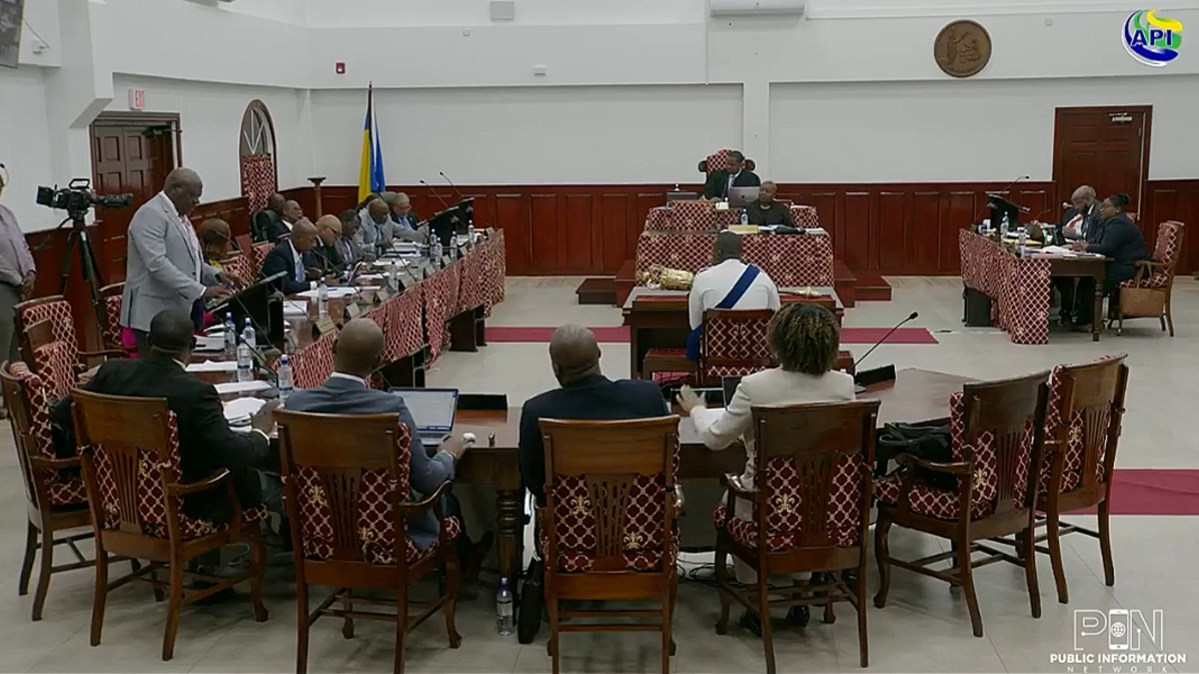
The Compassionate Gratuity for Daily and Minor Salaried Officers Bill was passed in the House of Assembly on Tuesday, July 21, 2026, following debate among Government and Opposition members, who largely supported the measure while raising concerns about some provisions.
Deputy Prime Minister St. Clair Leacock, who has responsibility for the Public Service, said the legislation represents Government’s effort to recognise the contribution of workers who have served the country but do not receive a pension from the public service.
“This very important bill before this House is the opportunity for this government to walk the talk,” Leacock said during the debate.
Leacock said the bill could benefit nearly 4,000 workers, including persons in lower-paid categories of the public service.
According to the Deputy Prime Minister, the legislation applies to grades M and L in the civil service, grades 1 and 2, daily-paid workers and other eligible categories.
He explained that the bill provides for compassionate gratuity for eligible officers who retire, while also allowing qualifying workers the option to continue working up to age 65.
Leacock said the measure addresses concerns faced by workers who retire at age 60 and may still have significant financial responsibilities.
“At 60, a lot of people still finishing their mortgages, still fighting with mortgage payments,” Leacock said, noting that many workers continue to face financial commitments and health challenges at retirement age.
The bill provides for payments from the Consolidated Fund and establishes timelines for payments after approval. It also allows eligible officers to nominate a designated beneficiary to receive the gratuity in the event of death while in service.
Leacock said the beneficiary provision was intended to reduce difficulties families may face when accessing benefits after the death of a worker.
Minister of Housing, Land Management, Urban Development and Informal Settlement Upgrading, Andrew John, described the legislation as an important step in addressing longstanding concerns among non-pensionable workers.
John said the issue had been raised by workers and unions over many years.
“This is what a government look like. This is what a government must do for its people,” John said while supporting the bill.
He highlighted the challenges faced by some non-pensionable teachers and other public officers who reached retirement age without the same benefits available to pensionable employees.
The Opposition supported the legislation but called for additional safeguards.
Opposition Leader Ralph Gonsalves said the bill was significant because it formalises an existing practice of granting compassionate gratuities to non-pensionable workers.
“This bill does two things. In one respect, it codifies existing practice of 25 years or more. And secondly, in this bill, in some respects, it improves on existing practice,” Gonsalves said.
However, he argued that some provisions should be reconsidered, including the seven-year service requirement and the absence of an appeals process for workers who believe a gratuity has been unfairly reduced or withheld.
Gonsalves also cautioned that the gratuity should not be confused with a pension.
“I don’t want persons who are listening to go away with the feeling that this is giving them pension. This is not giving pension. This is a compassionate handshake of gratuity,” he said.
Senator Keisal Peters also supported the legislation but raised concerns about ministerial discretion and the lack of a formal appeal mechanism.
She said workers should have a clear process to challenge decisions relating to the reduction or withholding of gratuities.
“Without those safeguards this issue can be open to abuse,” Peters said.
Senator Carlos James similarly supported the bill while arguing that an appeals mechanism should be included to protect workers and beneficiaries.
The Government maintained that the legislation would provide greater certainty for workers by moving the process from an administrative practice to a legal framework.
Minister of Health, Wellness, Environmental Health and Energy, Daniel Cummings, said the bill was particularly important for categories of workers who are essential to public services but are sometimes overlooked.
He highlighted workers including hospital attendants, auxiliary nurses, ambulance drivers, sanitation workers and vector control officers.
“This bill seeks not just to make the repayments offered to public servants post-retirement, not just to make it automatic, but it goes beyond that to recognise these people as being bona fide, genuine employees whose service is worthy of recognition,” Cummings said.
The legislation applies specifically to eligible daily-paid and minor salaried officers employed by the Government and does not extend to workers in statutory entities.
It provides for compassionate gratuity calculated at two weeks’ pay for each year of service, with payments expected within three months of approval in cases of retirement and within six months of approval where a worker dies in service.
The passage of the legislation means eligible non-pensionable public workers now have a defined legal framework governing compassionate gratuity payments, replacing a process that was previously handled through administrative approval.
END

Related News
SVG Health officials warn of rising HIV cases among young adults and older men, Continue r...

He Didn’t Want to Attend. Now He’s One of NTRC’s MyApp Valedictorians

Here is the preliminary list of SVG’s homicides so far for 2026