Yemeni province launches operation to take bases back from separatist STC
 02 January 2026
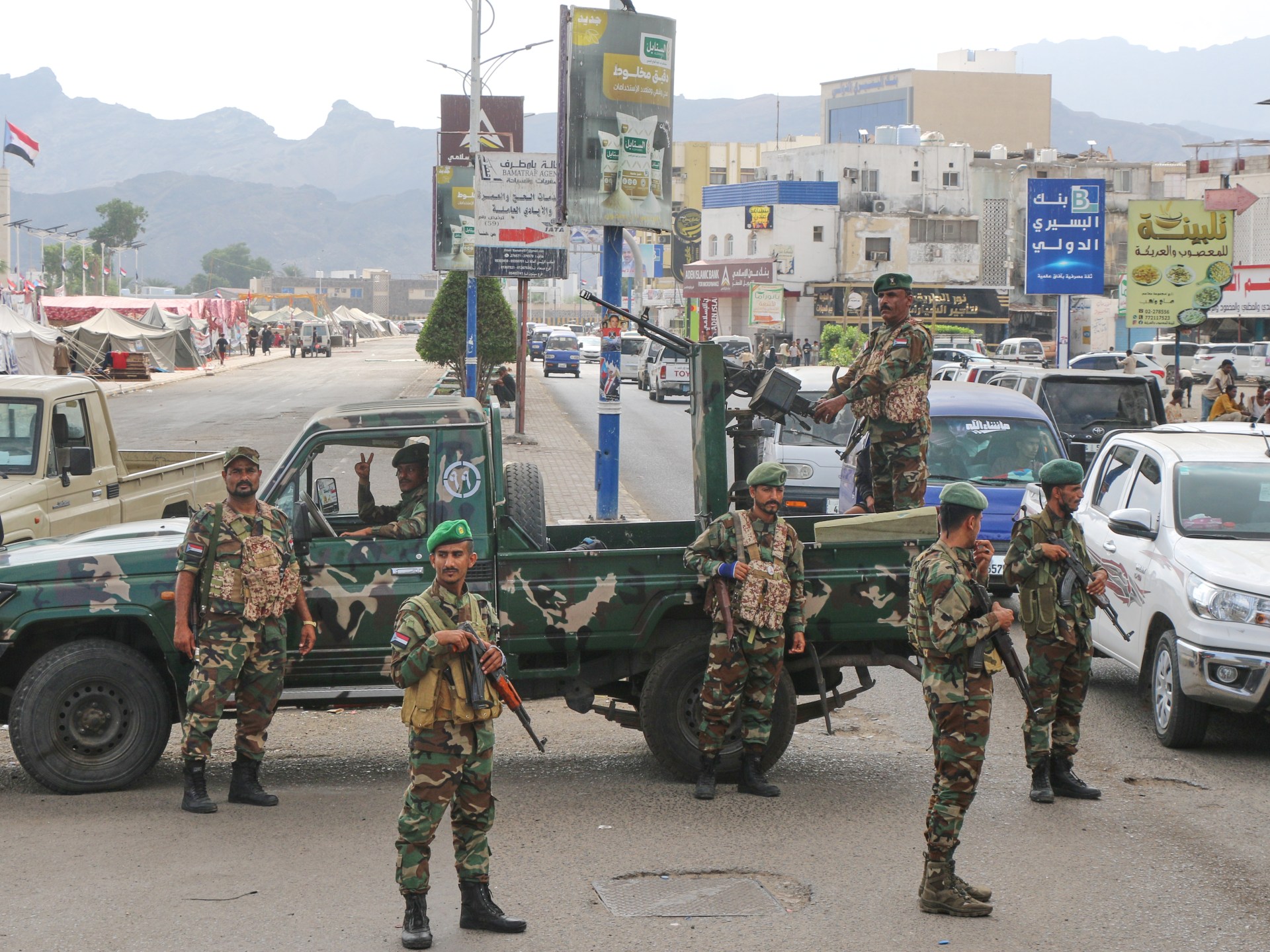

The Saudi-backed governor of Yemen’s Hadramout province has announced the launch of an operation to “peacefully” take back military positions from the separatist Southern Transitional Council (STC), stressing that the actions were not a declaration of war.
Salem al-Khanbashi said on Friday that the “Operation to Take Over Camps” would aim to “peacefully and systematically” take over military sites in Yemen’s southern province.
- list 1 of 3What led to Saudi Arabia’s strike on Yemen?
- list 2 of 3Saudi-UAE fallout and its impact on Yemen’s recognised government
- list 3 of 3What is behind the Saudi-UAE rupture in Yemen?
end of list
“The operation is not a declaration of war or an escalation, but rather a precautionary measure to protect security and prevent chaos,” he said in a statement.
The announcement comes after Yemen’s Saudi-backed government said it had appointed al-Khanbashi to take overall command of the National Shield forces in the eastern province, granting him full military, security and administrative authority in what it said was a move to restore security and order.
The STC did not immediately respond to al-Khanbashi’s declaration.
Saudi Arabia and the internationally recognised Yemeni government that it backs have accused the United Arab Emirates of arming the STC and pushing it to seize parts of the Hadramout and al-Mahra provinces in southern Yemen last month. Riyadh has warned that it views the STC’s growing presence in these provinces — which border Saudi Arabia — as a threat to its national security. The UAE has rejected these allegations and said that it is committed to Saudi Arabia’s security.
Al Jazeera’s Mohammed Al Attab, reporting from Sanaa, said fighting was reported to be taking place on Friday in positions where STC forces are located along the Saudi border.
Advertisement
“We are still waiting for confirmation about what is going on there,” Al Attab said, adding that the latest information available from the area suggested the STC had maintained control of its positions.
Last week, the UAE said it was pulling its remaining forces out of Yemen after Saudi Arabia backed a call for its forces to leave within 24 hours.
Saudi Arabia, the UAE and the STC are all part of a military coalition that Riyadh pulled together a decade ago to confront the Houthis. But the STC’s increasingly aggressive secessionist acts, and allegations that the UAE is assisting the group, have fostered tensions within the coalition.
The head of the Saudi-backed Presidential Leadership Council, Rashad al-Alimi, warned against any attempt to oppose the government’s decisions to prevent the country from sliding into a new cycle of violence.
“The decision to end the Emirati military presence came within the framework of correcting the course of the [coalition] and in coordination with its joint leadership, and in a way that ensures the cessation of any support for elements outside the state,” al-Alimi said in a statement.
The STC has insisted its fighters will remain in place in the southern provinces that Saudi Arabia and the official Yemeni government want them to withdraw from.
On Friday, Saudi Arabia’s ambassador to Yemen blamed STC leader Aidarus al-Zubaidi for refusing to grant landing permission the previous day for a plane carrying a Saudi delegation to Aden.
“For several weeks and until yesterday, the Kingdom sought to make all efforts with the Southern Transitional Council to end the escalation … but it faced continuous rejection and stubbornness from Aidarus Al-Zubaidi,” the Saudi ambassador, Mohammed Al-Jaber, said on X.
A halt in flights at Aden International Airport on Thursday continued into Friday as both sides traded blame as to who was responsible for the air traffic shutdown.
In a statement on Thursday, the STC-controlled Transport Ministry accused Saudi Arabia of imposing an air blockade, saying Riyadh required all flights to go via Saudi Arabia for extra checks. A Saudi Arabian source, however, denied the allegation, saying Yemen’s internationally recognised government, led by the Presidential Leadership Council, was behind the requirement for UAE-bound flights to land for inspection in Jeddah.
Yemeni presidential adviser Thabet al-Ahmadi confirmed to Al Jazeera that it had imposed a requirement that applied to one flight route departing from Aden airport. He said the move was meant to prevent STC money smuggling.
Related News
US seizes second oil vessel off Venezuela coast, officials say
US President Trump says Russia-Ukraine truce talks in ‘final stages’

At least seven dead, dozens missing as migrant boat capsizes off The Gambia