Roots to Reef camp equips Union Island youth to lead future of seamoss industry
 07 September 2026



By Admin. Updated 10:10 a.m., Monday, September 7, 2026, Atlantic Standard Time (GMT-4).
The next generation of Union Island’s environmental stewards and seamoss entrepreneurs took centre stage last month as 32 young people completed a three-day programme aimed at strengthening coastal resilience, preserving cultural heritage and building opportunities within the island’s growing blue economy.
The Roots to Reef Youth Camp 2026, organised by the SeaMoss Association of St. Vincent and the Grenadines (SMASVG) with funding from the St. Vincent and the Grenadines Conservation Fund (SVGCF), was held on Union Island from August 19 to 21.
The initiative formed part of the project Empowering Youth for Coastal Resilience: Cultural and Environmental Education through Seamoss Farming. Throughout the camp, participants explored seamoss cultivation, marine and coastal conservation, food safety, entrepreneurship, value-added product development and the island’s cultural traditions.

SMASVG Executive Director Shavorn Stephens said the programme was deliberately designed to expose participants to the people, knowledge and experiences already present within their own community.
“Throughout the three days, we wanted the young people to connect what they were learning to real people, businesses and experiences within their own community,” Stephens said. “It was important for them to hear different perspectives, ask questions and understand that there are many roles they can play in the future of this industry.”
Participants also heard firsthand from experienced members of the local seamoss sector, including Leopold and Hulda Tash, Falco Martin, Phillisica Dember, Ann Harvey, Troy Gellizeau, Mark Bracken and Kathlyn Weekes, who shared insights into cultivation, entrepreneurship, family involvement and the industry’s development over the years.


Environmental education featured prominently throughout the programme. Falco Martin led sessions on coral reef restoration, coastal protection and ocean conservation, emphasising that the long-term success of seamoss farming depends on healthy marine ecosystems.
Organisers encouraged participants to see themselves as future environmental champions capable of protecting the natural resources that support their communities and livelihoods.
The camp also celebrated Union Island’s cultural heritage. Teacher Anthony Alexander of Union Island Secondary School led participants in Big Drum activities, while Principal Alex Smith facilitated the use of the school’s classrooms and Home Economics Centre. SMASVG said the partnership has opened the door for continued engagement through a proposed Environmental Club at the school.
Project Lead Ronita Ollivierre said preserving knowledge across generations remains central to the association’s mission.

“We are intentionally trying to bridge the generational gap,” she said. “We want our young people to understand where this industry came from, but we also want them to see how they can innovate and take it forward.”
She added that sustainable growth depends on collaboration among cultivators, businesses, schools, environmental practitioners, community leaders and young people.
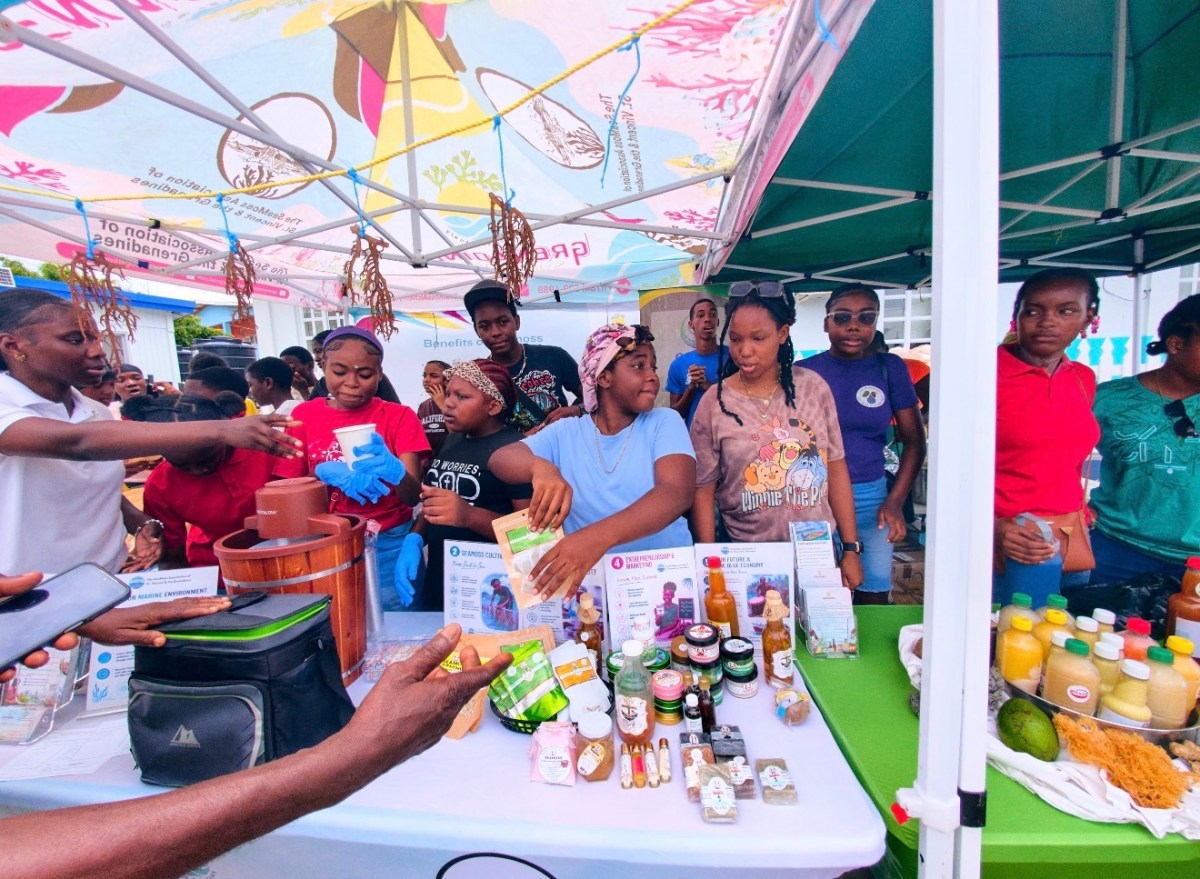
Practical entrepreneurship was another key element of the camp. Participants learned food hygiene and safe preparation techniques before developing a dairy-free seamoss ice cream as a value-added product. The ice cream was later sold during the Community SeaMoss Showcase at Mulzac Square, where it sold out completely.
Proceeds from the sales were donated to Union Island Secondary School to support the launch of its proposed Environmental Club, creating what organisers described as a lasting connection between the camp and future environmental education initiatives.

The programme concluded with the Community SeaMoss Showcase, where local vendors displayed seamoss products and businesses while participants performed Big Drum, bringing together the camp’s themes of conservation, culture, entrepreneurship and community.
Stephens said the programme’s success would ultimately be measured by the impact it has on participants long after the camp has ended.
“If even one of them walks away wanting to protect the ocean, continue the seamoss tradition, start a business or simply look at what we have here a little differently, then Roots to Reef has meant something,” he said.
SMASVG expressed gratitude to the presenters, facilitators, parents, guardians, vendors, community members and the St. Vincent and the Grenadines Conservation Fund for supporting the initiative, which it hopes will continue to inspire youth involvement in seamoss farming, marine conservation and environmental stewardship across Union Island.
END


Related News

Man charged over August 27 cutlass attack in Layou that left one person in hospital
$678,000 of taxpayers’ money spent fighting Giant African Snails, Minister says
St Joseph’s Convent Claims Top Three Spots In Youlou Art Competition