PM Dr. Friday tells international Journalist SVG will press ahead with new Citizenship Programme
 15 October 2026


By Val Matthias. Updated 6:26 a.m., Thursday, October 15, 2026, Atlantic Standard Time (GMT-4).
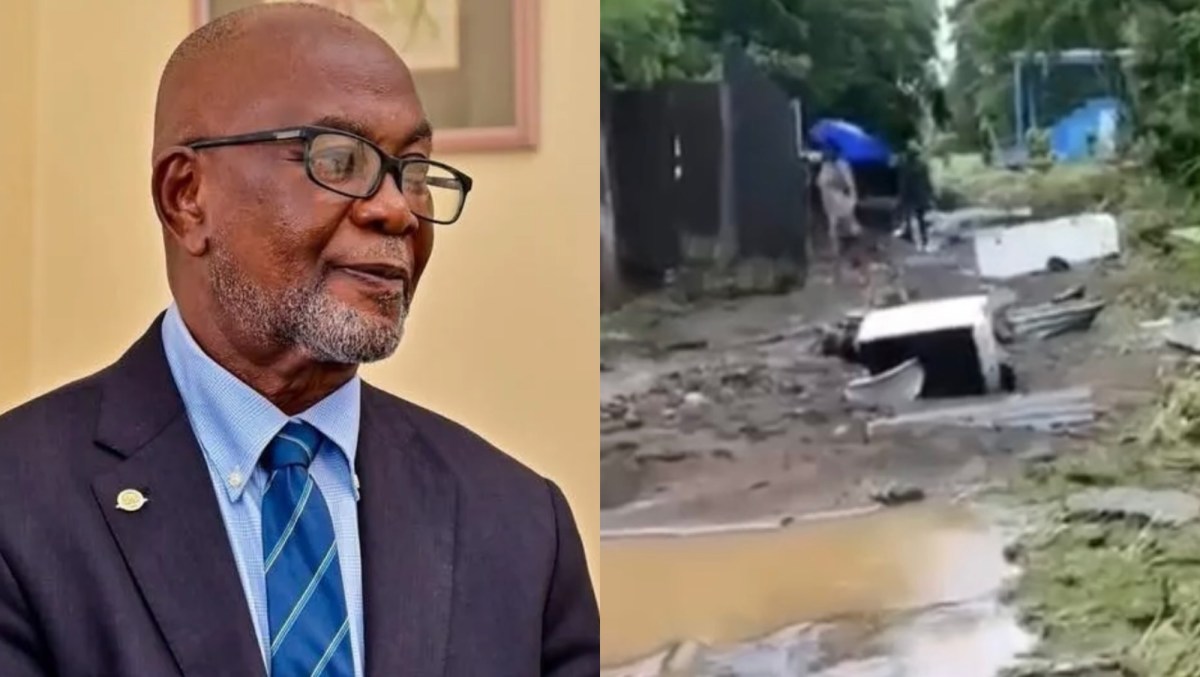
Prime Minister Dr. Godwin Friday has told an international journalist that St Vincent and the Grenadines will press ahead with plans for a new citizenship investment programme, despite growing international concerns about citizenship-by-investment schemes.
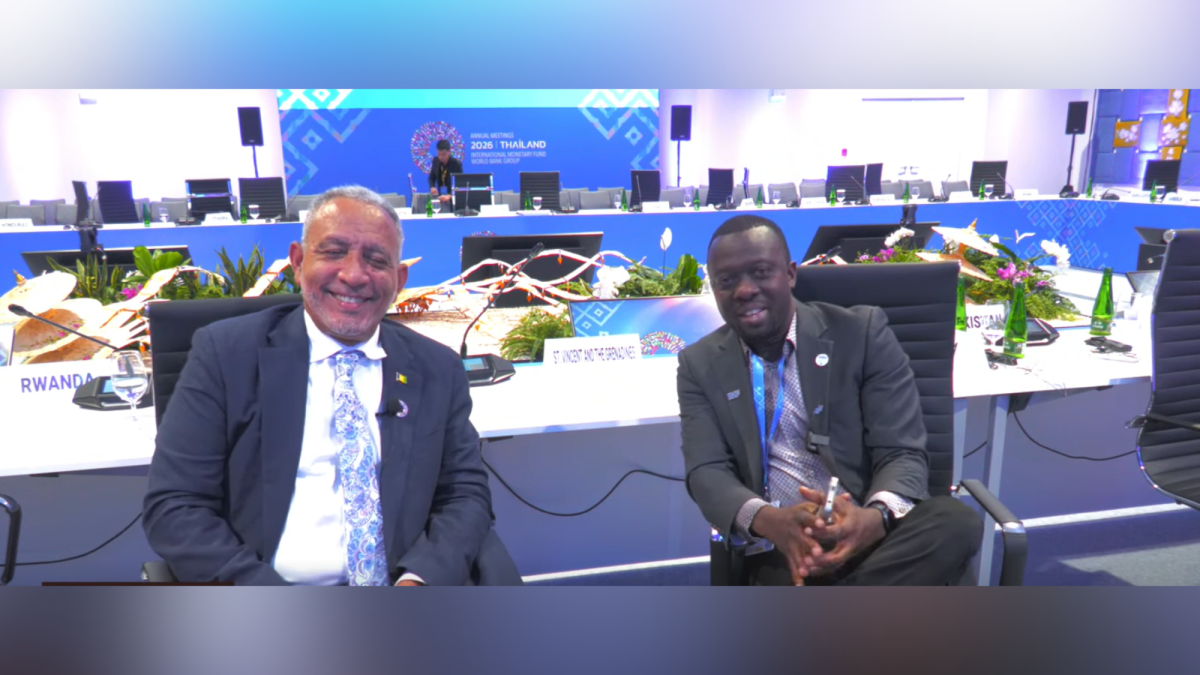
Speaking to Television Caribbean Managing Director and News Editor Andre Huie in Bangkok during the 2026 International Monetary Fund and World Bank Group meetings, Dr Friday said the government was working towards a new model that would be significantly different from the traditional Citizenship by Investment Programme.
The Prime Minister said a consultancy is currently designing the programme, with the government looking towards the first quarter of 2027 for its possible implementation.


The disclosure comes as the government faces one of the country’s most difficult fiscal periods in years, with public debt reaching about 113 per cent of gross domestic product in 2025.
The International Monetary Fund says SVG’s public debt has increased by 45 percentage points of GDP since 2019, while warning that the country’s debt dynamics are unsustainable without significant policy changes. The IMF projects debt could rise further in the coming years if fiscal deficits remain large.
In that context, the government’s decision to pursue a new citizenship programme is likely to attract further scrutiny, particularly because of concerns raised by the European Union over citizenship-by-investment schemes in the Eastern Caribbean.


But Dr Friday told Huie that the government believes there is still an economic opportunity.
He acknowledged the concerns raised by the European Union and other countries but said SVG intends to address them while retaining the potential benefits of such a programme.
“We intend to proceed with a similar type programme,” Dr Friday said.
He was careful to distinguish the proposed system from the traditional model, saying it would not be a Citizenship by Investment Programme “in the old sense.”

Instead, he said, the government is considering a system involving much greater due diligence and central oversight.
The programme would also be coordinated within the Organisation of Eastern Caribbean States, with the central bank playing a role in monitoring, according to the Prime Minister.
Dr Friday said the government is continuing discussions with the European Union and other countries that have raised objections.
He said the intention is to establish safeguards that would allow SVG to attract investment while addressing international concerns.
The proposed programme is therefore being presented by the government not simply as a mechanism for selling citizenship, but as a means of mobilising capital under tighter controls.
That distinction could prove important as SVG attempts to balance its need for investment against international pressure for stronger scrutiny of citizenship schemes.
The government’s financial position provides important context for the decision.
In the interview, Dr Friday said his administration inherited a “very difficult fiscal situation”, with government finances severely constrained and debt at 113 per cent of GDP.
He said one of the government’s priorities is to manage the debt in a way that creates fiscal space and allows it to deliver on its commitments to the population.
Its July 2026 Article IV report says public debt reached 113 per cent of GDP in 2025 and describes the debt position as unsustainable. Without a decisive policy shift, the IMF projects debt could reach 145 per cent of GDP by 2031.
The country’s debt burden has been driven by a combination of factors, including the economic effects of the pandemic, the 2021 volcanic eruption, Hurricane Beryl and major capital expenditure.
The IMF says public debt rose by 45 percentage points of GDP between 2019 and 2025, with roughly half of that increase occurring during the last two years of the period.
Dr Friday also linked the government’s financial difficulties to the impact of Hurricane Beryl.
He told Huie that the hurricane destroyed an estimated 22 per cent of the country’s GDP, while recovery continues, particularly in housing, businesses and communities in the southern Grenadines.
He said the government is still working to get people back into their homes and restore economic activity in affected communities.
The country is also continuing its recovery from the 2021 volcanic eruption, with World Bank-supported projects still forming part of the rebuilding effort.
The government is simultaneously dealing with the effects of higher energy prices.
Dr Friday said the administration has used temporary measures to cushion households and businesses from rising electricity costs, including extensions of arrangements involving the electricity company.
But he acknowledged that such subsidies cannot continue indefinitely.
The Prime Minister said the government would rather direct scarce resources towards productive activities that can generate economic growth, create jobs and provide better opportunities.
It is against this difficult economic background that the proposed citizenship programme is being developed.
Dr Friday said the government is not ignoring the international concerns.
Instead, he said, the proposed programme would have stronger central management, enhanced due diligence, regional coordination and central-bank monitoring.
He said other Eastern Caribbean countries with existing citizenship programmes are also considering adjustments.
The Prime Minister believes those changes, combined with continued discussions with the European Union and other countries, could produce a “productive resolution” to the dispute surrounding citizenship programmes.
The government is seeking new sources of capital at a time when its finances are severely constrained and debt is exceptionally high.
At the same time, it must convince international partners that a new citizenship programme can operate under standards strong enough to address concerns about security, due diligence and oversight.
Dr Friday’s interview therefore provides the clearest indication yet that, despite those challenges, his government has not abandoned the citizenship programme idea and is now targeting the first quarter of 2027 for a possible launch.
END
About the Author: This story was written and submitted by freelance journalist Mr. Val Matthias, a trained communicator with more than two decades in the media sector. He holds a Bachelor of Arts in Media and Communication (UWI Mona), a Master of Science in Tourism and Hospitality Management (UWI Cave Hill), a Certificate in Digital Marketing, and has years of broadcast journalism experience rising to ranks of a programme manager. All supporting materials for this story have been presented, vetted, and verified. Mr Matthias can be reached at [email protected]


Related News

3 Drivers rewarded for courtesy, service and safe driving
“Being Different Should Never Cost a Child Their Life”: RedRoot Calls for Action Again...

Visually impaired sailor makes history for SVG at World Sailing Inclusion Championships