


By S.Browne. Updated 6:10 p.m., Monday, August 10, 2026, Atlantic Standard Time (GMT-4).
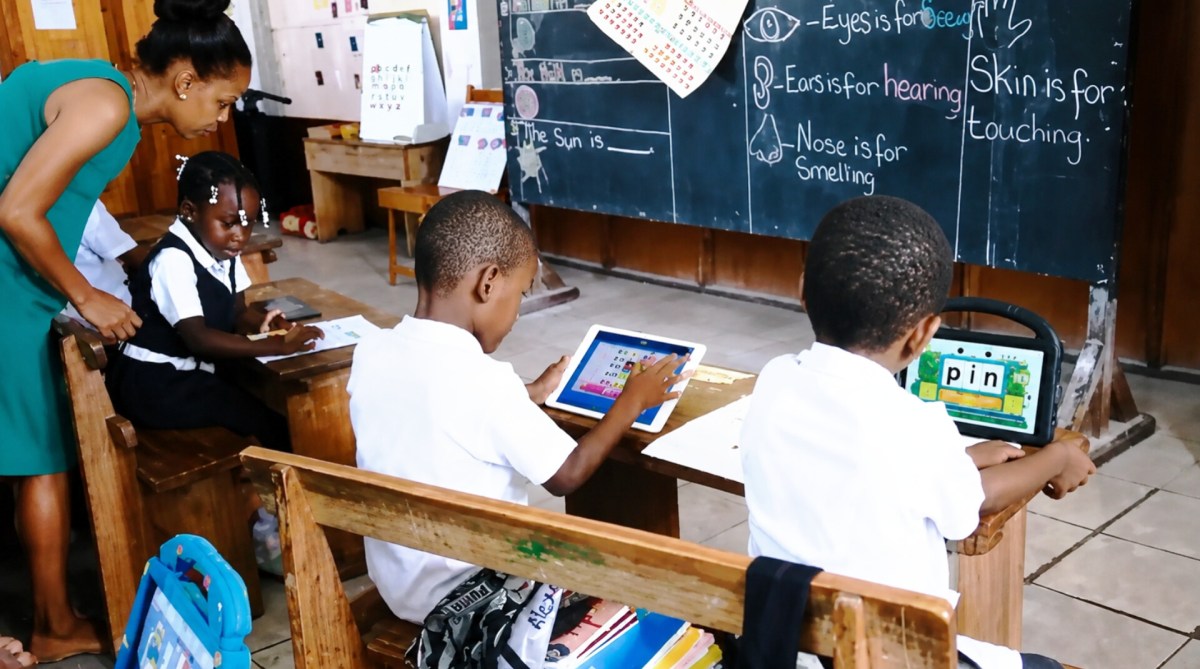
Primary school students in St. Vincent and the Grenadines are set to experience a new approach to learning as the country begins rolling out the Digital OECS Harmonized Primary Curriculum (D-OHPC), placing greater emphasis on practical skills, critical thinking, technology and applying knowledge rather than simply memorising information.
The phased rollout begins this month, with teachers on mainland St. Vincent scheduled to begin training on August 24, followed by teachers in the Grenadines from August 31 to September 3.
The first term of the new school year, from September to December, will be used to familiarise teachers with the curriculum, with classroom implementation expected to begin in January.
The roadmap was outlined on Monday by Senior Education Officer responsible for Curriculum, Aldia Gumbs-Dyer, during the official announcement of the D-OHPC rollout in St. Vincent and the Grenadines.
Gumbs-Dyer stressed that the training is not intended to be a one-off exercise, but the beginning of ongoing support for teachers as they adjust to the new curriculum.
“This is not a single training and then that’s it for teachers. It is the beginning of a supportive transition that will continue throughout the years to come.”
The new curriculum has been in development for several years under the OECS Programme for Educational Advancement and Relevant Learning (OECS PEARL), with St. Vincent and the Grenadines among the member states involved in its development.
The initiative was introduced locally to stakeholders in 2024, when the Ministry of Education said the new curriculum would be more student-centred, embrace advanced technologies and improve accessibility. At that time, the Ministry also said the existing primary curriculum had been in use since 2007.
The D-OHPC was subsequently piloted in 15 primary schools in SVG.
Teachers and school leaders who participated in the pilot say the changes are already being reflected in the classroom.
Principal of the Argyle Primary School, Veronica Francois, described the curriculum as more learner-centred, practical, relevant and competency-based.
“By competency-based, I mean it focuses not only on what students know, but on what they can do with what they know.”
Francois said the approach encourages students to apply knowledge, think critically, communicate, collaborate and solve problems.
At Argyle Primary, students participated in a classroom market-day activity that required them to measure ingredients, calculate costs and make decisions about pricing.
She said activities of that nature helped connect classroom lessons with real-life situations.
The curriculum also places greater emphasis on integrating different areas of learning, rather than treating subjects as entirely separate.
According to Francois, students can draw on literacy, numeracy, science, social studies and technology skills together to investigate problems and develop solutions.
Teacher at Greiggs Government School, Benisha Rodney, said another important change was the extent to which students could see themselves reflected in the learning material.
“My students finally saw themselves.”
Rodney recalled a Social Studies lesson in which an animated image of a boy and girl appeared in a presentation. One of her students immediately pointed out that the boy looked like a classmate.
For Rodney, the moment demonstrated the importance of making lessons relevant to the experiences and identities of Caribbean children.
She also highlighted the digital format of the curriculum, saying teachers can access the material directly from their devices.
“The curriculum doesn’t just tell me what to teach, it really actively supported me in my teaching.”
However, educators involved in the pilot have acknowledged that the transition will require teachers to learn new approaches and become comfortable with new digital tools.
Gumbs-Dyer said teachers would have to apply themselves to learning the new documents and expectations, but would not be expected to abandon the skills and teaching practices they already possess.
Teachers and principals will receive continued support from curriculum officers and curriculum support officers, who will serve as coaches. Curriculum guides will also be available in digital and hard-copy formats, alongside access to the OECS Learning Hub.
“No teacher is being asked to implement this new curriculum by him or herself in a classroom,” Gumbs-Dyer said.
Principals are being encouraged to play an active role in the transition by becoming familiar with the curriculum, establishing support teams, monitoring implementation and creating opportunities for collaborative planning.
Francois said her experience during the pilot demonstrated that teachers need to feel supported rather than judged when adapting to a new system.
At Argyle Primary, teachers held weekly planning sessions to discuss lesson plans and identify ways to make activities more competency-based and engaging. Teachers also met briefly each Monday after General Assembly to discuss the week ahead, anticipated challenges and areas where assistance was needed.
The phased rollout will not initially include all grades.
Teachers of Grades 5 and 6 are expected to receive their training at the end of the 2026–27 academic year, after completing changes associated with the Caribbean Primary Exit Assessment.
Gumbs-Dyer said the decision was taken to avoid placing two major sets of changes on Grades 5 and 6 teachers at the same time.
Phase Two is scheduled to begin in 2027, when kindergarten will be brought into the process and Social Studies and Science will be added.
Chief Education Officer also endorsed the rollout, telling teachers and principals that they should see themselves as active participants in the transformation rather than simply recipients of a new curriculum.
“We want you to see yourselves as leaders of this transformation.”
The curriculum is intended to provide greater continuity across OECS member states, allowing students who move between countries to continue building on their learning rather than experiencing a major disruption in their educational journey.
The OECS has described the broader PEARL initiative as an effort to strengthen education systems through reforms including curriculum development, teacher training, digital learning, early-childhood education and support for students with special education needs.
With teacher training beginning later this month, the Ministry is now moving the D-OHPC from the pilot stage towards implementation across the country’s primary schools.
END
Related News

BREAKING: Child dies in suspected electrocution at Richland Park

Here is the police report on the fatal shooting of a man in Mesopotamia
Police Take Internal Action After Officer Video Sparks Public Concern