PM Dr Friday says Previous Government Neglected Fisheries While “Begging and Borrowing”
 26 May 2026
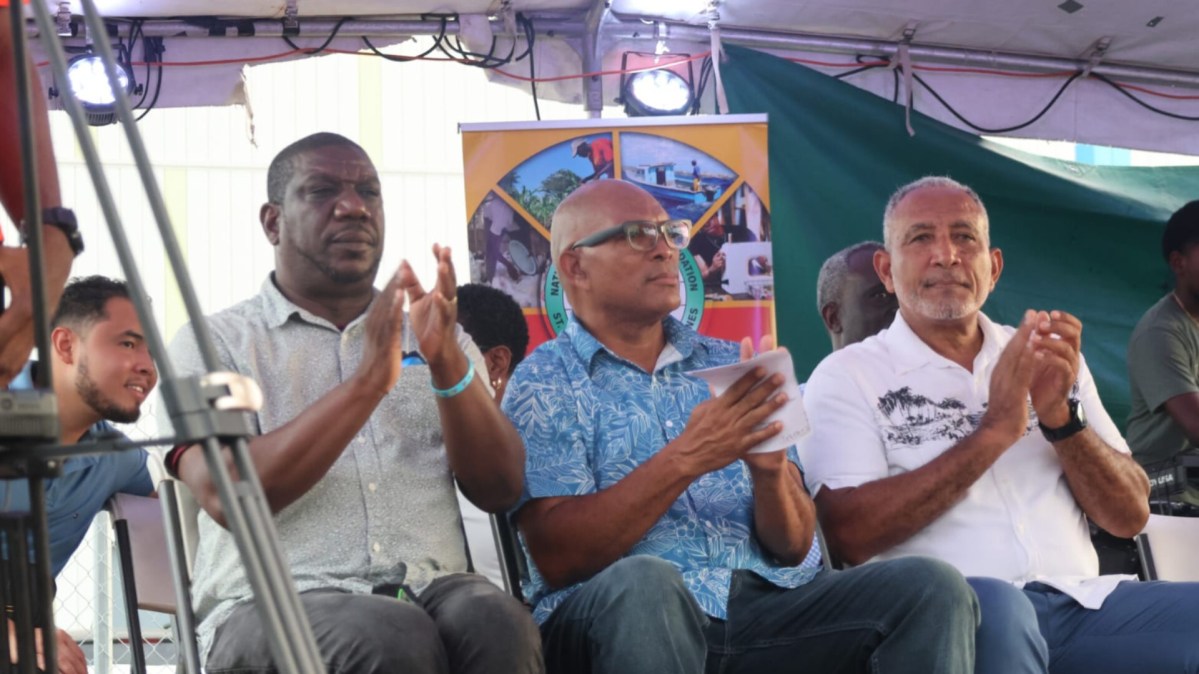


By Val Matthias. Updated 3:42 p.m., Tuesday, May 26, 2026, Atlantic Standard Time (GMT-4).
Prime Minister Dr. Godwin Friday has accused previous administrations of neglecting the fisheries sector while relying heavily on borrowing, arguing that the country is now paying the price for failing to invest in productive industries.
Speaking at the closing ceremony of the 49th Fisherman’s Day celebrations, Dr. Friday said agriculture and fisheries had been overlooked for years despite being essential to national development and food security.
“The bill is coming for us, this government, to pay from all the begging and borrowing that they have done in the past and then neglected agriculture,” he said. “They neglected the fishery sector. They neglected the productive sectors because you could get easy loan to borrow.”
The prime minister said his administration was now attempting to rebuild sectors capable of creating jobs, generating foreign exchange, and reducing dependence on imports.

He described fisheries as one of the pillars on which the country’s future economic growth would depend, alongside agriculture, tourism, and what he called the “new economy”.
“We cannot be a country that just begs and borrow for everything,” Dr. Friday told fishers and stakeholders gathered in Little Tokyo.
The remarks came as the government continues efforts to expand investment in the fisheries and blue economy sector, including support for aquaculture, seafood production, and marine conservation.
Dr. Friday defended the decision to establish a separate Ministry of Fisheries, Marine Conservation, and Climate Resilience, saying the industry had for too long been treated as secondary despite its importance to livelihoods and food production.
“For too long,” he said, fishers had been undervalued even though they were among the people feeding the nation.
The prime minister argued that stronger productive sectors were necessary if the country was to provide long-term opportunities for young people and reduce economic vulnerability.
“In the days when we had the farmers and the bananas, we built homes all across the country. We sent our children to school,” he said, pointing to the role agriculture once played in supporting economic mobility.

Dr. Friday said the government wanted to create “real productive employment” rather than temporary work programmes, adding that rebuilding fisheries and agriculture was central to that strategy.
He also acknowledged the challenges facing fishers, including rising fuel costs linked to global events, but said the government intended to improve access to financing, equipment, and technology.
Among the measures being proposed are credit facilities through a planned National Development Bank, support for larger and more efficient vessels, and investment in fisheries infrastructure.
Dr. Friday said the country also needed to balance increased production with environmental protection, arguing that fisheries and marine conservation had to work together.
“We have to manage it carefully,” he said, warning against overexploitation of marine resources.
The prime minister also pointed to opportunities in sea moss cultivation, aquaculture, and seafood exports, saying the country had significant untapped marine resources that could contribute to economic growth if managed properly.
“There’s a bright future ahead of us,” he said, while acknowledging that rebuilding the sector would take time.
END



Related News

Youth to gain hands-on climate skills through new programme in SVG
PM Dr Friday Calls for National Unity on Spiritual Baptist Freedom Day
Cuba says Vincentian students supported despite pressures on education system