
A wave of Ukrainian long-range drones has struck the St Petersburg region overnight, hitting an oil terminal and a Baltic Sea port in one of the largest deep-strike operations targeting President Vladimir Putin’s home city.
Leningrad region Governor Alexander Drozdenko said air defences shot down 72 unmanned aerial vehicles (UAVs) over the region on Saturday.
- list 1 of 3Russia’s triumphant tone shifts as Ukraine deploys ‘asymmetrical tactics’
- list 2 of 3What is Nayara, the Indian firm Russia is reportedly importing oil from?
- list 3 of 3Russia’s advance collapses in Ukraine, ‘40,000’ troops killed in June
end of list
The operation, conducted approximately 900km (560 miles) from Ukrainian-held territory, triggered widespread local disruptions.
Russian authorities briefly halted flight operations at Pulkovo Airport and throttled municipal mobile internet networks to jam the drones’ cellular-backed navigation systems.
St Petersburg Governor Alexander Beglov said that one drone crashed in the grounds of the 18th-century Peterhof Palace complex, and another hit an oil terminal in the city’s Kirovsky district.
Regional officials said debris struck an oil terminal, a nearby port and a historic palace complex. Drozdenko added that drone debris fell near the port of Vysotsk, close to the Finnish border, without giving a casualty toll.
Russia’s Defence Ministry said 389 Ukrainian drones had been intercepted overnight nationwide, but confirmed strikes only in the wider Leningrad region.
Ukrainian President Volodymyr Zelenskyy said Ukrainian forces had struck oil infrastructure funding Russia’s war effort and also hit the Kronstadt naval base in St Petersburg, calling it “an important military target”.
On Saturday, Ukraine’s General Staff claimed its strikes had disabled 42.74 percent of Russia’s oil refining capacity as of early July, reporting eight refineries hit over the past month and more than 60 storage tanks destroyed or damaged.
Advertisement
It put cumulative industry losses at $13.5bn since August 2025.
Independent energy analysts estimate the functional disruption to be closer to one-third of Russia’s capacity.
The campaign has triggered domestic fuel shortages, prompting Moscow to extend petrol export bans and implement fuel sale restrictions across more than 40 regions and annexed Crimea.
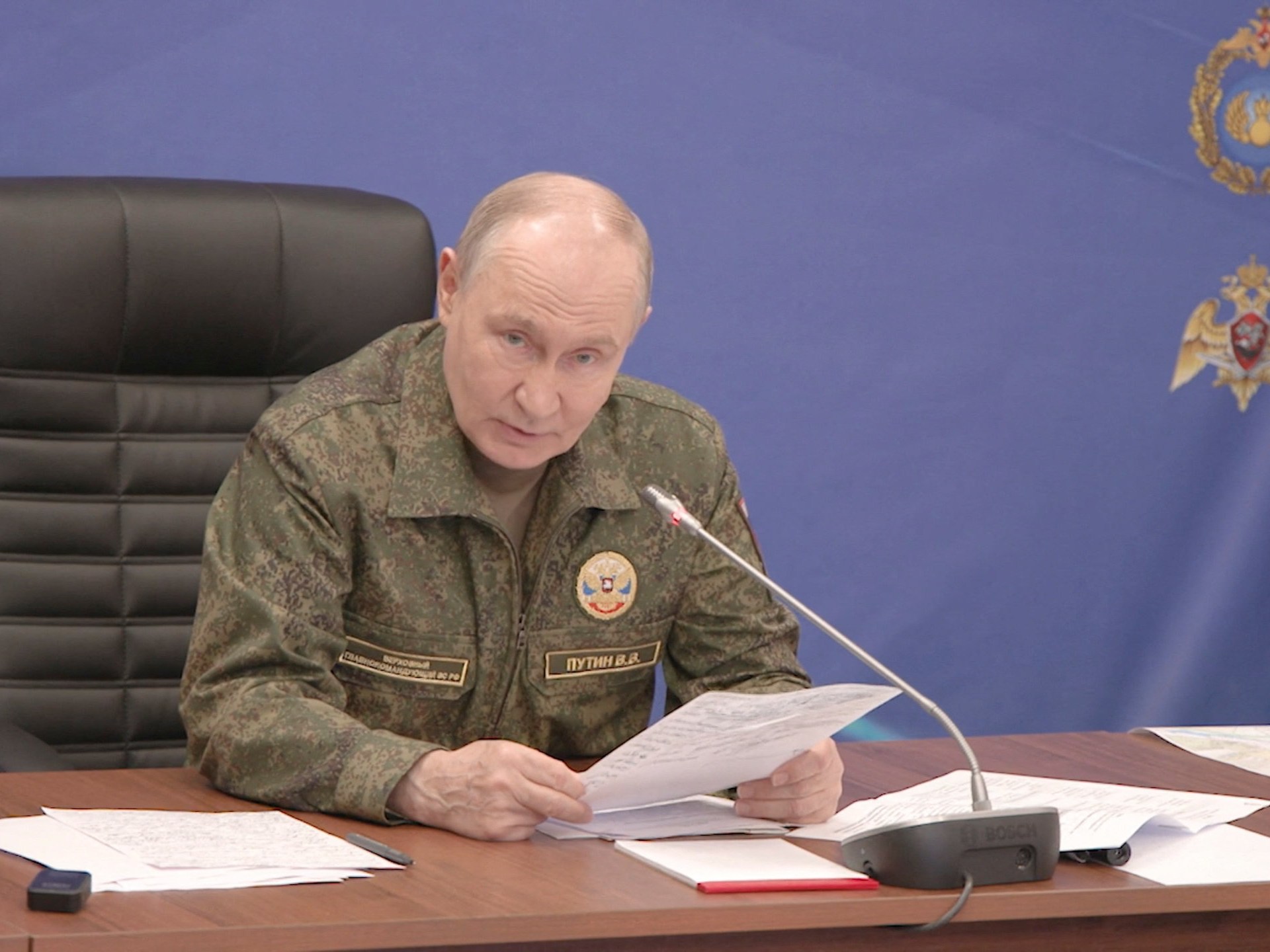
Putin acknowledged last Sunday that the attacks were causing a fuel shortage, though he described it as “not critical” and said damaged facilities were being repaired quickly.
Meanwhile, Russia on Saturday struck a gas production facility with a drone in the central Poltava region, causing a fire, Ukrainian state energy firm Naftogaz said.
“A fire broke out at the site after the attack. Operations at the facility have been suspended,” Naftogaz said on Telegram. “The enemy is systematically targeting gas production facilities in an attempt to reduce Ukraine’s domestic output and complicate preparations for the heating season,” it added.
The strikes came days after a Russian attack on Kyiv killed 30 people, part of an intensifying exchange. At least four people were killed and 27 injured when Russian forces struck the northeastern Ukrainian city of Sumy with glide bombs on Friday, regional officials said, adding that people remained trapped in the rubble of a residential building.