


Press Release. Updated 10:44 a.m., Tuesday, July 14, 2026, Atlantic Standard Time (GMT-4).
By Kemarlie Durrant
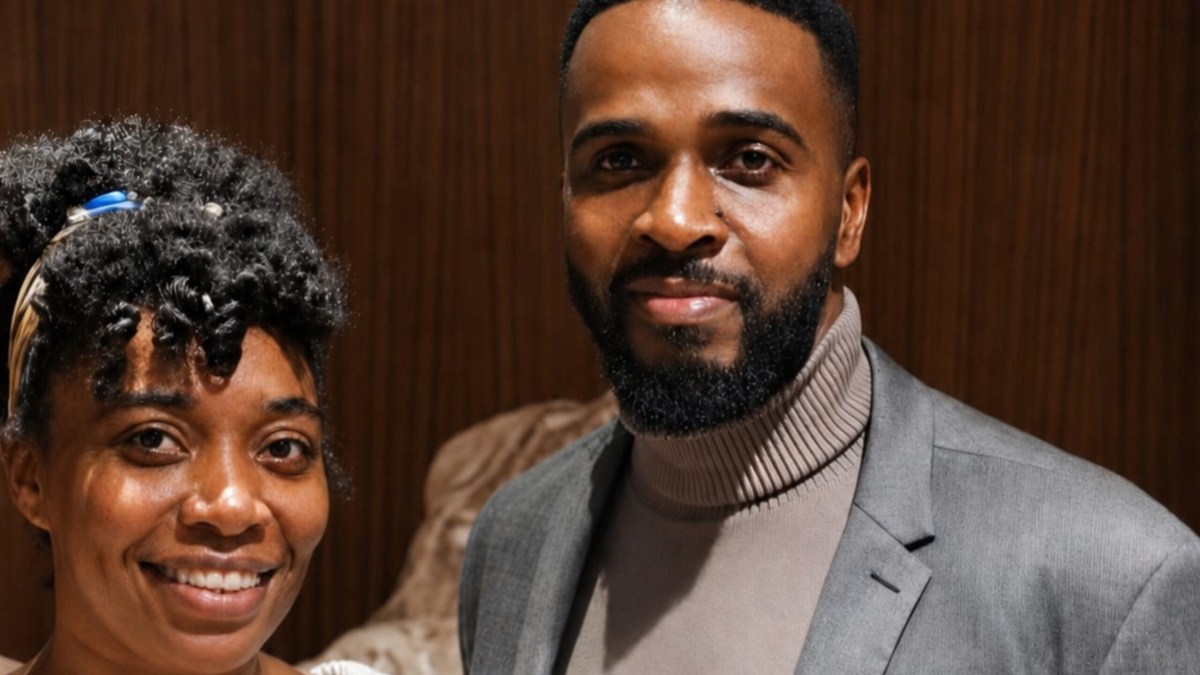
When Devan Peters left Belmont, St. Vincent and the Grenadines (SVG), for Taiwan in 2014 on a five-year Ministry of Foreign Affairs (MOFA) scholarship to study Mandarin Chinese and pursue a first degree, he did not imagine where the journey would ultimately take him.
Nearly 12 years later, Peters is an engineer at Taiwan Semiconductor Manufacturing Company (TSMC), the world’s largest contract semiconductor manufacturer and one of the most influential technology companies in the global chip industry.
TSMC commands roughly 70% of the world’s foundry market and supplies chips to companies such as Apple, Nvidia and Qualcomm. The chips TSMC manufactures are used in devices ranging from cell phones to advanced weapon systems.
Peters is the only Vincentian known to be working at TSMC in Taiwan and is among a few professionals from the Caribbean employed by the company. Alongside his full-time role, he is pursuing a doctorate in electrical and computer engineering.
His journey is not simply one of academic success or career achievement. It is a story of perseverance, faith, careful planning and a commitment to giving back to the country he still proudly calls home.
Peters arrived in Taiwan in 2014 and studied Mandarin Chinese at National Taiwan Normal University for one year before enrolling at Tamkang University in Taipei, where he completed a bachelor’s degree in electrical and computer engineering, entirely in Chinese.

He later earned a master’s degree in the same field from National Yang Ming Chiao Tung University and is now completing his doctoral research on semiconductor test circuit design while working full-time as an engineer.
Despite his academic qualifications and proficiency in Mandarin Chinese, breaking into the semiconductor sector was far from straightforward, particularly at a company as competitive as TSMC.
Peters says the process demanded careful planning long before he ever submitted an application.
“I identified the roles I wanted; for example, integrated circuit designer, then studied the job postings for those roles to see exactly which skills companies were asking for,” he explained.
“From there, I worked backwards. I chose courses that mapped directly to those requirements and built a project portfolio around them so that when a hiring manager looked at my CV, they immediately saw someone who already fit the role.”
That approach paid off and Peters landed multiple interviews with several other major tech companies before ultimately accepting a job at TSMC.
He emphasises that technical knowledge alone is not enough. “Most engineering workplaces here run in Chinese, and even imperfect Mandarin signals commitment,” he says, adding that he ensures his legal status, from his visa status to his residency documentation, is always in order.
Choosing Taiwan was one of the biggest decisions of Peters’ life. It was a journey that began the year before he actually received the scholarship.
He first applied for a MOFA scholarship in 2013 but was unsuccessful. Rather than giving up, he applied again the following year and was awarded the scholarship that brought him to Taiwan in 2014.
Peters says his determination was fuelled by watching his siblings pursue higher education overseas. Seeing them build their own paths inspired him to do the same and gave him the confidence to believe that he, too, could succeed abroad.
Throughout that journey, he said one principle has remained constant: “Put God first in everything.”
He credits his Christian faith with giving him the strength to persevere through every challenge he faces.
Before he came to Taiwan, he was not always an “A+” student. However, he is proud that he refused to let the language become an obstacle or excuse and maintained strong grades, including courses delivered in Mandarin Chinese.
He says that over the years, the encouragement of family, friends and mentors has played an important role in helping him reach where he is today. In Taiwan, he especially credits his wife, Shemon Baptiste-Peters, and Taiwan-based Vincentian cultural ambassador, Peggy Carr, for standing beside him throughout every stage of his journey.
Although his career has kept him in Taiwan beyond graduation, Peters says SVG has never left his heart.
“I will always be Vincentian, no matter where I am.”
Peters is one of the few Black people working at TSMC. His colleagues are often curious to learn more about him. He welcomes those conversations as opportunities to introduce people to SVG and share more about his country.
He hopes to take everything he has learned back to SVG one day.
“Everything I am doing now is a stepping stone towards achieving my full potential,” he says, adding that he wants to be sure he has gained enough knowledge and experience before he can meaningfully contribute to the development of SVG.
He has already begun in small ways. On his last visit to SVG, Peters spoke to students at the Technical and Vocational Division of the SVG Community College, his alma mater, and donated equipment to assist lecturers and students there.
Life in Taiwan has also taught him valuable lessons outside of the classroom and workplace. Although adjusting to a new culture was challenging when he first arrived, Peters now describes Taiwan as “one of the safest, most convenient places I’ve lived thus far”.
He speaks highly of the “excellent and affordable healthcare, reliable public transport, and people who are generally kind to foreigners”, even as he notes that the wind has not always been at his back during his journey in Taiwan.
“I won’t pretend it’s effortless,” he says and goes on to acknowledge that the language barrier remains one of the biggest challenges for many international students.
“The language barrier is real, whether in or out of university, banks, government offices, apartment hunting, and the bureaucracy takes persistence.
“The turning point for me was committing to Mandarin seriously. Once you can operate in Chinese, a completely different Taiwan opens to you, professionally and personally.
“My wife and I have built our life here now. And after all these years, I can say this is a country that rewards people who invest in it.”
For Vincentians considering Taiwan as a destination for higher education, Peters encourages them to embrace the opportunity, but to prepare carefully.
Drawing on his own experience with the MOFA scholarship, he says Taiwan offers a financially viable path to a world-class education, particularly in engineering and technology, in a way few other destinations can match.
His advice is to research how a chosen field operates in Taiwan, identify where the opportunities lie, and begin building the relevant skills early.
“In my case, that was semiconductors, but the principle applies to any discipline,” he says. “Take Mandarin seriously from your very first semester. It’s the single biggest factor in whether Taiwan becomes a brief chapter or a career.”
His final piece of advice: “Prepare mentally for the distance. SVG to Taiwan is about as far from home as you can get to build your community here early.
“And know that staying is a realistic option. Work permits, the Gold Card [makes moving to Taiwan as an international professional easy and convenient], and eventually permanent residency are all achievable if you perform. I came here as a student, and I’m still here by choice, all these years later.”
END
Related News
He Didn’t Want to Attend. Now He’s One of NTRC’s MyApp Valedictorians
Senior Citizens Invited to Build Digital Skills Through Training Programme

Police Probe Viral Video Allegedly Showing Illegal Sexual Act, Warn Against Cyberbullying