
The United States has warned that it would “aggressively” impose sanctions on Oman if it helps Iran establish a tolling system in the Strait of Hormuz, intensifying President Donald Trump’s threats against the Gulf ally.
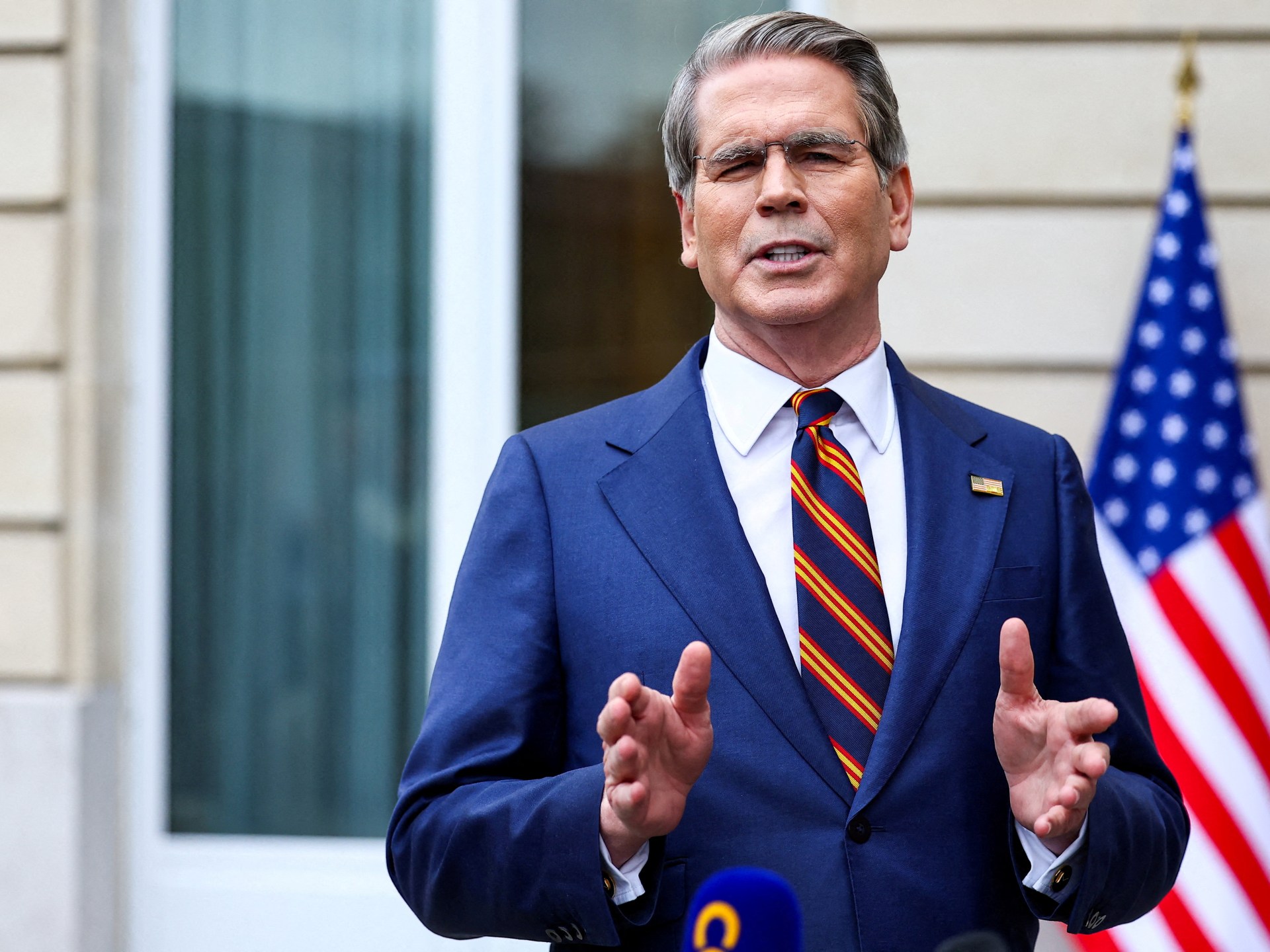
US Treasury Secretary Scott Bessent said on Thursday that Washington will “not tolerate” either country imposing fees on commercial ships in the strategic waterway.
- list 1 of 3Iran and US trade attacks after Trump rejects report of Hormuz agreement
- list 2 of 3Why has Trump threatened to bomb Oman, amid Iran war escalation?
- list 3 of 3US attacks Bandar Abbas again: Why is the port so important for Iran?
end of list
“Oman, in particular, should know that the US Treasury will aggressively target any actors involved — directly or indirectly — in facilitating tolls for the Strait and any willing partners will be penalized,” Bessent said in a social media post.
“All nations should reject outright any efforts by Iran to disrupt the free flow of commerce. Tehran’s days of terrorizing the region and the world are over.”
The statement comes less than 24 hours after President Trump threatened to bomb Oman, a key US ally known for its neutrality and mediation efforts in regional crises, including the war between the US and Iran.
While Iran has suggested that the governments in Tehran and Muscat could jointly manage the Hormuz Strait, Oman has not said that it is seeking control over the waterway, parts of which flow through its territory.
It is not clear what is driving Washington’s recent posture toward Oman. It is highly unusual for the US to threaten sanctions and military action against a close security and economic partner.
Since the US and Israel started bombing Iran without direct provocation on February 28, Iran has closed the strait and claimed sovereignty over it.
Advertisement
Around 20 percent of the world’s oil flowed through Hormuz before the conflict, so the Iranian blockade has put a major strain on energy supplies, sending prices soaring.
The US and Iran have been indirectly negotiating to reach an agreement for a comprehensive end to the war, and control over the Hormuz Strait has emerged as a major point of disagreement.
Trump has stressed that the strait must be a free passageway.
When asked whether he would accept joint Iranian-Omani control over the strait in the short term, the US president told reporters on Wednesday: “Nobody is going to control it. It’s international waters, and Oman will behave just like everybody else, or we will have to blow them up.”
Ali Bagheri, deputy secretary of Iran’s Supreme National Security Council, said on Thursday that Tehran will not allow Hormuz to be a source of insecurity for the country.
“The powers that have used this passage against Iran’s security must be held accountable,” he was quoted as saying by Iran’s public television.
Bagheri added that Iran seeks to “establish a just order that negates hegemony and domination and strengthens trust and cooperation” in the region.
Related News
Trump says Xi assured him China would not send weapons to Iran
Tehran labels US attacks ‘gross violation’, says it is prepared to respond
Deadly attack on Pakistan outpost puts Afghanistan ceasefire at risk