


By Val Matthias. Updated 9:19 a.m., Saturday, October 3, 2026, Atlantic Standard Time (GMT-4).
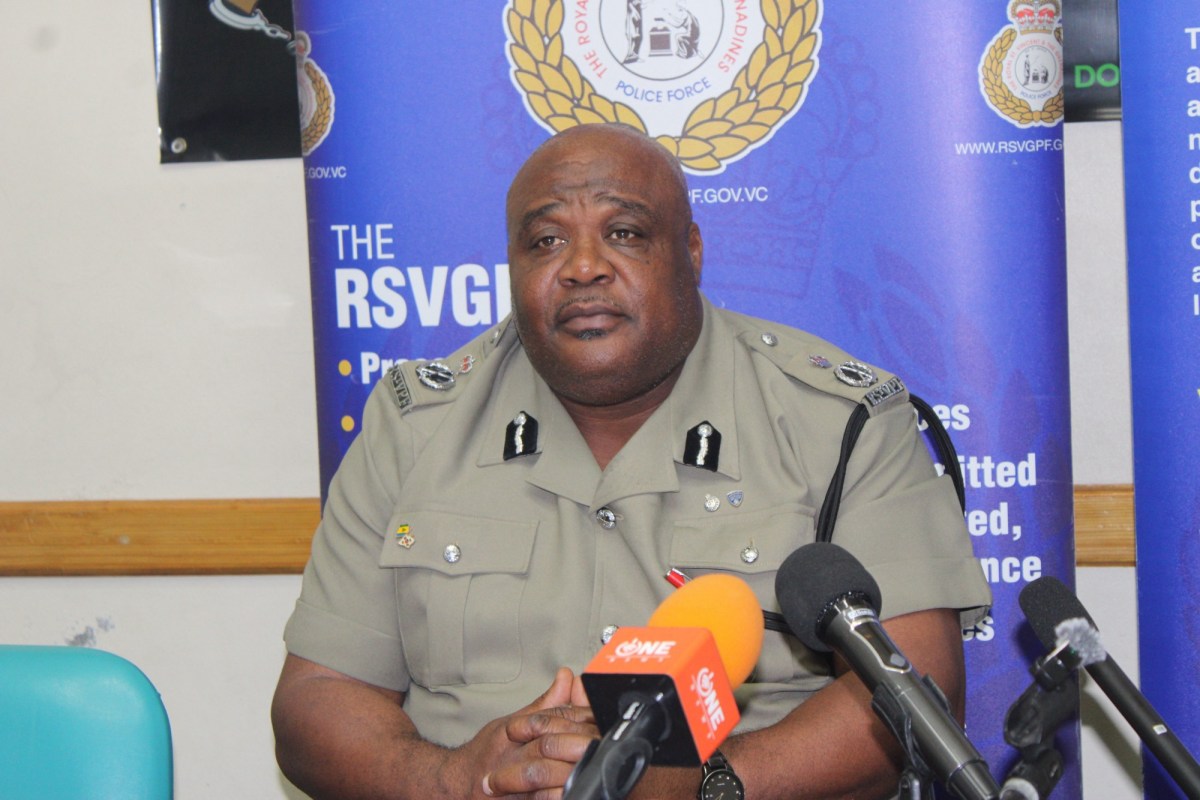
The Royal St Vincent and the Grenadines Police Force (RSVGPF) has changed how complaints against police officers are investigated, with Commissioner of Police Trevor Bailey saying at least four officers are now assigned exclusively to investigate allegations of misconduct within the force.
Bailey said the changes include separating the Complaints Department from the Public Relations Department and introducing a procedure under which officers accused of misconduct are not given access to the statements of those making complaints against them.
Speaking to the Agency for Public Information (API), the Commissioner said the changes form part of efforts to strengthen the relationship between the police and the public while ensuring that allegations against officers are investigated thoroughly.


He acknowledged concerns that complaints against police officers had not resulted in action, assuring the public that the force was taking steps to address those concerns.
“Complaints by itself with at least four officers who are dedicated to do nothing than to investigate complaints against police officers,” Bailey said, describing the revised departmental arrangement.
Under the procedure outlined by Bailey, a statement is taken from a person making a complaint against a police officer. The officer accused is then required to provide an account of the incident without being shown what the complainant said.


Bailey said the arrangement changes how information is handled during investigations.
“Now if you make a complaint against any police officer, a statement is normally taken from you. Now the police officer will have no access to what you report,” he said.
The Complaints Department investigates the allegation and forwards a file containing its findings and recommendations to the Deputy Commissioner of Police.
Bailey said the decision to send the file to the Deputy Commissioner, rather than directly to him, was deliberate and linked to the different procedures for handling disciplinary and criminal matters.

Bailey explained that cases in which an investigation indicates that an officer may have committed a criminal offence are referred to the Commissioner of Police.
“If at the end of the investigation it is revealed that the police officer would have gone too far and he committed a crime, the file will now come to the Commissioner of Police,” he said.
Allegations handled through the force’s internal disciplinary system follow a different route.
Bailey said files involving officers facing internal disciplinary proceedings remain with the Deputy Commissioner. This arrangement allows the Commissioner to review a disciplinary decision if an officer subsequently appeals.
He explained that an officer dissatisfied with a disciplinary outcome may appeal to him for a review.
The procedure therefore distinguishes between cases that may require criminal proceedings and those dealt with through the police force’s internal disciplinary system.
Bailey said officers under his command were expected to treat members of the public respectfully while carrying out their duties.
He presented the restructuring of the Complaints Department as part of the force’s efforts to improve its relationship with the public and address concerns about the handling of allegations against police officers.
The changes establish a dedicated group of investigators, separate the complaints function from public relations and set out how investigation files are to be referred for further action.
However, the Commissioner’s statements did not establish how the revised procedures have affected the number of complaints investigated, the time taken to resolve cases or the outcomes of investigations.
Bailey’s announcement centres on changes to the process for handling complaints. Whether those changes translate into greater public confidence will depend on how the procedures are implemented and how allegations against officers are addressed when investigations are completed.
END
About the Author: This story was written and submitted by freelance journalist Mr. Val Matthias, a trained communicator with more than two decades in the media sector. He holds a Bachelor of Arts in Media and Communication (UWI Mona), a Master of Science in Tourism and Hospitality Management (UWI Cave Hill), a Certificate in Digital Marketing, and has years of broadcast journalism experience rising to ranks of a programme manager. All supporting materials for this story have been presented, vetted, and verified. Mr Matthias can be reached at [email protected]

Related News
Minister Bramble Rejects ‘Who You Know’ Culture in Government Business Deals

The Woman Who Helped Tell GECCU’s Story Steps Down

Four killed in Green Hill mass shooting