


By S.Browne. Updated 2:55 p.m., Friday, July 17, 2026, Atlantic Standard Time (GMT-4).
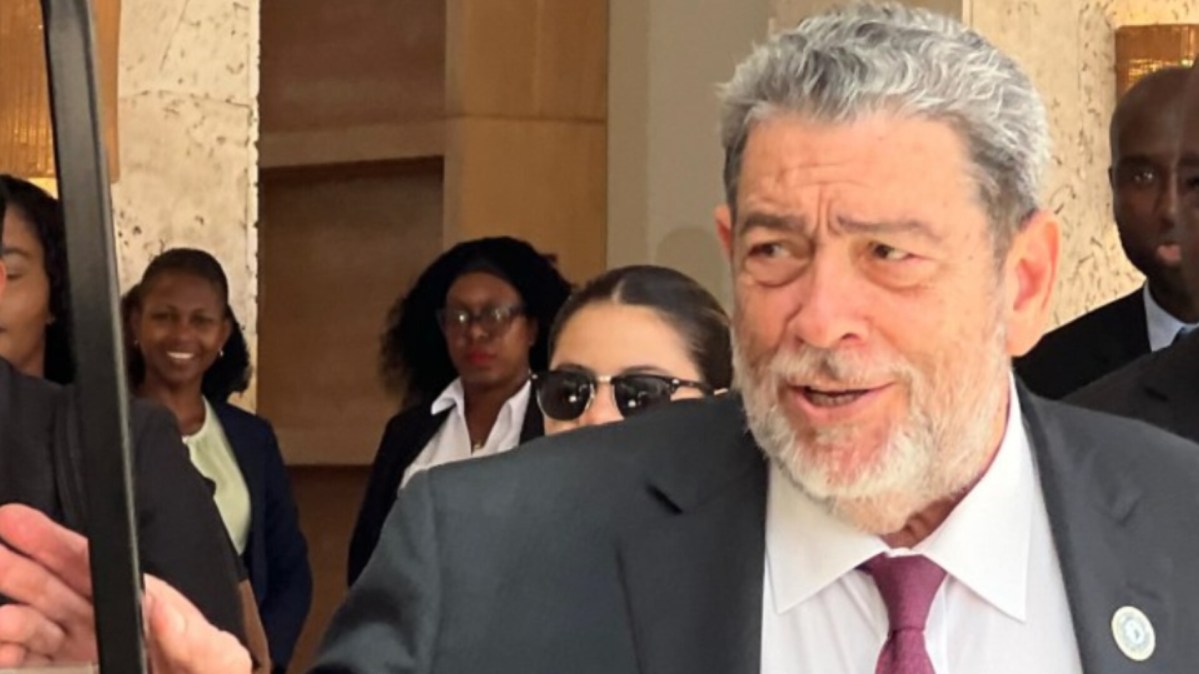
Opposition Leader Dr. Ralph Gonsalves has rejected claims by Minister of State in the Office of the Prime Minister Cheiftian Neptune that St. Vincent and the Grenadines’ latest Moody’s credit rating downgrade reflects years of Unity Labour Party (ULP) mismanagement, arguing instead that the downgrade was triggered by the New Democratic Party (NDP) Government’s fiscal policies and approach to public debt.
In a statement issued by the Office of the Leader of the Opposition, Gonsalves said Moody’s Investors Service lowered the country’s credit rating to Caa1 because of decisions taken by the NDP administration since assuming office, rather than the economic legacy of the former government.
Gonsalves strongly rejected that position, arguing that the country maintained a stable B3 rating between 2016 and 2025 despite facing major challenges, including the COVID 19 pandemic, the eruption of La Soufrière and Hurricane Beryl.
He noted that Moody’s had reaffirmed the country’s stable outlook in December 2025, one month after the NDP took office, and argued that the significant change came from the new administration’s policy direction.
According to the Opposition Leader, three major factors contributed to the downgrade during the NDP’s first eight months in office.
He highlighted what he described as an “austere yet reckless” 2026 Budget, which included a current account deficit of EC$103 million. Gonsalves claimed the government attempted to address the deficit by seeking EC$200 million in local commercial market borrowing at interest rates of up to 7.25 per cent instead of utilising more affordable concessional loans.
He also accused Prime Minister Dr. Godwin Friday and his administration of creating uncertainty in financial markets through discussions surrounding debt swaps and debt sustainability.
According to the Opposition statement, Moody’s interpreted these discussions as an indication that the government was considering debt restructuring, which could be viewed as a default.
Gonsalves further argued that the Moody’s report did not include discussion of economic prospects or growth plans for the country, which he said reflected the absence of a clear national development strategy.
Moody’s Ratings assesses the creditworthiness of governments by evaluating factors such as economic performance, government finances, debt levels and a country’s ability to meet its financial obligations.
According to the Opposition’s statement, St. Vincent and the Grenadines maintained a B3 credit rating between 2016 and 2025 before Moody’s downgraded the country to Caa1.
On Moody’s rating scale, B3 is the lowest level within the B category, while Caa1 falls into the next lower category, indicating a higher level of credit risk.
A stronger rating generally indicates greater confidence in a country’s ability to repay its debts, while a lower rating reflects a higher level of perceived risk. As a result, governments with lower credit ratings may have to pay higher interest rates when borrowing money because lenders require greater compensation for taking on additional risk.
Gonsalves also criticised the government’s borrowing performance, claiming that the NDP administration had raised only EC$52 million of its projected EC$200 million borrowing target while accepting shorter repayment terms.
He further raised concerns about proposed expansions to the Acute Care Hospital at Arnos Vale, claiming the project could increase public expenditure by nearly EC$200 million without an identified funding source.
The Opposition Leader warned that the negative outlook attached to the Caa1 rating could have consequences for Vincentians through slower economic growth and higher borrowing costs.
The Opposition’s statement comes amid an ongoing political debate over the factors behind St. Vincent and the Grenadines’ latest Moody’s credit rating assessment, with the Government and Opposition offering different explanations for the downgrade.
END