


By S.Browne. Updated 1:27 p.m., Tuesday, July 14, 2026, Atlantic Standard Time (GMT-4).
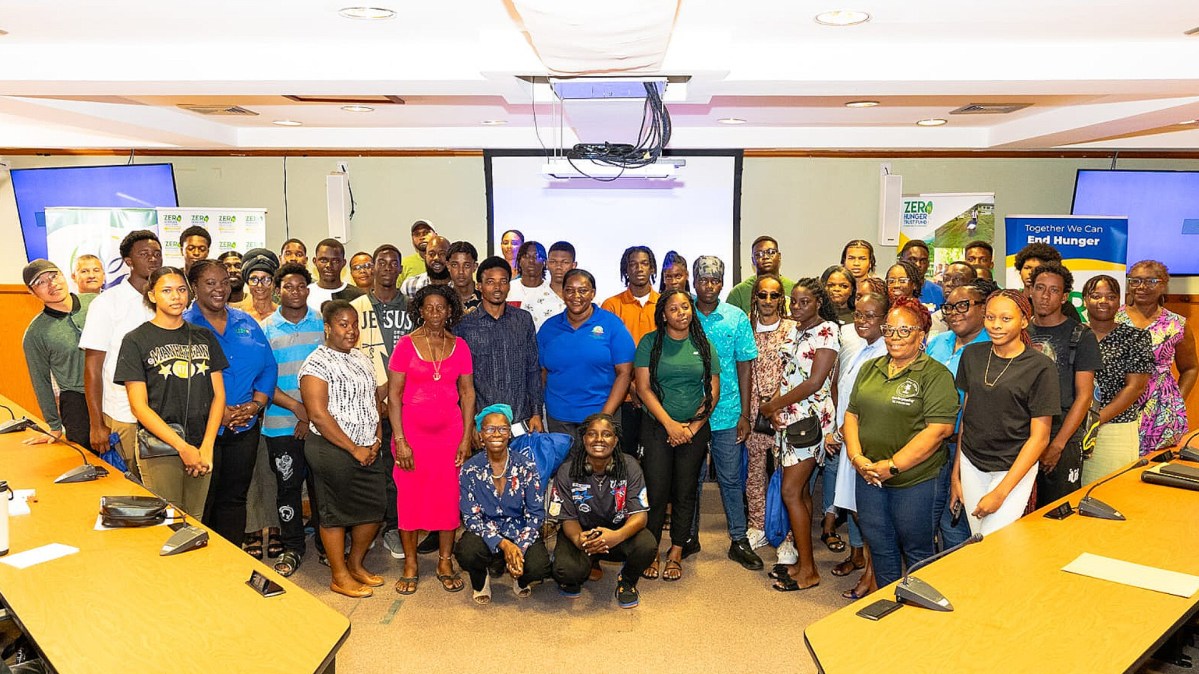
The Zero Hunger Trust Fund (ZHTF) has expanded its Youth Agriculture Science Internship Programme (YASIP) to its largest cohort yet, with 45 young Vincentians set to begin a six-week internship aimed at preparing the next generation of agricultural professionals while strengthening the country’s food systems.
The 2026 cohort was officially launched on Thursday, July 10, 2026, at the National Insurance Services (NIS) Conference Room under the theme “Empowering Young Minds, Transforming Food Systems.” From July 13 to August 21, the interns will be placed with 23 host partners, gaining practical experience in crop production, livestock, horticulture, agribusiness, agro-processing, agricultural research, environmental conservation and sustainable agriculture.
Now in its fourth year, YASIP has continued to expand, growing from 27 interns in 2024 to 38 in 2025, before reaching 45 participants this year. The programme has also broadened its scope, introducing enhanced training, wider industry partnerships and new initiatives aimed at keeping young people engaged in agriculture beyond the internship itself.
Addressing the launch, Director and Chief Executive Officer of the Zero Hunger Trust Fund, Safiya Horne-Bique, said the programme was established to bridge the gap between classroom learning and practical workplace experience.
“Across our schools, young people are studying agricultural science and showing interest, talent and curiosity. Too often, however, there remains a gap between classroom learning and the practical exposure needed to see agriculture as a career, a business opportunity, a field of innovation and a pathway to national service,” she said.
Horne-Bique explained that YASIP connects students with farmers, agribusinesses, public institutions, research bodies and community organisations, allowing them to develop practical skills while gaining a better understanding of the country’s food systems.
“We want our interns to leave this programme with a stronger sense of what is possible. We want them to see agriculture not as a last resort, but a modern, necessary and rewarding sector with space for science, technology, entrepreneurship, creativity and leadership,” she said.
She said this year’s programme has been strengthened with a more comprehensive orientation, a structured three-day study tour and a greater emphasis on sustainable agriculture and environmental stewardship through continued collaboration with the St Vincent and the Grenadines Conservation Fund.
The Director and CEO also announced the introduction of the National Youth Food Systems Framework, which is intended to provide young people with continued access to mentorship, networking, leadership development and enterprise opportunities after completing the internship.
“YASIP is a practical expression of that direction. It connects education to work experience, young people to mentors, agriculture to enterprise, local production to national resilience and food security to livelihoods,” Horne-Bique said.
As the Zero Hunger Trust Fund marks its 10th anniversary, Horne-Bique said the organisation is placing greater emphasis on investing in young people as part of its broader strategy to strengthen food security and sustainable development in St Vincent and the Grenadines.
“Our new strategic direction places stronger emphasis on systems transformation, connecting food security, agriculture, nutrition, livelihoods, data, partnerships, public understanding and community action,” she said.
She added that the country’s food system requires a wide range of professionals, encouraging interns to embrace every opportunity the programme offers.
“Food systems need farmers, but they also need scientists, entrepreneurs, extension officers, agro-processors, marketers, researchers, environmental stewards, policy thinkers, technology specialists and community leaders,” Horne-Bique said.
The Youth Agriculture Science Internship Programme was established by the Zero Hunger Trust Fund to provide agricultural science students with practical workplace experience while encouraging greater youth participation in agriculture, innovation and sustainable food production. The internship forms part of the Trust Fund’s wider efforts to improve food and nutrition security and build a more resilient food system in St Vincent and the Grenadines.
END

Related News
SVG Receives US$1 Million Agro-Processing Facility from India

Mavis Findlay-Joseph Assumes Duties as Chief Education Officer

SVG’s Milton Cato Among Three Vincentians Featured on New EC Banknotes